The Askar 103APO for Arctic Circle imagers is purpose-built for the kind of work nobody else gets to do: months of continuous deep-sky imaging under one of the darkest, most transparent skies on Earth. With its FPL-55 triplet objective, locking 3.4-inch rack-and-pinion focuser, and short 706mm focal length at f/6.85, the 103APO threads the needle between aperture and portability for sled-haul, cabin, or rooftop setups above 66° N. Through the long polar night of 2026, it pairs cleanly with cooled CMOS cameras, handles refrigerated air without focus shift, and delivers a flat, color-corrected field across full-frame sensors that high-latitude imagers actually use.
Why the Askar 103APO Suits High-Latitude Imaging
From Tromsø to Utqiaġvik to Yellowknife, Arctic imagers face a paradox: the sky is spectacular, but the gear is in agony. Lubricants stiffen, batteries collapse, dew turns to frost, and aluminum tubes contract enough to shift collimation in cheap optics. The Askar 103APO answers most of these problems at the design stage. The triplet uses Ohara FPL-55 glass with mating elements chosen to minimize thermal stress, so the spot diagram stays tight from +5 °C down past −35 °C. The CNC tube is internally baffled and knife-edge ringed to suppress reflections during low-altitude lunar and auroral framing, where stray light from snow-amplified twilight is brutal.
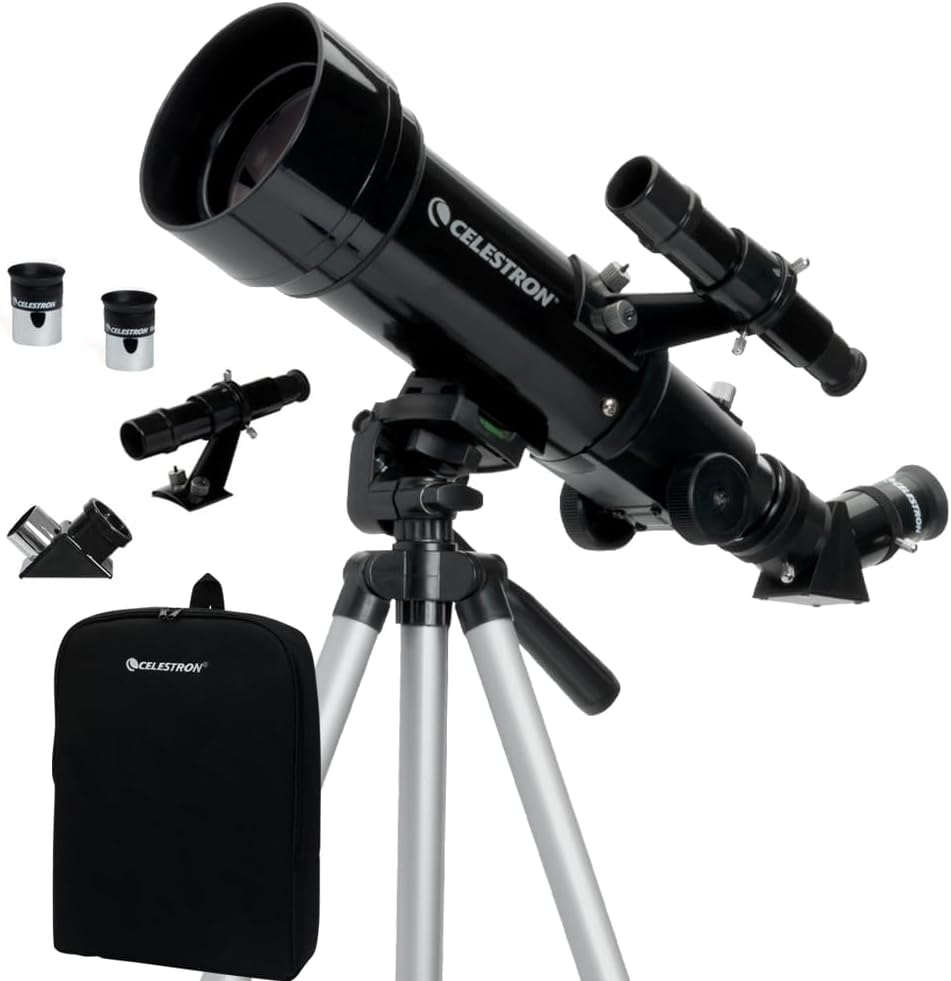
Focal length matters here too. At 706mm native (and roughly 530mm with the matched 0.75x reducer), the Askar 103APO for Arctic Circle imagers covers wide-field targets that ride low on the southern horizon all winter: Orion's belt and sword complex, the Rosette, the California Nebula, and Barnard's Loop are all framed comfortably on an APS-C or full-frame sensor without needing a mosaic. That matters when sky temperatures stay below −25 °C and every minute of stable tracking counts.
Cold-Weather Behavior: Focuser, Coatings, and Dew
The 103APO's standout feature for polar work is the 3.4-inch dual-speed focuser with a brass compression ring and a hard stop that doesn't slip when grease thickens. Most refractor focusers exhibit measurable sag and creep below −20 °C; the Askar unit ships with a tension screw you can pre-set in a warm cabin and lock before stepping outside. Pair that with a Pegasus FocusCube or ZWO EAF and you can run autofocus routines every 45 minutes without drift, even when the OTA itself is shedding heat to a −40 °C sky.
Multi-coatings on the 103APO are EBBAR-class broadband, transmitting above 99.5% per surface across 400–700nm. In transparent Arctic air with column water vapor often under 2mm, that translates to genuinely visible gains versus older fluorite doublets — narrowband S-II frames in particular benefit. For dew, the long internal dew shield is decent, but you'll still want a Kendrick or Pegasus heater strap at 30% duty during transition hours when frost forms on the objective even at −30 °C.
Mount and Power Considerations Above the Arctic Circle
The 103APO with rings, finder, guidescope, and cooled camera lands near 8.5kg payload — comfortably inside the imaging-grade range of an iOptron CEM40, ZWO AM5, or Sky-Watcher EQ6-R Pro. For polar-night sessions where you're not slewing every few minutes, a strain-wave mount like the AM5 saves enormous battery drain because there's no counterweight motor load. Expect lithium iron phosphate (LiFePO4) cells to hold around 70% of rated capacity at −30 °C; AGM lead-acid drops below 40%. Plan capacity accordingly and keep batteries in an insulated box with a 2W heater pad.
Polar alignment is its own challenge above 66° N because Polaris sits uncomfortably high — often above 70° altitude — making polar scopes awkward. Most Arctic imagers skip the polar scope entirely and run SharpCap or NINA's plate-solve polar alignment routine. The 103APO's flat-field optics make plate solving fast and reliable even with stars near the field edge. For more on alignment workflows, see our guide to polar alignment above 60 degrees north.
Comparison: Askar 103APO vs Companion Visual Scopes
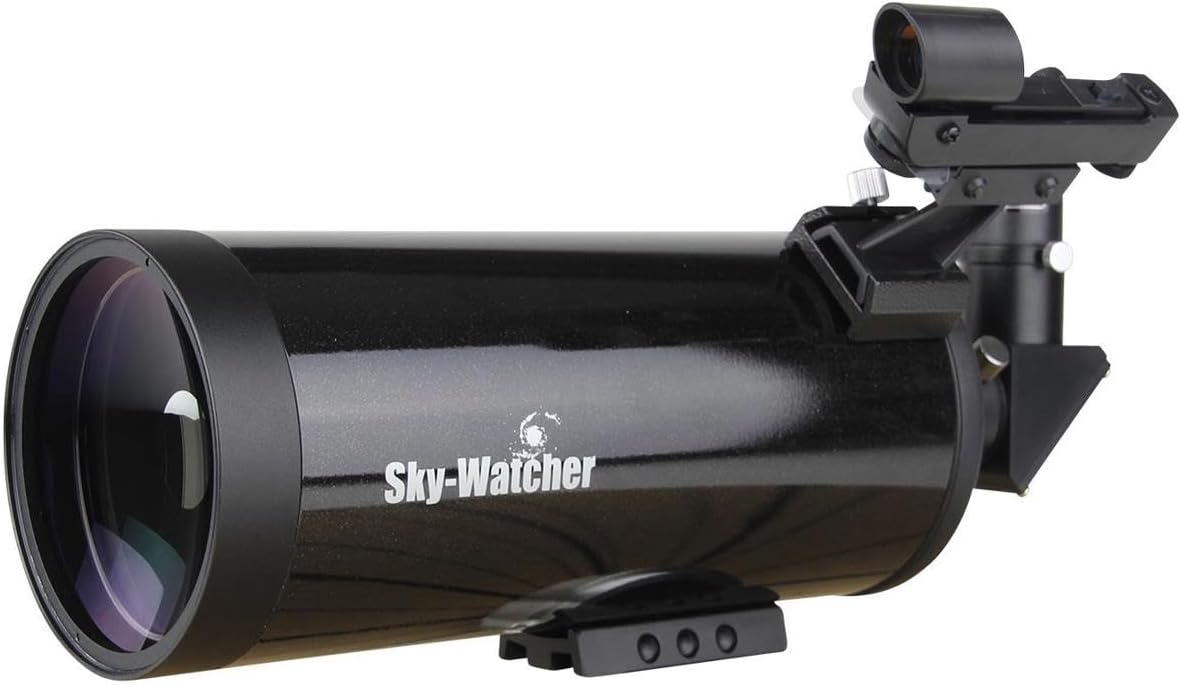
Many Arctic imagers run a dedicated imaging rig alongside a quick-deploy visual scope for guests, lunar tours, or grab-and-go work between long exposures. Computerized Schmidt-Cassegrains from Celestron are the most common pairing because they fold long focal lengths into compact tubes that warm up fast indoors. Here's how the 103APO sits next to the two most relevant visual companions for 2026 expeditions:
| Scope | Aperture | Focal Length | Best Use | Cold Tolerance |
|---|---|---|---|---|
| Askar 103APO | 103mm | 706mm (f/6.85) | Wide-field imaging, narrowband | Excellent down to −40 °C |
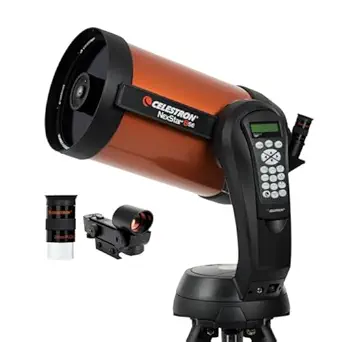
| Celestron NexStar 8SE | 203mm | 2032mm (f/10) | Lunar, planetary, bright DSO visual | Good, needs longer thermal soak |
| Celestron NexStar 6SE | 150mm | 1500mm (f/10) | Travel visual, sled-haulable | Very good, fastest cool-down |
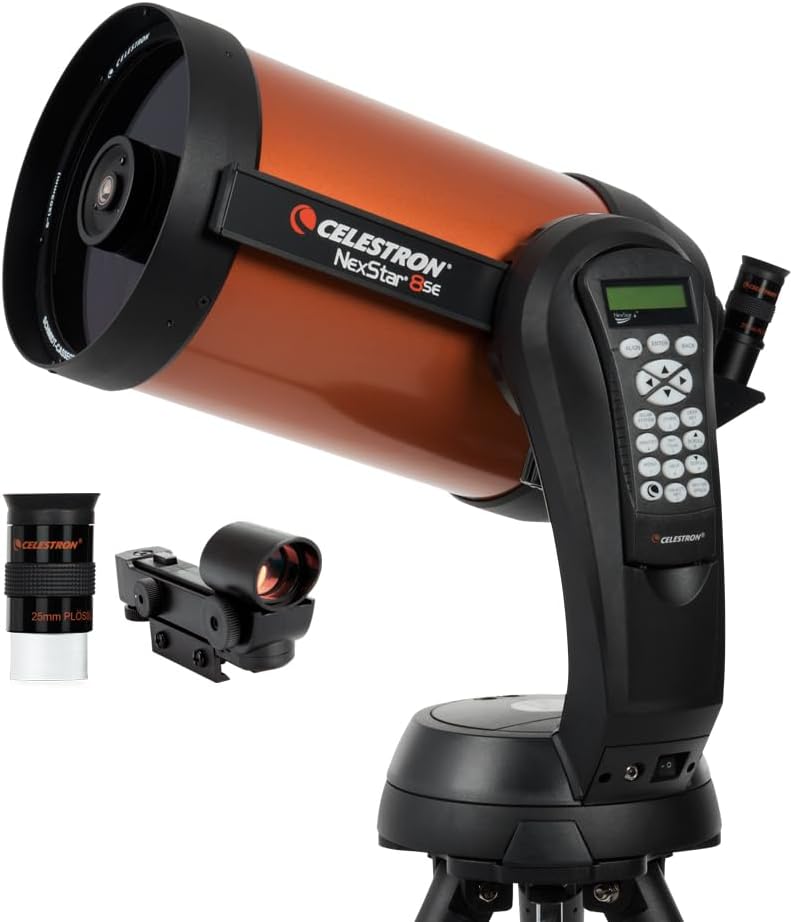
Celestron NexStar 8SE — Visual Companion for Cabin Setups
For Arctic basecamps where you want a separate visual scope to entertain guests or chase the Moon while the 103APO chews through a 6-hour Ha integration, the NexStar 8SE is the standard pick. The SkyAlign GoTo finds targets in under three minutes even when Polaris is awkwardly high, and the 8-inch SCT throws bright, contrasty views of the winter Moon riding low through clear Arctic air. It does need a 45-minute thermal soak before optics settle, so bring it outside when you start your imaging routine. Check current price on Amazon.
Celestron NexStar 6SE — Travel Visual for Field Imagers
If your Arctic imaging happens from remote cabins or snowmobile-accessed dark sites, the smaller NexStar 6SE is dramatically easier to transport than the 8SE while still delivering the GoTo convenience that matters when fingers are inside three layers of gloves. It cools down faster, draws less power from cold batteries, and shares enough accessories with the 8SE that gear consolidation is easy. As a visual sidekick to the 103APO imaging rig, it's the practical choice. Check current price on Amazon.
What the 103APO Sees During Polar Night
The astronomical advantage of imaging above the Arctic Circle in 2026 is that the Sun stays at or below −18° for weeks at a time, giving you 18–22 hour windows of true astronomical darkness. The trade-off is that southern targets transit low. The 103APO's wide field is ideal here: M42, the Horsehead, and the Flame fit comfortably in one frame on APS-C, and circumpolar targets like M81/M82, NGC 2403, IC 342, and the entire Heart-and-Soul complex stay above 30° all night.
Aurora is the other obvious target. The 103APO is too narrow for typical full-curtain shots — you want a 14–24mm lens for those — but for capturing the texture of corona overhead with a Sony A7S-class body running at native focal length, the triplet's flat field means stars stay round to the edges even during 5-second exposures during active substorms. For long-form aurora chasing, see our piece on running a telescope rig alongside aurora cameras.
Filters, Cameras, and Software for the 103APO
The 103APO's matched 0.75x reducer/flattener brings the system to f/5.1 with a 44mm illuminated circle — full-frame clean. For narrowband, Antlia 3nm or Chroma 3nm filters at 36mm round are the common premium pick; Astronomik 6nm is the budget-respectable option. Cooled CMOS cameras like the ZWO ASI2600MM Pro or QHY268M run cleanly at −25 °C set point even when ambient is −35 °C, which means you barely need TEC duty cycle — extending camera life and saving wattage.
NINA remains the dominant capture platform for Arctic imagers in 2026, with its sequencer reliably handling meridian flips, automated focus runs, and rotation between filters across multi-night plans. Pair it with PHD2 for guiding through a 50mm guidescope; the 103APO's stiff tube and locking focuser make differential flexure a non-issue. For deeper workflow notes, see our review of capture software for sub-zero astrophotography.
Practical Setup Tips for Polar Night Sessions
The Askar 103APO for Arctic Circle imagers rewards methodical setup. Bring the scope outside at least 60 minutes before first exposure to equalize. Cap both ends until you're ready to image — this prevents internal convection cells from forming during cool-down. Use cable wraps that stay flexible below −30 °C (silicone-jacketed cables are worth the price); standard PVC turns into rebar. Run heater bands at minimum continuous duty rather than thermostatic cycling, which wastes power on cold restarts.
For storage between sessions, never bring the OTA directly from −30 °C into a warm cabin — condensation will form inside the dew shield and potentially on the objective. Either leave the scope outside under a thermal cover or use a sealed Pelican case with desiccant and let it warm slowly over 6+ hours. The 103APO's coatings will survive years of this routine if you respect the thermal cycle.
Frequently Asked Questions
Is the Askar 103APO good enough for full-frame astrophotography in Arctic conditions?
Yes. With the matched 0.75x reducer, the 103APO delivers a 44mm flat illuminated circle that fully covers 35mm sensors like those in the Sony A7R, ZWO ASI6200, or QHY600. Edge stars stay tight even at −35 °C because the FPL-55 triplet's spacing was designed to minimize thermal differential. Most Arctic imagers see no measurable field curvature change between summer indoor testing and February field use.
How does the Askar 103APO compare to the Takahashi FSQ-106 for polar night imaging?
The FSQ-106 remains the gold standard for petzval astrographs, but it costs roughly four times the 103APO. In terms of star shapes, color correction, and cold-weather stability, the Askar gets you about 90% of the Takahashi performance for the price of one premium camera. For high-latitude imagers who treat gear hard and risk frost damage every winter, the 103APO is the more rational choice.
What mount handles the Askar 103APO best for sub-zero imaging?
The ZWO AM5 strain-wave mount is the current Arctic favorite because it has no counterweight motor draw, runs efficiently from a 12V LiFePO4 supply, and tolerates cold lubrication better than worm-gear designs. The iOptron CEM40 and Sky-Watcher EQ6-R Pro are also proven down to −30 °C, but plan on heated battery boxes for either.
Can I run the Askar 103APO without a guide scope in polar regions?
For sub-2-minute exposures with a well-aligned strain-wave mount, unguided imaging works surprisingly well at the 103APO's 706mm focal length. For longer subs or narrowband at 5-minute and 10-minute exposures, you'll still want a guide scope and PHD2. Above 70° latitude, periodic error correction needs more attention because tracking rates near the celestial pole are unforgiving of any drift.
Does the Askar 103APO need a dew heater above the Arctic Circle?
Yes, despite the dry Arctic air. Frost still forms on cold optical surfaces when sky temperature drops below ambient, which happens almost continuously under clear winter skies. A 30% continuous duty heater band on the objective end is sufficient. The long built-in dew shield helps but is not enough on its own.
Is the 103APO too long for sled hauling to remote dark sites?
The OTA is roughly 22 inches long with the dew shield retracted, weighing around 5.8kg. That fits comfortably in a Pelican 1610 or similar hard case alongside a strain-wave mount head. Sled hauling with a Snowdog or Ski-Doo behind a snowmobile is routine for Yukon and Lapland imagers — the bigger logistical challenge is power, not the optical tube.
What's the warm-up procedure when bringing the Askar 103APO indoors?
Seal the OTA in a dry case with desiccant before transitioning indoors. Let it warm passively for at least six hours before opening the case. Never expose a cold objective to warm humid cabin air directly — condensation on optical surfaces is the leading cause of coating damage in Arctic refractors over multi-year use.
Key Takeaways
- Choosing the right askar 103apo for arctic circle imagers means matching capacity and output ports to your actual devices
- Always check actual watt-hours (Wh), not just watts — runtime depends on Wh, not peak output
- Also covers: askar 103apo polar night astrophotography
- Also covers: cold weather refractor performance
- Also covers: askar 103apo aurora imaging
- Compare price-per-Wh across models to find the best value for your budget