Pier-mounting the Sky-Watcher Quattro 200P in an earthquake zone backyard means combining a stiff steel pier (typically 6-inch schedule-40 or heavier), an oversized reinforced concrete footing isolated from the house slab, a Hilti-style epoxy anchor system rated for seismic shear, and a vibration-damping interface plate between the pier top and the EQ6-class mount. For a Sky-Watcher Quattro 200P earthquake zone pier installation in 2026, the priorities are mass below grade, isolation from structural rebound, and a polar-aligned head you can re-verify quickly after any tremor above magnitude 3.5. Done right, your f/4 imaging Newtonian stays guided to sub-arcsecond accuracy between events and survives the small shakes without re-collimation drama.
Why the Quattro 200P Needs a Special Pier Plan in Shake Country
The Quattro 200P is a fast (f/4) 8-inch imaging Newtonian weighing roughly 10 kg with rings and dovetail, riding on a long 800 mm tube that acts like a sail and a lever arm. In seismic backyards from coastal California to the Pacific Northwest, Japan, Chile, New Zealand, Turkey, and the Mediterranean, a standard tripod transmits every micro-tremor straight into the optical train, ruining sub-frames and sometimes loosening collimation screws over months of cumulative shaking. A properly designed Sky-Watcher Quattro 200P earthquake zone pier moves the dominant resonant frequency of the system well above the 1–6 Hz band where most damaging seismic energy concentrates, while distributing rare large-event loads into soil rather than into your optical tube assembly.
You are solving three problems at once: chronic micro-vibration from distant traffic and minor quakes, occasional moderate shaking that could rack the mount head, and the rare catastrophic event where you simply want the OTA to survive. The pier handles the first two; insurance and tie-downs handle the third.
Footing Design: The Part Nobody Sees
Local building codes vary, but a defensible spec for a backyard astronomy pier in Seismic Design Categories D, E, or F is a cube of 4000-psi reinforced concrete roughly 36×36×36 inches, tied with #4 rebar on 8-inch centers in both directions, isolated from any adjacent house slab by at least 12 inches of compacted gravel or a foam expansion joint. Bury the top of the footing 4–6 inches below grade so frost heave and surface runoff do not progressively tilt the pier base.
Anchor the steel pier with four to six 5/8-inch stainless threaded rods set in Hilti HIT-RE 500 V3 or equivalent epoxy, with embedment depth of at least 7 inches. This anchor pattern survives the cyclic loading of repeated minor quakes far better than wedge anchors, which can walk loose over a decade of vibration. If you live in a liquefaction-prone zone or on poorly compacted fill, hire a structural engineer; no internet article substitutes for a site-specific geotechnical opinion.
Choosing the Pier Tube
Six-inch schedule-40 black steel pipe at 48–52 inches above grade is the sweet spot for the Quattro 200P on an EQ6-R Pro or HEQ5. Eight-inch is overkill for the optical load but pays off in earthquake zones because the larger cross-section dramatically raises the first bending mode. Welded internal gussets at the top adapter plate prevent the dreaded "pier ring" that sounds beautiful but ruins exposures longer than 60 seconds.
Cap the pier with a 3/4-inch steel adapter plate machined to your specific Sky-Watcher head bolt pattern, with a 1/4-inch Sorbothane Duro-70 pad sandwiched between plate and mount base. Sorbothane is the secret weapon of seismic backyard observatories: it damps the high-frequency ringing that survives the concrete’s mass without compromising polar alignment stability.
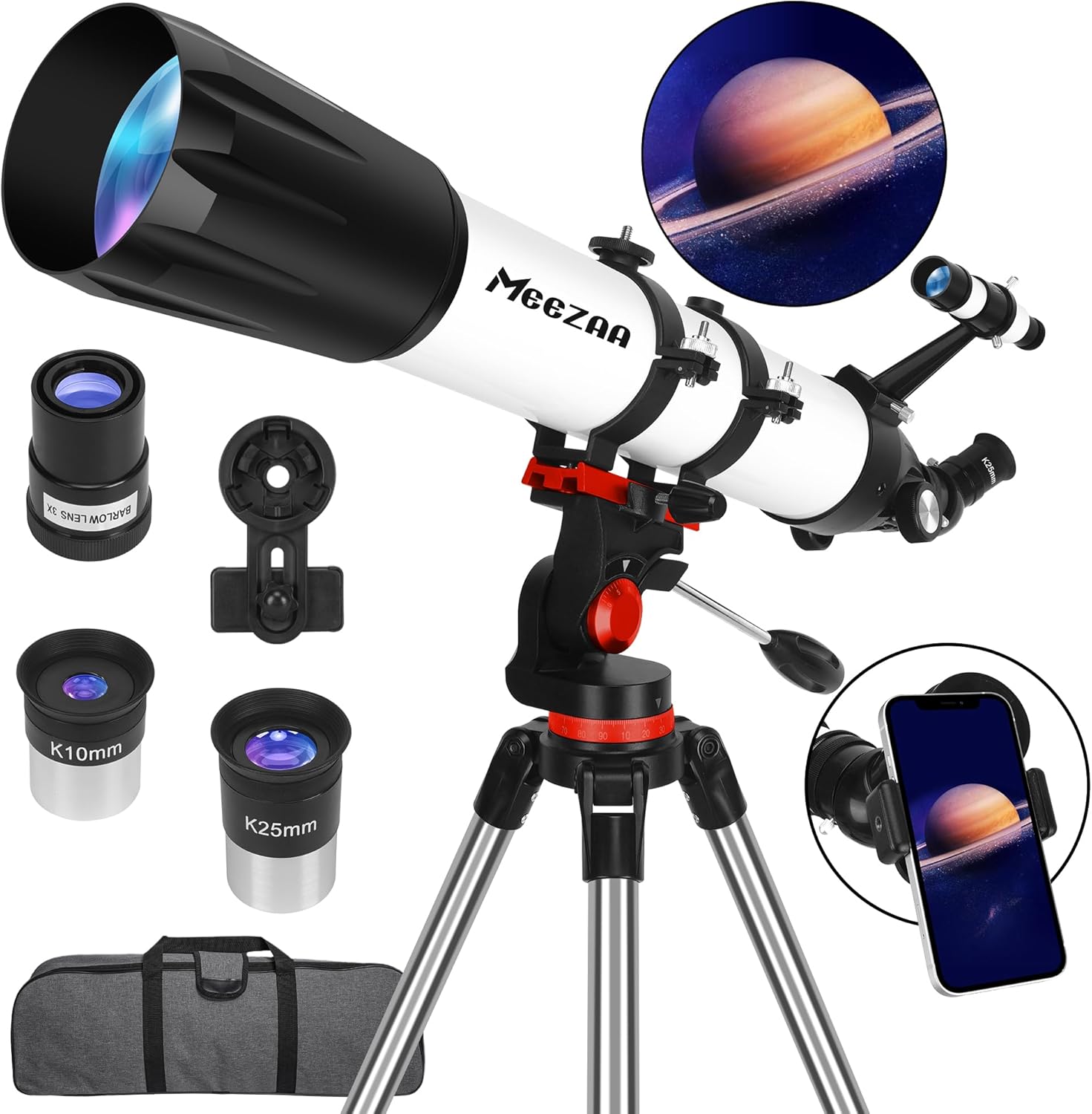
Alternative Telescopes Some Owners Choose for Seismic Backyards
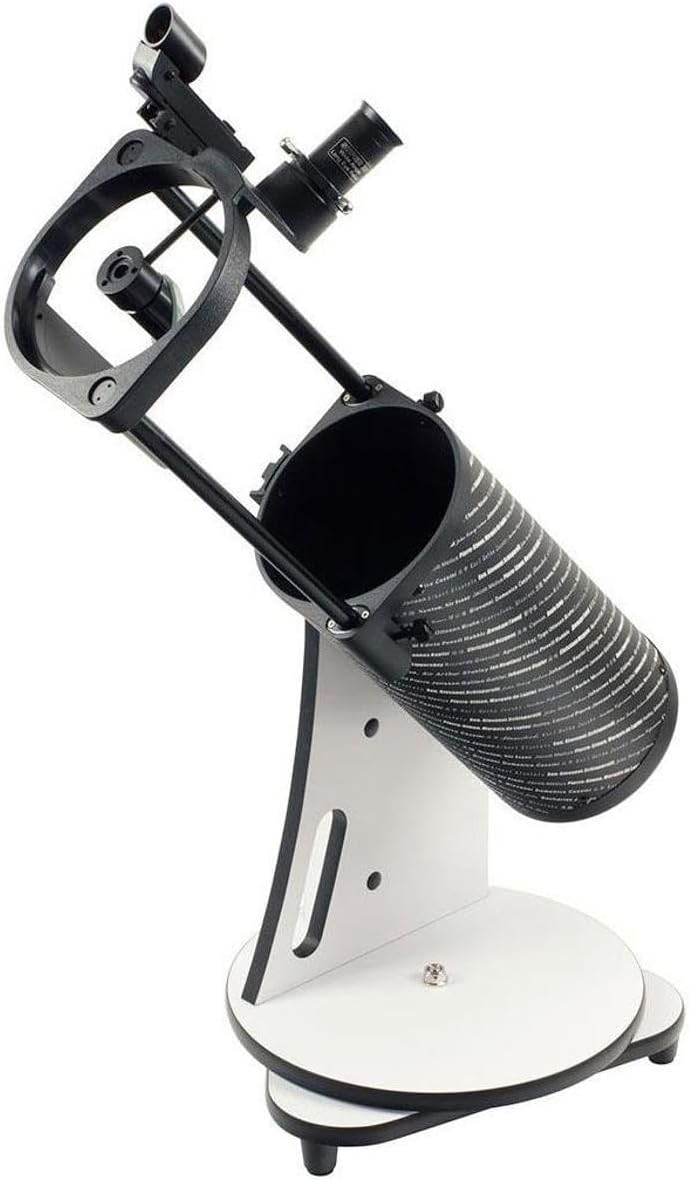
Not every astrophotographer wants an 800 mm Newtonian on a permanent pier in shake country. The long tube acts as a wind sail and a tuning fork, and the secondary mirror collimation drifts with vibration cycles. Many observers in earthquake-prone regions pair their Quattro 200P with a more compact, lower-moment-arm SCT for the nights when winds gust above 15 mph or when seismic activity is elevated. Below are three real options widely available on Amazon in 2026, picked because their short, fork-mounted geometry tolerates a stiff column far better than long open-tube reflectors.
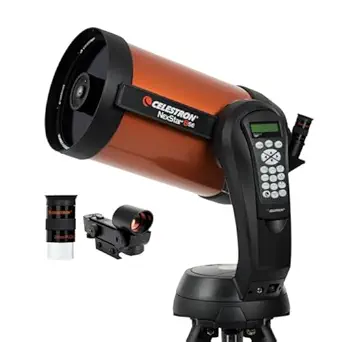
Celestron NexStar 8SE — The Companion SCT for Pier-Built Backyards
The NexStar 8SE pairs an 8-inch Schmidt-Cassegrain with a single-fork GoTo mount. On a dedicated seismic pier (or even a heavy tripod bolted to your concrete footing as a secondary location), it shrugs off light shaking that would ruin a Quattro 200P sub. Owners in earthquake zones report it surviving M4 events without collimation loss. Check current pricing and availability at Celestron NexStar 8SE Computerized Telescope – 8-Inch Schmid.
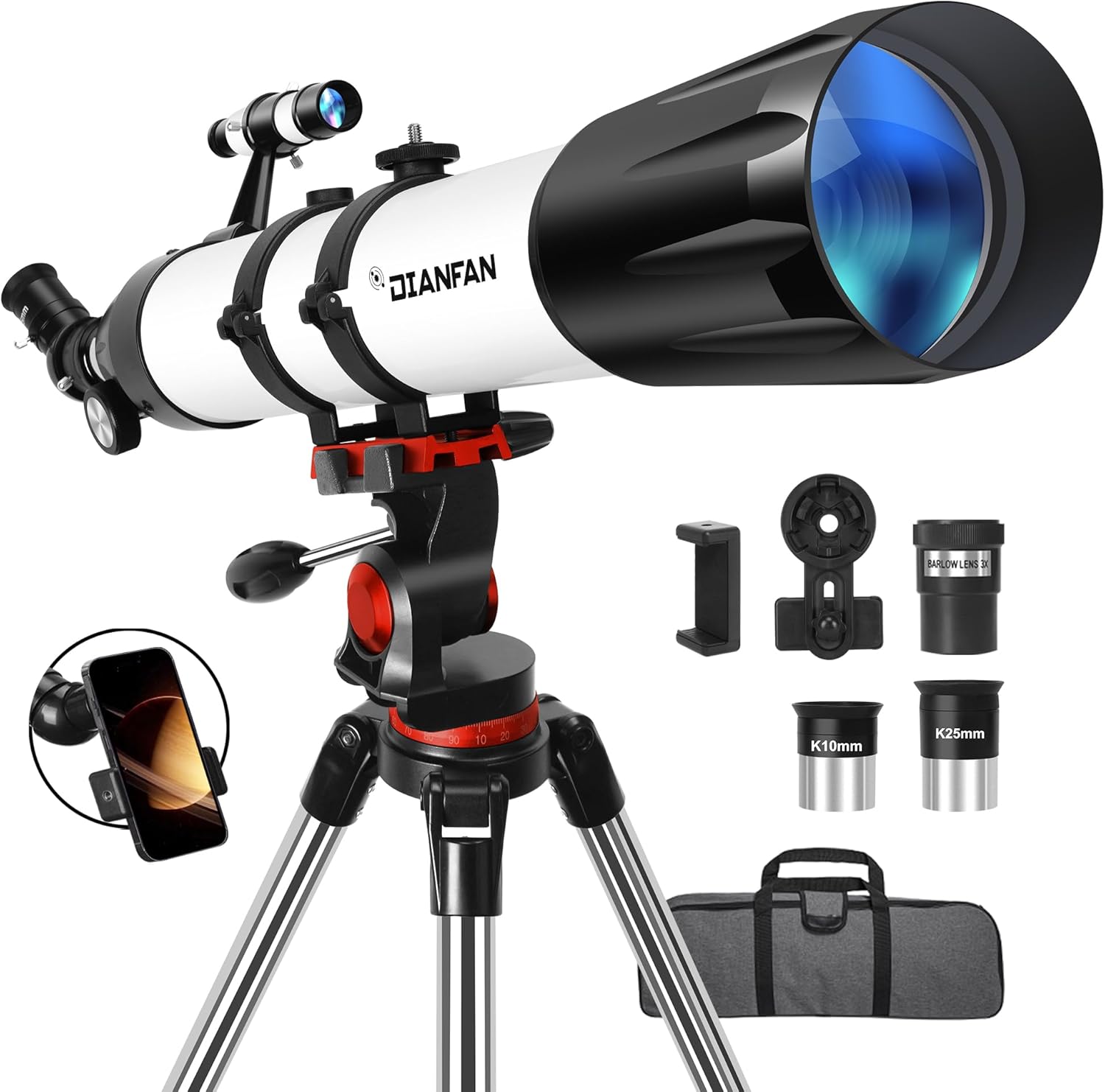
Celestron NexStar 8SE with NexYZ DX Smartphone Adapter Kit
If you want the same seismically friendly 8-inch SCT plus a smartphone adapter for documenting earthquake-night observing logs and imaging the Moon when imaging through the Quattro is impractical, the bundled kit is a sensible buy. The AC adapter eliminates battery failures during aftershock-disrupted sessions when you cannot easily walk to the pier. See the bundle at View on Amazon.
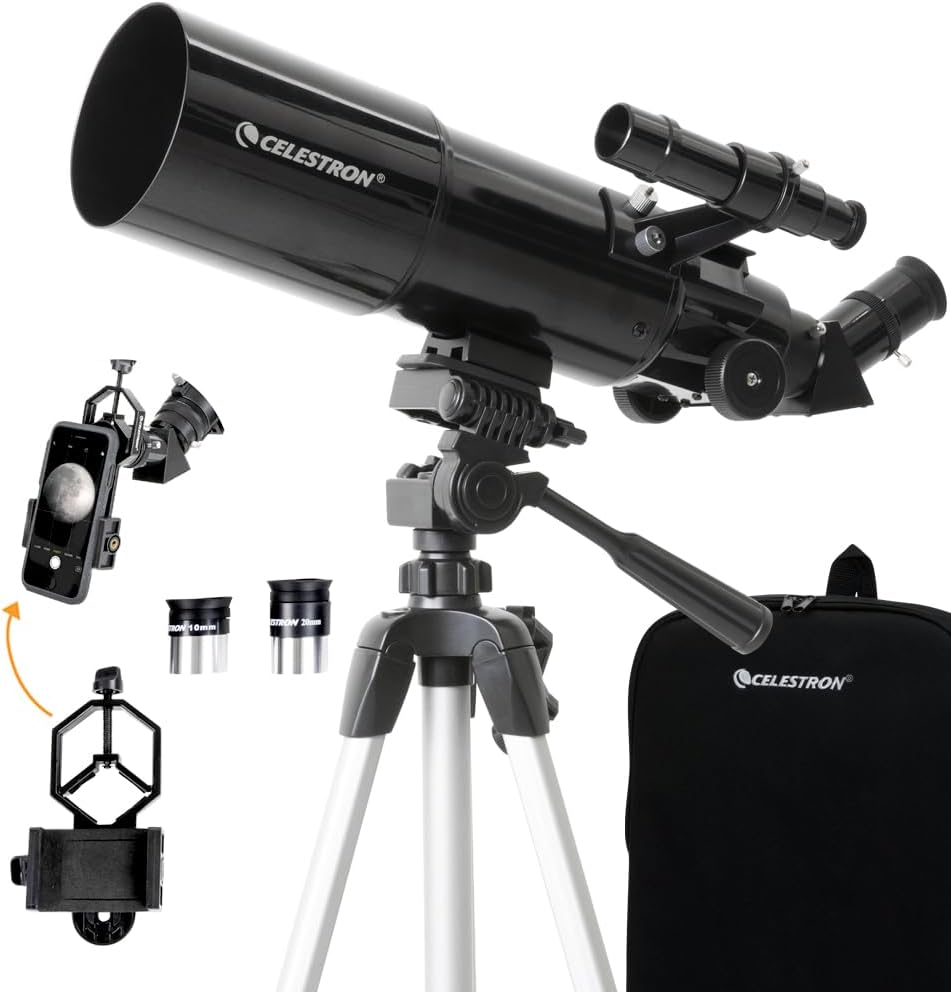
Celestron NexStar 6SE — Lighter Companion for Smaller Piers
For backyards where local code or soil conditions limit pier footing size, the 6SE drops total system mass by about 30 percent and reduces wind-sail moment significantly. It is a frequent recommendation for renters in seismic zones who want a less invasive permanent setup that still benefits from the pier-mounted stability they built for their Quattro 200P. Available at View on Amazon.
Celestron NexStar 8SE with 1.25" Eyepiece and Filter Kit
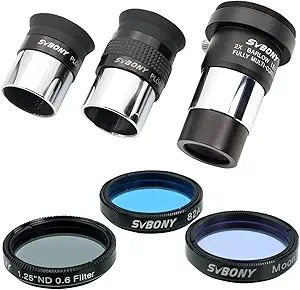
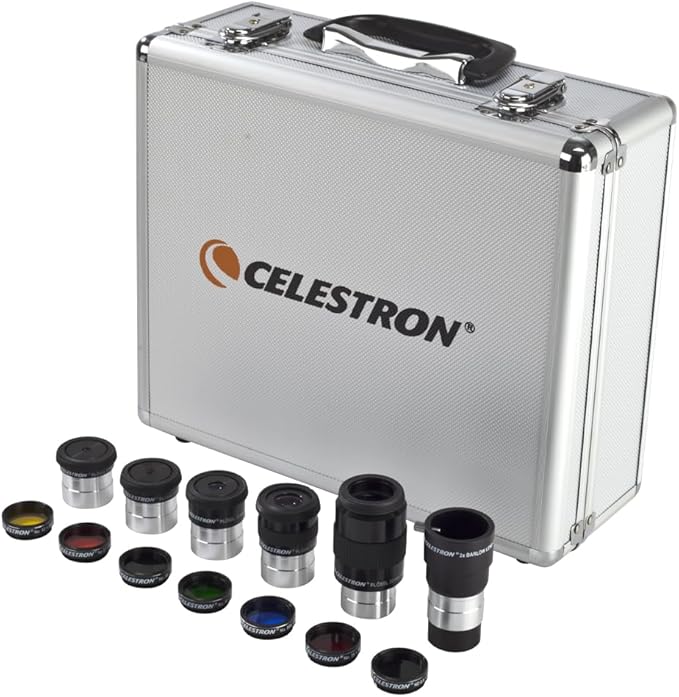
For visual observers building a dual-pier observatory — one column for the Quattro 200P imaging rig and a second column for an eyepiece-based grab-and-go scope — the eyepiece and filter kit edition gets you started immediately without piecing together accessories. The filter kit includes a moon filter that pairs well with the seismically isolated viewing experience. Pricing and stock at View on Amazon.
Comparison Table: Seismic-Backyard Companion Telescopes
| Model | Aperture | Tube Length | System Weight | Wind/Seismic Profile | Best Use Beside Quattro 200P |
|---|---|---|---|---|---|
| NexStar 8SE | 8" | ~17" | ~33 lb | Low — short SCT, fork mount | Backup imaging, visual on shake nights |
| NexStar 8SE + NexYZ DX Kit | 8" | ~17" | ~34 lb | Low | Documentation, lunar/planetary phone imaging |
| NexStar 6SE | 6" | ~16" | ~30 lb | Very low — smallest sail area | Compact pier, rental properties |
| NexStar 8SE + EP/Filter Kit | 8" | ~17" | ~34 lb | Low | Dual-pier visual station |
| Sky-Watcher Quattro 200P (subject) | 8" | ~32" | ~22 lb OTA | High — long tube, open OTA | Primary imaging rig requiring stiffest pier |
Tie-Down and Tarp Strategy
Permanent piers in seismic backyards benefit from a quick-release tie-down system using two 1/2-inch nylon straps anchored to the concrete footing and looped over the OTA rings during off-hours. This prevents the Quattro 200P from pendulum-swinging on its dec axis during an event. Pair this with a marine-grade telescope cover rated to 60 mph winds; you will lose more equipment to wind events than to actual earthquakes statistically, but the same cover protects against falling debris in a moderate shake.
For more on how to balance imaging rigs against unexpected loads, see our companion guide on EQ6-R Pro counterweight shaft extensions and the related write-up on permanent pier concrete footing design.
After-Quake Verification Routine
Following any felt event, run this 10-minute checklist before your next imaging session: visually inspect the pier base for cracks radiating from the anchor rods, torque-check the four pier-to-plate bolts to 35 ft-lb, re-verify polar alignment with PHD2 drift align or SharpCap, run a quick collimation check with a laser collimator on the Quattro’s primary, and shoot a 5-minute unguided test exposure to confirm RMS error stays under 1.5 arcseconds. If anything fails, the pier likely needs professional re-grouting at the base, which is a several-hundred-dollar fix rather than a multi-thousand-dollar mount replacement.
Insurance and Documentation
Photograph your installation with timestamps and store images in cloud backup. Most homeowner policies will cover a permanently installed pier-mounted telescope under "affixed equipment" riders, but only with documentation. Get a rider specifically naming the Quattro 200P, the mount, and the pier hardware; standard scheduled-personal-property endorsements often exclude items considered part of an outdoor structure.
Frequently Asked Questions
How deep should the concrete footing be for a Sky-Watcher Quattro 200P pier in California?
For Seismic Design Categories D and above in California, plan on a minimum 36-inch-deep reinforced footing measuring at least 30×30 inches in plan, with #4 rebar on 8-inch centers. Below the frost line is irrelevant in most of California, but liquefaction-zone soils may require deeper engineered piles. Always pull a permit if your municipality requires one for permanent yard structures.
Can I use an existing concrete patio as the footing for my Quattro 200P pier?
No. Patio slabs are typically 4 inches thick with minimal rebar and are coupled to the house structurally. Mounting a pier to them transmits every footstep, door slam, and seismic event directly into your imaging train. Always pour an isolated footing separated from the slab by at least 12 inches of gravel and a foam expansion joint.
What is the best vibration-damping material for the top plate of a seismic-zone pier?
Sorbothane Duro-70 in 1/4-inch thickness is the consensus choice among 2026 backyard observers. It damps the 5–50 Hz band where pier-ring resonance lives without compromising the stiffness needed for guided imaging. Sorbothane Duro-50 is too soft and allows the mount to creep under sidereal tracking loads.
Will a Sky-Watcher Quattro 200P earthquake zone pier survive a magnitude 6 event?
The pier itself, properly designed with epoxy anchors and reinforced footing, will survive. The OTA and mount head may be damaged by being thrown around. Use the tie-down strategy described above, and consider a quick-release dovetail clamp so you can remove the OTA and store it indoors when seismic activity is elevated, such as during aftershock sequences.
Does pier height affect earthquake vulnerability for an imaging Newtonian?
Yes. Taller piers have lower first-bending-mode frequencies and behave more like inverted pendulums. Keep the pier at the minimum height that lets the Quattro 200P clear the mount in all orientations — typically 48–52 inches above grade. Going taller for cable management or comfort is a mistake in seismic zones.
Should I use a roll-off roof observatory or a dome over my pier-mounted Quattro?
Roll-off roof structures are far safer in earthquakes because they distribute loads through a simple frame rather than concentrating mass overhead. Domes have killed more telescopes in major California quakes than the quakes themselves through falling shutter assemblies. If you must have a dome, specify seismic bracing for the ring track.
How often should I re-verify the pier anchor torque after small earthquakes?
Annually under normal conditions, and after any felt event above approximately magnitude 4. Use a calibrated torque wrench, not a guess. Cyclic loading from minor quakes can loosen wedge anchors significantly over a decade; this is the primary reason to specify chemical epoxy anchors instead during initial construction.
Key Takeaways
- Choosing the right Sky-Watcher Quattro 200P earthquake zone pier means matching capacity and output ports to your actual devices
- Always check actual watt-hours (Wh), not just watts — runtime depends on Wh, not peak output
- Also covers: Quattro 200P seismic anchoring
- Also covers: California pier mount astrophotography
- Also covers: earthquake safe telescope pier design
- Compare price-per-Wh across models to find the best value for your budget