The Askar FRA300 Pro for Pacific Northwest imagers fighting marine layer fog is the rare imaging refractor that turns the region's most frustrating weather problem into an actual workflow advantage. Its 60mm aperture, f/5 quintuplet flat-field design captures wide-field targets quickly enough to slip between Seattle's moisture pulses, and the short 300mm focal length forgives the seeing turbulence rolling inland from Puget Sound. In 2026, with marine layer events lasting deeper into the night thanks to warmer offshore waters, the FRA300 Pro has become the default grab-and-go astrograph for imagers from Bellingham to Eugene.
Why marine layer fog is the defining challenge west of the Cascades
If you image from west of the Cascades, marine layer is not "bad weather" — it is the climate. From May through September, advection fog forms when warm air from the interior valleys flows over the cold California Current, condensing into a stratus deck that rolls inland after sunset. Imagers in Portland, Tacoma, Vancouver BC, Olympia, and the Willamette Valley typically lose 30–40% of their summer imaging windows to this pattern. The marine layer rarely arrives uniformly — it pulses, thins, and lifts in pockets, opening 20–90 minute clear windows separated by hours of haze.
A traditional 1500mm SCT astrograph is the wrong tool for this rhythm. By the time you finish polar alignment, plate-solve, and let your dither settle, your window has already closed. The Askar FRA300 Pro for Pacific Northwest imagers collapses the entire setup cycle into something you can execute between fog bands. It is a quintuplet petzval design from Sharpstar/Askar, weighing roughly 5.7 pounds with the built-in flattener, and it integrates seamlessly with the strain-wave harmonic mounts most PNW imagers have migrated to for portable operation.
What makes the FRA300 Pro right for this specific climate
Four characteristics matter for the wet-coast use case, and they are not the same characteristics that get hyped on YouTube reviews shot under New Mexico skies.
Speed. The f/5 focal ratio gathers signal fast — a 60-second sub on IC 1805 yields the same usable data an f/7 doublet would need 120 seconds for. When fog is rolling in from the west and you have 25 minutes of clear sky, that 2× speed advantage is the entire difference between a usable dataset and noise. PNW imagers who have switched from an Esprit 100 or a Stellarvue 80 report nearly doubling their per-session integration time without changing anything else.
Focal length tolerance. The 300mm focal length covers a 5-degree field with a full-frame sensor, which means autoguiding tolerance is forgiving. Coastal humidity routinely degrades guiding RMS to 1.2–1.6 arcseconds at sites near sea level. At 300mm, that's still under one pixel on most modern cooled CMOS sensors with 3.76µm pixels.
Sealed optical train. The internal flattener eliminates the need for a separate corrector spacer chain that fogs up first. PNW imagers who have battled dew on extension tubes know this matters — every extra optical surface is another condensation point at 95% relative humidity. The FRA300 Pro's M68 backfocus interface is short, well-sealed, and easy to wrap with a single dew strap.
Compactness. Under 13 inches long retracted, the entire imaging train fits inside a Pelican 1510 you can stage on your porch and deploy in under four minutes when a sucker hole opens. Comparable triplets in the 80–90mm class need a wheeled hardcase and a setup ritual that simply does not fit the marine layer rhythm.
Companion visual scopes for hazy nights
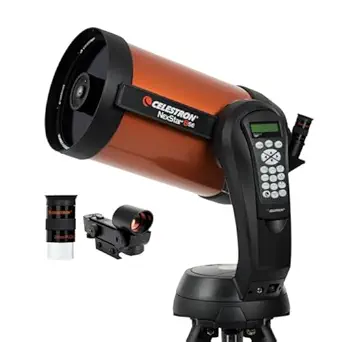
Many PNW astronomers run a two-scope workflow — the FRA300 Pro for unattended imaging through clear windows, and a larger Schmidt-Cassegrain for visual observing on partially hazy nights when the Moon, Jupiter, and Saturn punch through the marine layer even when deep-sky imaging is impossible. The classic American backyard pairing for this is a Celestron NexStar SCT on a separate alt-az tripod, ready to grab when you give up on the imaging session but still want to see something through the eyepiece.
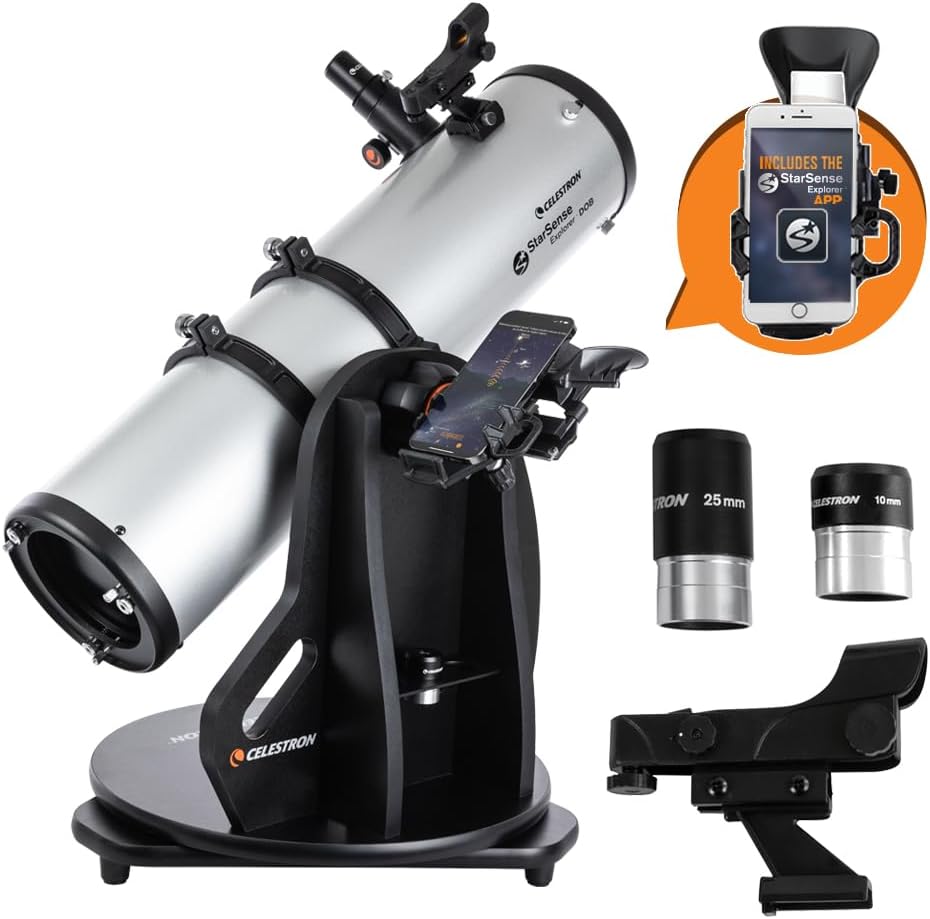
Comparison: dedicated imaging refractor vs companion visual SCTs
| Feature | Askar FRA300 Pro | Celestron NexStar 8SE | Celestron NexStar 6SE |
|---|---|---|---|
| Aperture | 60mm | 203mm (8") | 150mm (6") |
| Focal length | 300mm | 2032mm | 1500mm |
| Focal ratio | f/5 | f/10 | f/10 |
| Primary use | Wide-field imaging | Lunar / planetary visual | Lunar / planetary visual |
| Setup time (cold) | ~4 min | ~15 min (SkyAlign) | ~12 min (SkyAlign) |
| Marine layer suitability | Excellent for imaging | Hazy-night visual only | Hazy-night visual only |
| Weight (OTA + arm) | 5.7 lb | 24 lb | 21 lb |
Recommended pairings for a PNW imaging kit in 2026
Celestron NexStar 8SE — the partial-clearing visual rescue scope
When marine layer thickens to the point that 60-minute subs are impossible, you can still salvage the night with a quick visual session on bright targets. The Celestron NexStar 8SE has earned its spot as the most popular American backyard SCT for a reason — the SkyAlign GoTo system finds Jupiter, Saturn, the Moon, and the brightest Messier targets without polar alignment, and 8 inches of aperture cuts through low-altitude haze well enough to show Cassini's Division on nights when imaging IC 1805 is out of the question. PNW imagers who have lost an imaging session to fog appreciate having a no-setup-ritual visual option ready to roll out the back door. Check the Celestron NexStar 8SE on Amazon.
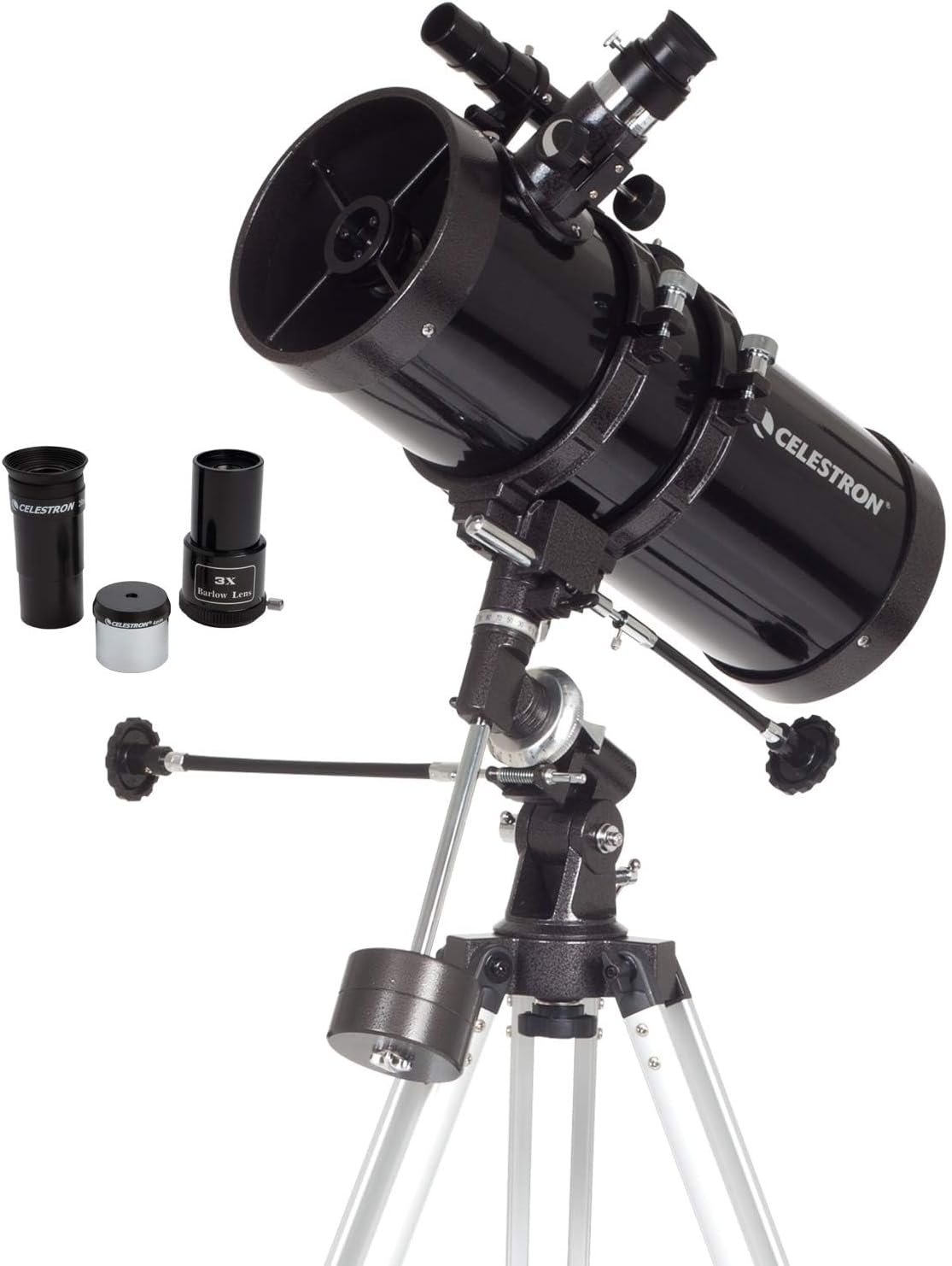
Celestron NexStar 6SE — the lighter, faster-to-deploy backup
If your storage space or your back is tight, the 6SE delivers most of the same visual experience in a package light enough to carry one-handed from a covered porch to a tripod set up in the driveway. The 150mm aperture still resolves planetary detail and lunar terminator features through marine layer haze, and the shorter cool-down time (the bane of larger SCTs in damp climates) means you can actually use it inside a 30-minute clearing window. Pair it with the FRA300 Pro and you have a complete tactical kit for any condition west of the Cascades. Check the Celestron NexStar 6SE on Amazon.
Workflow tips for marine layer imaging nights
The Askar FRA300 Pro for Pacific Northwest imagers only delivers its full advantage if you adapt your session habits to the regional reality. A few practices that veteran imagers in the Salish Sea region have converged on:
Pre-stage everything indoors. Keep the imaging train assembled, balanced, and stored in a heated room. When NOAA's marine forecast suggests a 9 PM clearing, you should be able to walk outside, set on a permanent pier or a pre-marked tripod position, and be slewing within five minutes. Cold-soak time for a small refractor is under 10 minutes, versus 45+ for an 8-inch SCT.
Use a strain-wave mount. Harmonic-drive mounts like the ZWO AM5, iOptron HEM27, or Pegasus NYX-101 eliminate counterweight setup and reduce deployment friction. The FRA300 Pro's low weight means even the smallest strain-wave mount carries it with margin for a guide scope and a cooled camera.
Plate-solve, don't polar-align nightly. If you can leave your mount on a permanent pier under a Telegizmos cover, your polar alignment survives weeks. Plate-solving via NINA or Ekos gets you on target in under two minutes regardless of mount position. See our guide to permanent pier setups in the Pacific Northwest for waterproofing approaches that survive coastal winters.
Aggressive dew management. Wrap a dew heater strap on the objective end and another on the camera body. The FRA300 Pro's compact size means a single Pegasus Pocket Powerbox can power both heaters, the cooler, and the mount from one cable run.
Short-sub strategy. Configure your sequencer for 60–90 second subs rather than 300-second subs. When fog rolls in mid-frame, you lose one short sub instead of five minutes of integration. The FRA300 Pro's speed makes short subs viable without sacrificing signal-to-noise.
Plan targets by altitude, not by season. Marine layer is thinnest at altitudes above 40 degrees. Prioritize targets transiting high, even if they're "out of season" — Cygnus targets in October, Auriga in February. See our breakdown of high-altitude DSO targets for Cascadia imagers for a month-by-month list optimized for marine layer climates.
How the FRA300 Pro compares to other small refractors in PNW conditions
The most common cross-shopping is against the William Optics RedCat 51, the Askar FMA180 Pro, and the Sharpstar 76EDPH. Each has tradeoffs for the wet-coast use case. The RedCat 51 is lighter but its 250mm focal length is almost too wide for many targets and its native config requires a separate flattener for larger sensors. The FMA180 is faster but smaller aperture means longer integration on faint nebulae. The 76EDPH is a doublet — beautiful stars but requires a separate flattener that adds another fog-prone joint. The FRA300 Pro hits the sweet spot for the Askar FRA300 Pro for Pacific Northwest imagers use case specifically because it integrates the flattener and lands at a focal length that matches both the most popular DSO targets and the realistic guiding tolerance you can achieve at sea level humidity. For a side-by-side spec breakdown see our small astrograph comparison for 2026.
Frequently Asked Questions
How does the Askar FRA300 Pro handle Bortle 6–7 light pollution from Seattle suburbs?
The fast f/5 focal ratio is actually an asset in light-polluted skies because it reaches sky-limited exposure faster — you spend less time accumulating gradient before moving on. Pair it with an L-eXtreme or Antlia ALP-T dual-band filter and Bortle 6 skies on the east side of Seattle become productive imaging targets. The flat field across full-frame keeps filter-induced halos symmetric, which calibrates out cleanly in PixInsight.
Can I use the FRA300 Pro on a star tracker like the Sky-Watcher Star Adventurer GTi?
Yes. At 5.7 pounds with camera and guide scope, the FRA300 Pro stays inside the GTi's 11-pound imaging payload spec. PNW imagers who travel to Mt. Rainier or the Methow Valley dark sites for new-moon weekends often pair it with the GTi specifically because the whole rig fits inside one airline carry-on backpack.
Does the marine layer ever fully clear in summer for imaging?
Yes, but unpredictably. The most reliable windows are 2 AM to 5 AM during the post-frontal northwesterly flow pattern that follows summer cold fronts, typically two to four times per month. You can also drive east of the Cascade crest (Ellensburg, Yakima, Wenatchee) for guaranteed dry skies — most Seattle imagers maintain a "dark site go bag" with the FRA300 Pro pre-staged for these escape sessions.
What guide scope works best with the FRA300 Pro at sea level?
A 30mm f/4 mini guide scope with an ASI220MM Mini or similar guide camera is plenty. At 300mm imaging focal length, you don't need an OAG — seeing-limited guiding precision is in the 1.2–1.6 arcsecond RMS range anyway, and a piggyback guide scope avoids the flexure debugging that off-axis guiding requires in humid air.
How long does it take to cool down compared to an SCT?
The FRA300 Pro reaches thermal equilibrium in 8–10 minutes from a 20°F temperature differential. A Celestron NexStar 8SE needs 45–60 minutes to fully cool. In a climate where your imaging window might only be 30 minutes long, this difference alone is reason enough to choose a refractor for primary imaging duty.
Will the FRA300 Pro work with my existing Celestron AVX mount?
Yes, easily. The AVX is rated for 30 pounds of imaging payload and the FRA300 Pro with camera, guider, and accessories runs about 11 pounds total. You'll have plenty of margin for autoguiding accuracy. The mount's worm-gear PEC can be trained to keep RMS under 1 arcsecond after a few hours of PHD2 logging.
Is the FRA300 Pro worth it over the original FRA300 (non-Pro)?
For PNW conditions, yes. The Pro version improved focuser stiffness (important under dew-strap load), upgraded the M68 backfocus interface for better full-frame illumination, and added a more robust tube-ring mounting pattern. The non-Pro had focuser slop that produced tilt under heavy filter-wheel + camera assemblies, which the Pro version corrected. For the Askar FRA300 Pro for Pacific Northwest imagers use case specifically, the focuser upgrade alone justifies the price delta because dew straps add ~200g of constant load the original focuser handled poorly.
Key Takeaways
- Choosing the right askar fra300 pro for pacific northwest imagers means matching capacity and output ports to your actual devices
- Always check actual watt-hours (Wh), not just watts — runtime depends on Wh, not peak output
- Also covers: fra300 pro coastal fog imaging
- Also covers: askar refractor for seattle astrophotography
- Also covers: fra300 marine layer workaround
- Compare price-per-Wh across models to find the best value for your budget