The iOptron SkyHunter mount for backpackers hiking the Pacific Crest Trail solves the impossible-seeming trade-off between tracked astrophotography and ultralight pack weight. Weighing roughly 2.7 pounds (mount head only) with an integrated polar scope, dual-mode equatorial/alt-azimuth operation, GPS, and a 6.6 lb payload ceiling, the SkyHunter delivers GoTo-class tracking inside a footprint that disappears into a frame-pack lid. For thru-hikers chasing dark-sky targets between Kennedy Meadows and Sonora Pass in 2026, it is the most credible answer to whether you can actually image deep-sky objects from a tent platform without hating your shoulders by mile 600.
Why the SkyHunter Fits the PCT Better Than Any Other GoTo Mount
The Pacific Crest Trail traverses some of the darkest legally accessible skies in the contiguous United States. The Sierra crest above 9,500 ft, the Goat Rocks Wilderness in Washington, and the volcanic plateaus of southern Oregon all sit in Bortle 1 or low Bortle 2 territory. The catch, of course, is that thru-hikers count every gram, resupply every 5-7 days, and sleep wherever the permit window allows. A traditional fork-mounted Schmidt-Cassegrain or a 27-pound HEQ5 is a non-starter the moment you shoulder a base weight under 15 lb.
When shopping for ioptron skyhunter mount for backpackers, it pays to compare specs, capacity, and real-world runtime before committing.
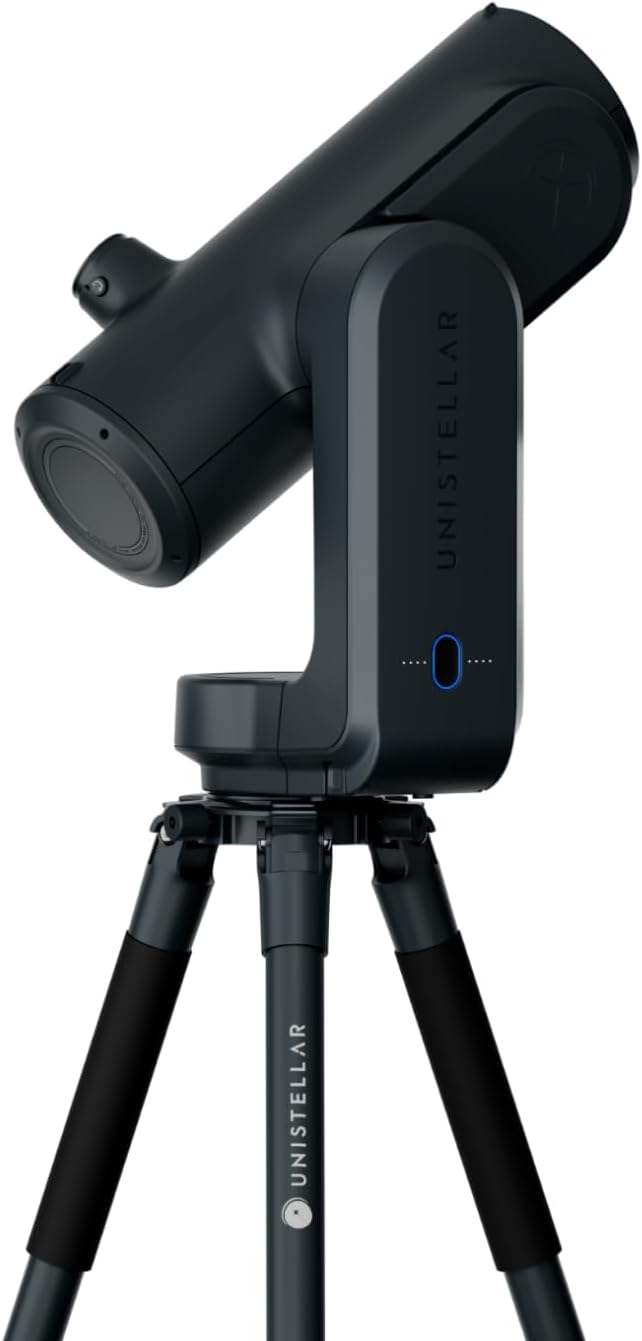
The ioptron skyhunter mount for backpackers is currently the only sub-3 lb commercial mount that combines true equatorial sidereal tracking, GoTo via Bluetooth handset or smartphone app, a built-in polar scope, integrated GPS, and a quick switch into alt-azimuth mode for daytime spotting or terrestrial birding on zero days. Star trackers like the Star Adventurer 2i are lighter, but they lack GoTo and require manual framing for every target, which is brutal at 11,000 ft in the cold.
Pack Weight Reality Check for 2026 Thru-Hikers
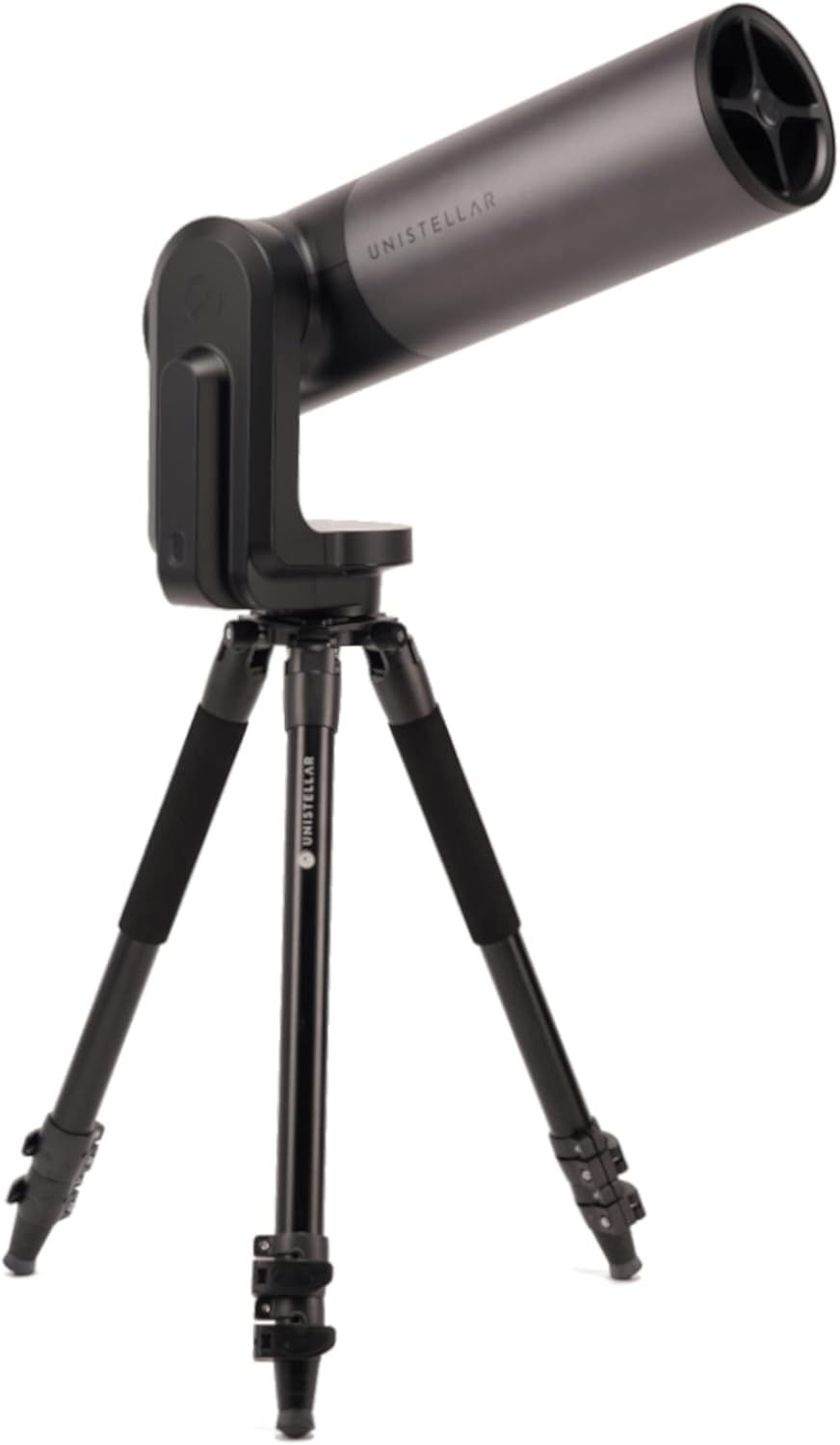
Here is the honest breakdown a PCT backpacker should expect to carry if they commit to the SkyHunter for the entire trail. Mount head sits at approximately 2.7 lb (1.2 kg). A compact carbon tripod such as the Leofoto LS-284CEX or a Sirui-T traveler adds roughly 3.0-3.2 lb. The aftermarket lightweight counterweight comes in at about 1.0 lb, though many backpackers DIY a counterweight from a Smartwater bottle filled with creek water and emptied before pack-up. Add a small payload like a 60mm refractor (William Optics Z61 at 3.2 lb) plus a cooled astro camera or unmodified mirrorless, and you are looking at a 12-14 lb astro kit including the mount system. That is non-trivial, but it is the lightest tracked-imaging rig currently buildable.
What Makes the SkyHunter Specifically a Backpacker's Mount
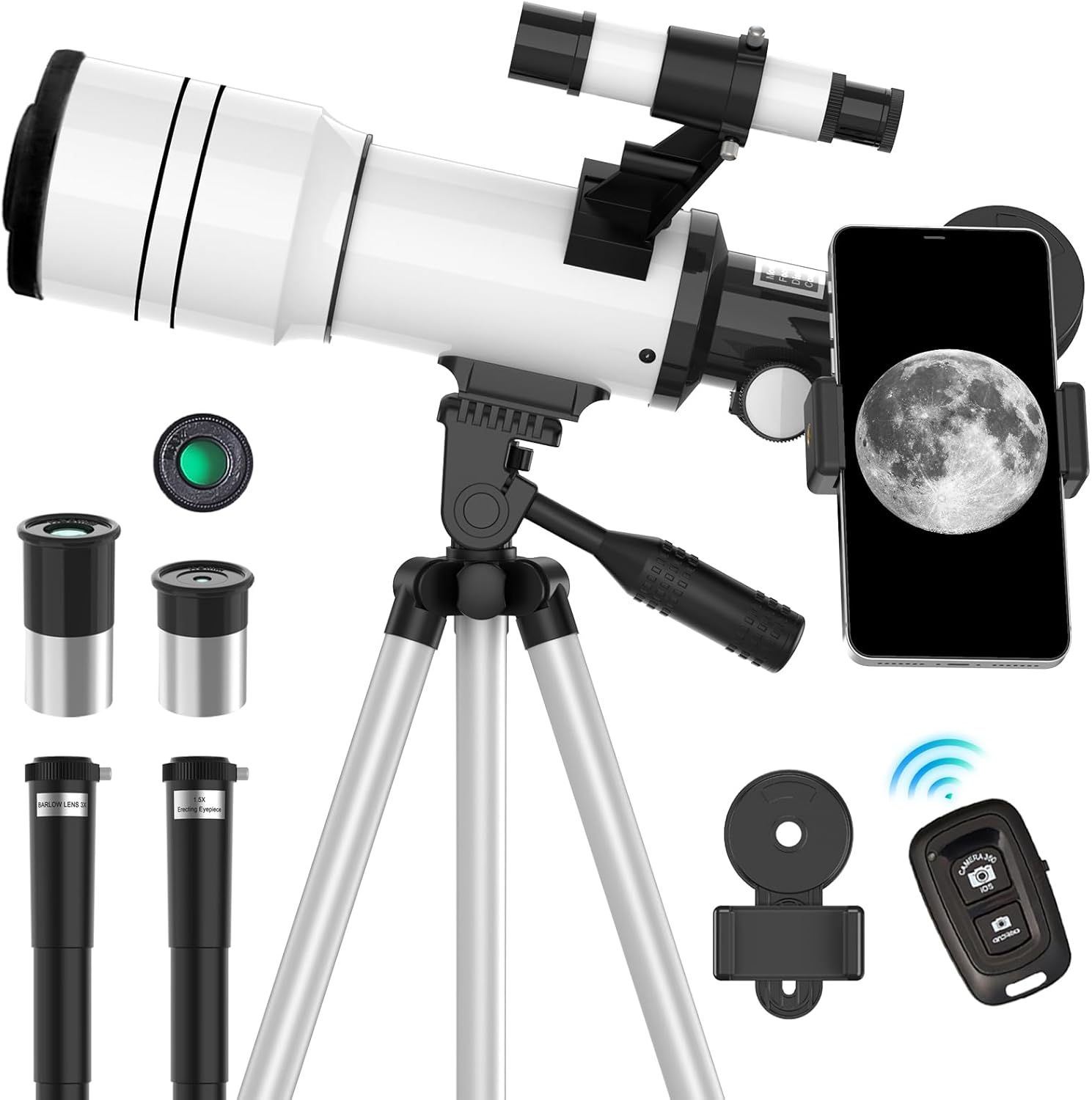
Three design choices separate the SkyHunter from every other portable GoTo mount on the market. First, the head is fully self-contained: no external controller cable run, no separate latitude wedge, and no detachable counterweight shaft fittings that get lost in pine duff. Second, the polar scope is built into the RA axis with a reticle illuminated by a coin-cell red LED, meaning you do not need to balance an external accessory on a folding stool at 4 AM. Third, the firmware accepts an 8-NiMH AA battery pack or a 12V USB-PD source, which matters because most thru-hikers already carry a 20,000 mAh power bank for their phone and Garmin inReach.
Setup Time on a Backcountry Campsite
Realistic setup from pack-off to first tracked exposure is 12-18 minutes once you have done it three or four times. The GPS lock takes 30-90 seconds at altitude with clear sky. Polar alignment via the reticle is faster than any DSC-only mount because the SkyHunter's app shows live Polaris clock-position based on your GPS time. After alignment, a two-star GoTo calibration on Vega and Altair (both visible across most of the PCT summer window) gets pointing accuracy inside the field of a 200mm lens.
Comparison: SkyHunter vs. Base-Camp Telescope Alternatives
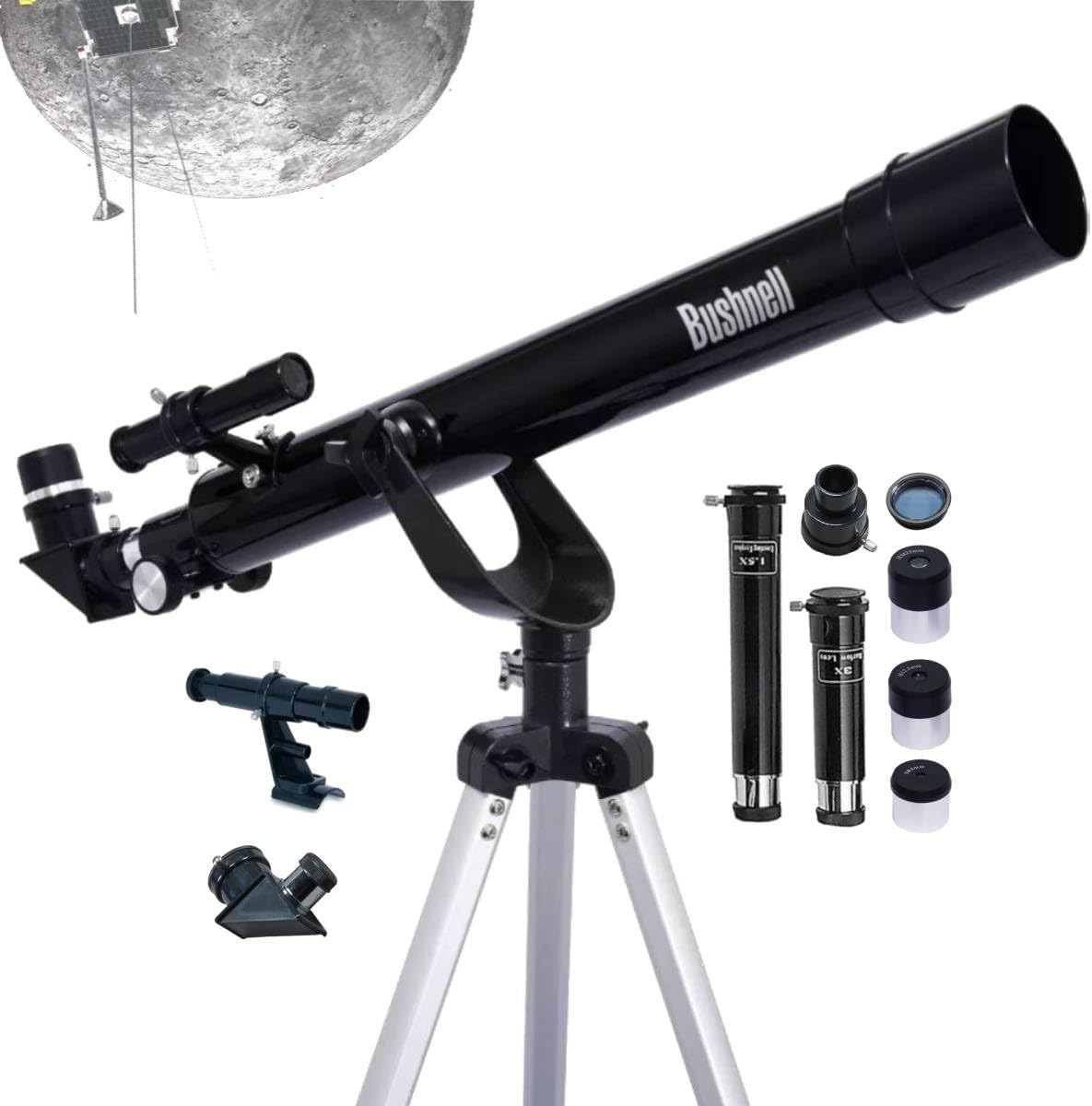
Some readers asking about backcountry imaging are actually weighing two scenarios: carry the SkyHunter the whole trail, or stash a larger telescope with a friend who can drive to a trailhead like Sonora Pass or Stevens Pass for a planned dark-sky weekend. The table below compares the SkyHunter against two car-camping-class scopes that work well as base-camp setups for thru-hikers who want to upgrade their imaging on zero days near roads.
| Setup | Total Weight | Best Use | Trail-Carryable | Deep-Sky Capable |
|---|---|---|---|---|
| iOptron SkyHunter + Z61 | ~13 lb | On-trail wide-field DSO | Yes | Yes (widefield) |
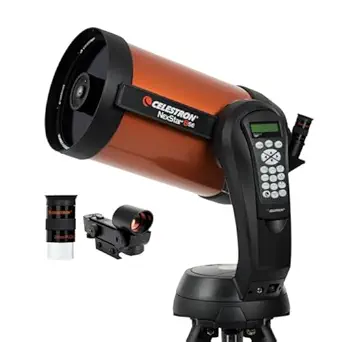
| Celestron NexStar 6SE | ~30 lb | Trailhead car-camp visual + planetary | No | Limited (no equatorial) |
| Celestron NexStar 8SE | ~33 lb | Resupply-town deep visual | No | Limited (no equatorial) |
The point is not that the NexStar SCTs compete with the SkyHunter on the trail itself; they do not. The point is that a savvy PCT astrophotographer often runs a hybrid plan: the SkyHunter rides in the pack for nightly widefield work, and a heavier scope waits in a friend's vehicle at planned road crossings for the showpiece sessions.
Base-Camp Pick #1: Celestron NexStar 6SE
For a trailhead rendezvous where weight no longer matters and you want bright planetary detail and globular cluster visual observing, the NexStar 6SE is the most balanced choice. The 6-inch Schmidt-Cassegrain optical tube gives you enough aperture to split Cassini's Division and resolve M13 to the core, but the entire fork-mounted system fits in a Subaru Outback hatch and powers off the same 12V battery you use for the SkyHunter. Pair it with a planned mail-drop zero day in Bishop, Mammoth, or Bend.
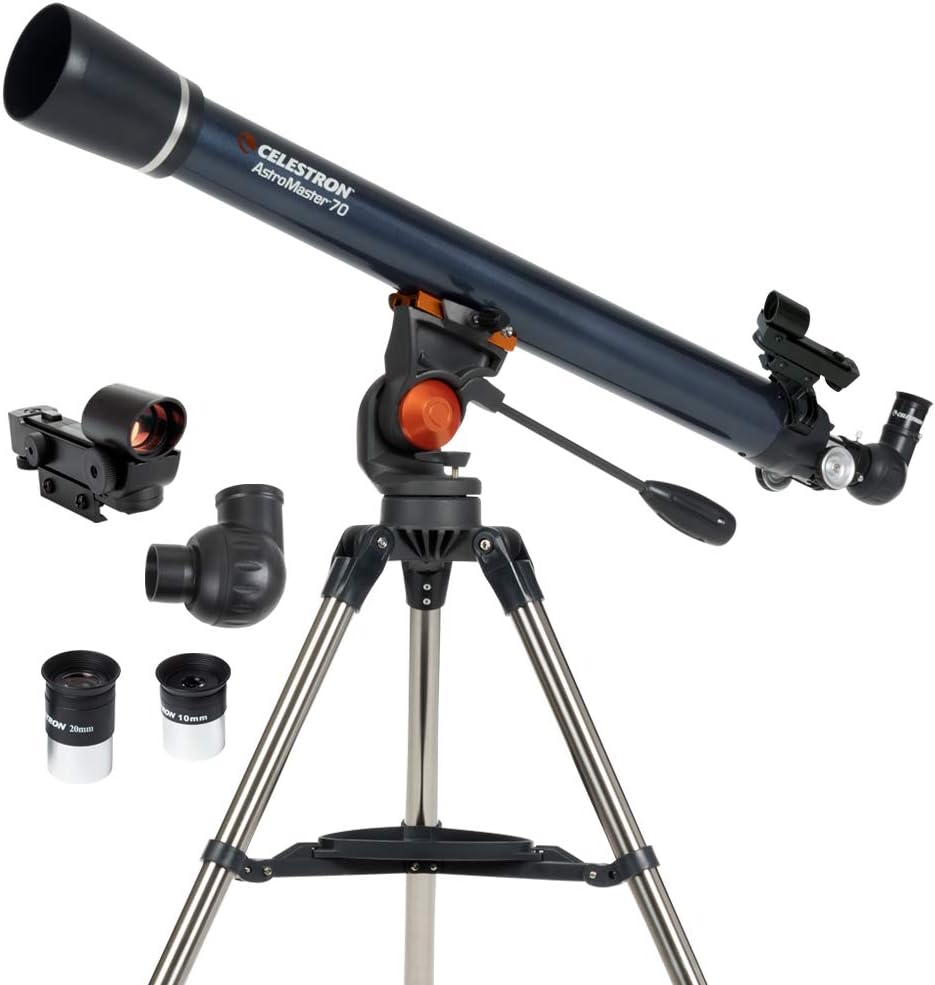
Celestron NexStar 6SE Computerized Telescope on Amazon
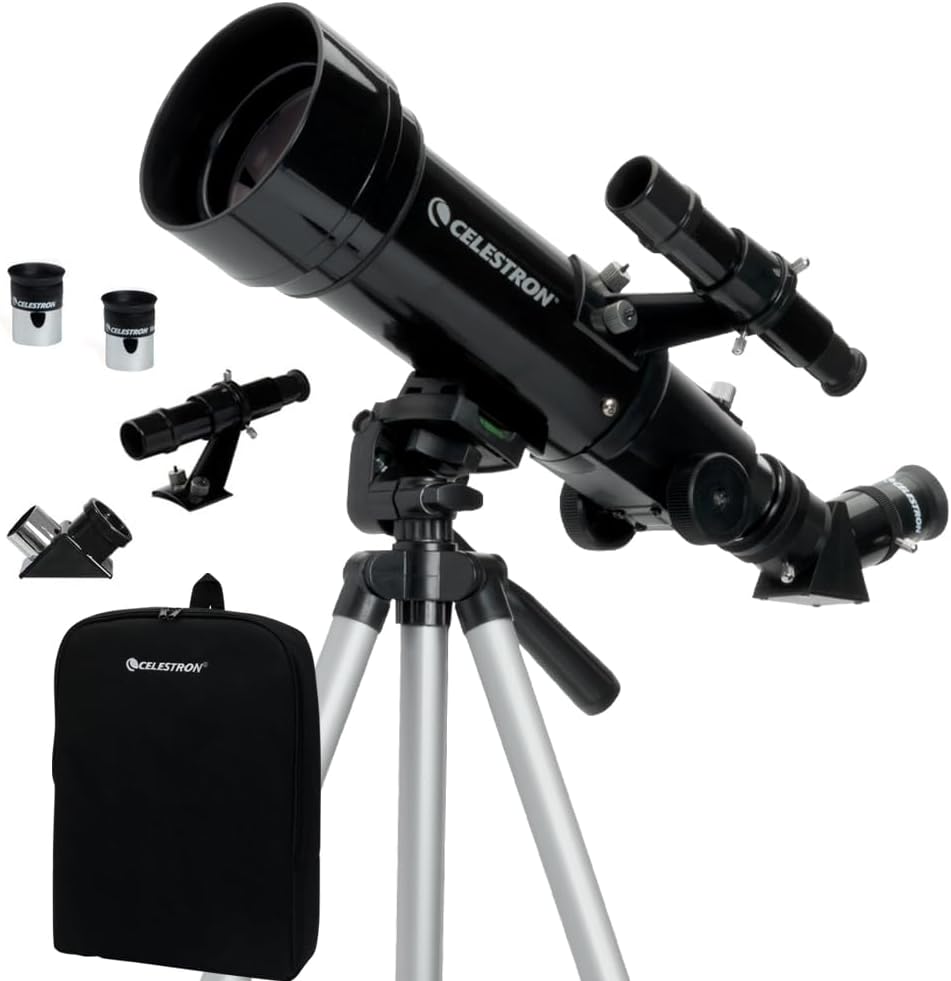
Base-Camp Pick #2: Celestron NexStar 8SE
If you have a partner driving a support vehicle to two or three trailheads across the PCT season, the 8-inch NexStar 8SE is the deep-sky workhorse that lets you actually see structure in the Veil Nebula and resolve Stephan's Quintet on a transparent Sierra night. The 8SE's SkyAlign procedure is forgiving for tired thru-hikers who have not touched a telescope in two weeks, and the 40,000-object database includes every Messier and Caldwell target you can realistically reach from PCT latitudes.
Celestron NexStar 8SE Computerized Telescope on Amazon
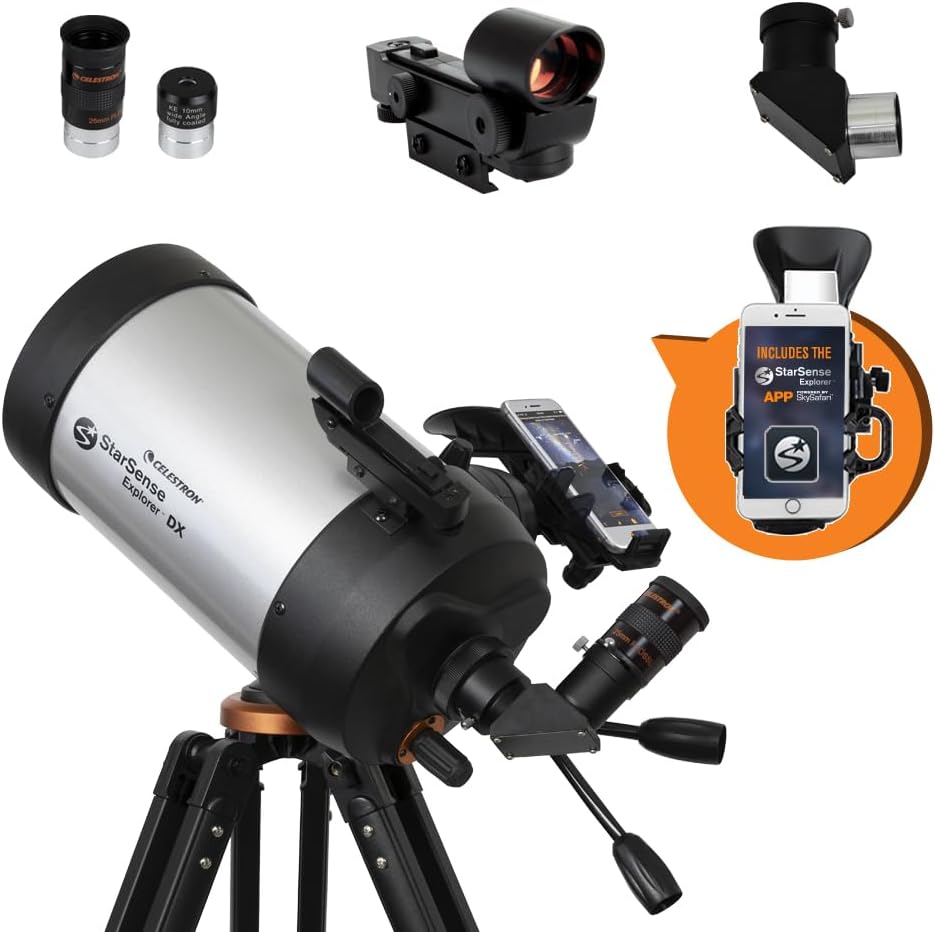
Smartphone-Adapter Variant for Quick Trailhead Sessions
If the support-vehicle session is short and you want a record without setting up a dedicated astro camera, the NexStar 8SE bundle with the NexYZ DX 3-axis smartphone adapter is the quickest path to sharable images of the Moon, Jupiter, and Saturn straight from a recent-generation phone. This is the kit most thru-hikers actually use at trailhead reunions because the social-media payoff is immediate and the setup tolerates wine.
Celestron NexStar 8SE with NexYZ DX Smartphone Adapter Kit on Amazon
Field Tips Specific to PCT Sections
The southern desert section (Campo to Kennedy Meadows) gives you incredible Milky Way core elevation in May and June, but daytime heat and granite dust will work into any unsealed mount. Carry a small microfiber and a soft brush; the SkyHunter's worm housing is sealed but the dovetail saddle is not. The Sierra section delivers the best transparency of the trail but also the coldest pre-dawn temperatures, which slow down the mount's stepper response. Keep the battery pack inside your jacket until alignment is done. The Oregon and Washington sections have shorter astronomical night windows in summer; plan accordingly and prioritize wide targets like the North America Nebula. For a deeper breakdown of trail timing, see our companion guide to dark-sky imaging windows along the PCT in 2026.
Tripod and Counterweight Choices
The SkyHunter ships with a 3/8-16 base, which fits virtually every carbon photo tripod. The best backpacker compromise in 2026 remains a four-section carbon traveler with a leveling base, ideally one that collapses to 16 inches or shorter so it strap-mounts to the side of a frame pack. Our full breakdown of tripod choices is in the ultralight tripod guide for backcountry astrophotography. For the counterweight, the official iOptron 1.7 lb weight is fine if you have the pack space, but a Smartwater bottle filled at the next creek crossing and clipped to the shaft with a small carabiner saves you a full pound between camps.
What You Give Up Versus a Heavier Mount
Be honest about the trade-offs. The SkyHunter's 6.6 lb payload ceiling means you cannot run a serious refractor longer than about 400mm focal length without tracking error becoming visible at 2-minute subs. There is no autoguider port in the way a HEQ5 has, so unguided performance is the ceiling for backcountry imaging. Periodic error is reasonable for a mount this size, but expect to shoot 30-60 second subs rather than the 4-minute subs a heavier mount supports. Compared to the heavier SkyGuider Pro, you gain GoTo and lose about 4 lb of payload capacity. That is the deal.
Frequently Asked Questions
Can the iOptron SkyHunter really track deep-sky objects unguided on a thru-hike?
Yes, within reason. With a properly polar-aligned SkyHunter and a payload under 4 lb (a 60mm refractor and a small mirrorless body), you can reliably shoot 30-60 second unguided sub-exposures with round stars at focal lengths up to about 360mm. Stacking 60-100 of those subs from a Bortle 1 PCT campsite produces images that would have required a 30 lb mount a decade ago.
How does the SkyHunter compare to the Star Adventurer 2i for backpacking?
The Star Adventurer 2i is roughly half a pound lighter and cheaper, but it has no GoTo, no integrated polar scope reticle illumination from an internal battery, and no alt-az mode for daytime use. For a backpacker who wants tracked widefield only and is willing to manually frame every target, the 2i is fine. For anyone who wants to image more than one DSO per night without dragging it through a planetarium app for ten minutes, the SkyHunter wins.
What is the realistic battery life on the SkyHunter for a multi-night section hike?
In sidereal tracking with occasional GoTo slews, the SkyHunter draws around 0.3-0.5 amps at 12V. A 20,000 mAh / 74 Wh USB-PD power bank with a 12V trigger cable yields roughly 4-5 full nights of imaging including phone charging. NiMH AA packs work but you should plan to swap fresh cells at every resupply.
Can I use the SkyHunter for daytime spotting between alpine lakes?
Yes. The alt-azimuth conversion is the SkyHunter's most underrated feature for backpackers. Switch modes through the handset menu, and you have a stable spotting platform for a 60-80mm refractor that doubles for raptor watching, sheep counting, and route-spotting across cirques. This is a real use case for thru-hikers carrying the mount through long alpine sections like the John Muir Trail overlap.
Will the SkyHunter survive being strapped to the outside of a frame pack for 2,650 miles?
With sensible protection, yes. Pack it inside a padded camera cube or a dry bag wrapped in a puffy jacket; do not strap it bare to compression straps where it will rub. The aluminum housing is robust, but the polar-scope optic and the dovetail clamp can take cosmetic damage from rock scrapes. Several documented PCT and CDT thru-hikes have completed full seasons with the mount in working condition.
Is the SkyHunter overkill if I am only doing nightscape photography?
If your goal is pure Milky Way landscape work at 14-24mm, a static tripod is enough and the SkyHunter is unnecessary weight. The SkyHunter starts paying off the moment you want focal lengths beyond 50mm or stacked sub-exposures longer than the 500-rule allows. For backpackers who want both styles, the mount enables the second style without preventing the first.
What other accessories should a PCT astrophotographer carry alongside the SkyHunter?
A dim red headlamp (Petzl Bindi with the red filter), a 12V USB-PD trigger cable, a microfiber cloth in a zip-top bag, a small intervalometer or a phone running NINA-mobile or DSLR Controller, and a printed laminated card with the polar-alignment reticle clock positions for your trail latitudes. Everything else is the same kit you already carry as a thru-hiker.
For 2026, the SkyHunter remains the single piece of gear that turns the PCT from a hiking trip with occasional sky-gazing into a legitimate mobile dark-sky imaging campaign. It is not the cheapest mount, and it is not the lightest tracker, but no other product currently combines GoTo, tracking, polar alignment, and sub-3 lb mass in a way that survives the realities of a thru-hike.
Key Takeaways
- Choosing the right ioptron skyhunter mount for backpackers means matching capacity and output ports to your actual devices
- Always check actual watt-hours (Wh), not just watts — runtime depends on Wh, not peak output
- Also covers: skyhunter pct astrophotography
- Also covers: ultralight tracking mount backpacker
- Also covers: ioptron skyhunter thru hiker
- Compare price-per-Wh across models to find the best value for your budget