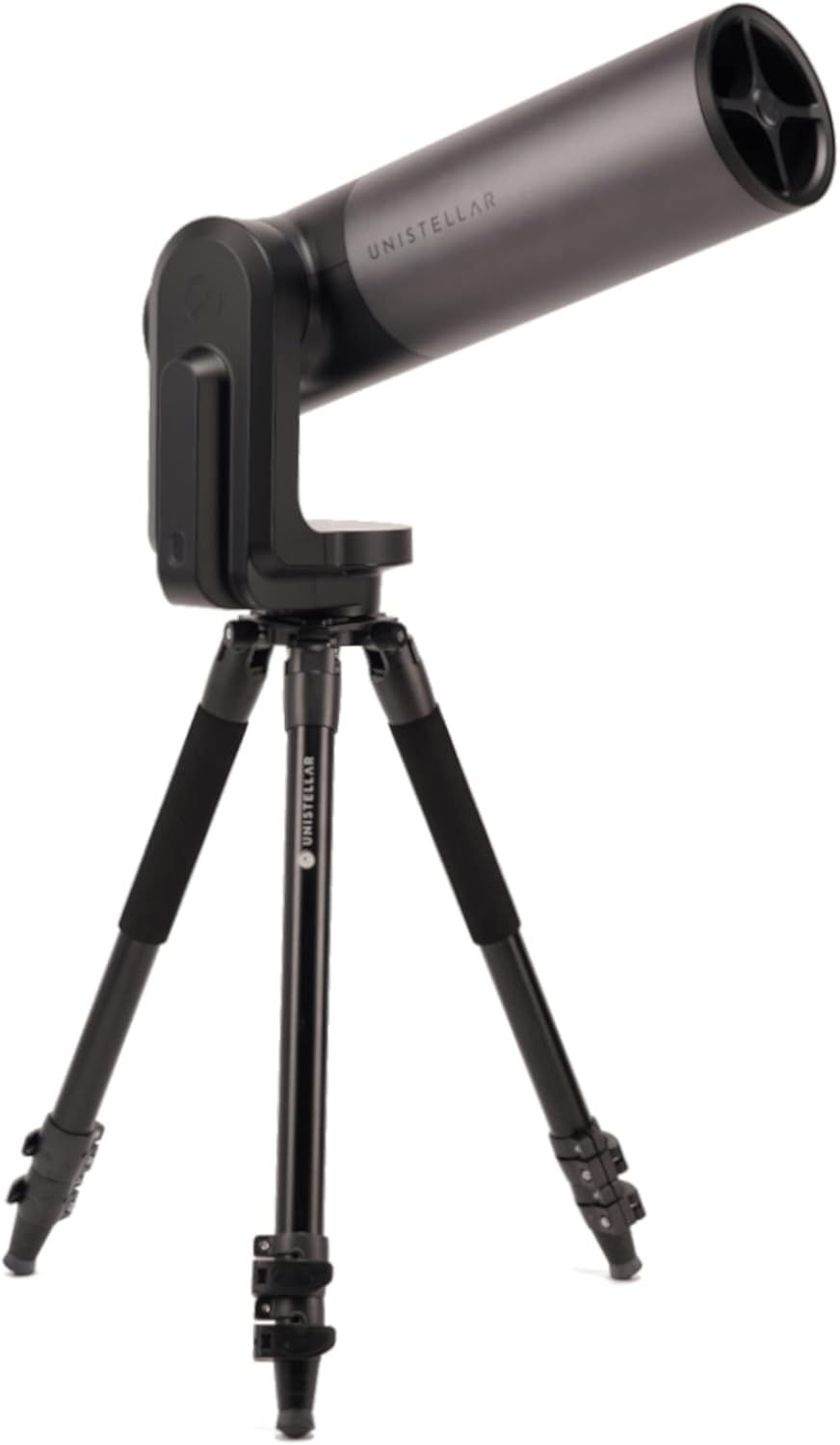
For successful zwo seestar s50 battery overnight deep sky imaging, you need to extend the built-in 6,000 mAh cell from its stock 4-6 hour runtime to a full 8-12 hour darkness window. The fastest path is a 20,000 mAh (or larger) USB-C PD power bank delivering 5V/3A or 9V/2A through the side port, paired with screen-off operation, lower frame stacking cadence, and insulated cold-weather wrapping. With these three changes, most owners reliably image from astronomical twilight to dawn without a single shutdown, even in sub-freezing conditions where lithium chemistry normally collapses. The rest of this 2026 guide walks through exact settings, hardware picks, and field-tested workflows.
Why the Seestar S50's stock battery falls short overnight
ZWO rates the Seestar S50's internal 6,000 mAh lithium pack at roughly 6 hours of continuous imaging at room temperature. In practice, owners report 3.5 to 5 hours once you factor in the cold, Wi-Fi broadcasting, the dew heater, autofocus cycles, and the small but constant drain of the alt-az motors tracking sidereal motion. A typical deep sky target like the Veil Nebula or NGC 7000 demands 90-180 minutes of integration time per panel, and a mosaic ambition multiplies that. If you start at astronomical dark (around 10 p.m. in midsummer) and want to image through morning twilight (around 4 a.m.), you need at least six clean hours of uptime, plus reserve.
The internal battery cannot be hot-swapped, and ZWO does not officially support running the unit with the door open to an internal cell replacement. That leaves external USB-C power as the only sanctioned path to all-night operation. Fortunately, the side USB-C port accepts both charging input and operating power simultaneously, meaning a connected power bank acts as a true uninterrupted supply.
Power bank sizing for true all-night runtimes
The simplest rule: target three times your expected session length in watt-hours. The Seestar S50 draws an average of 7-9 watts during active imaging, spiking to 12 W during slews and plate-solving. A 20,000 mAh power bank at 3.7V nominal stores roughly 74 Wh, which delivers around 55 Wh to the telescope after voltage conversion losses. That comfortably covers 6-7 hours. For a true zwo seestar s50 battery overnight deep sky marathon of 10+ hours, step up to a 27,000 mAh (100 Wh) bank, which is also the FAA carry-on ceiling for travel.
Look for these specifications on the bank:
- USB-C PD 3.0 output at 5V/3A minimum, ideally with 9V/2A and 12V/1.5A profiles.
- Pass-through charging so you can top up the bank from a car or solar panel without disconnecting the scope.
- Low-current mode (sometimes called "trickle" or "earbuds mode") - critical, because some banks auto-shut-off when the Seestar enters idle between stacks.
- Operating temperature rated to -10°C or lower for winter sessions.
Eight settings that stretch the Seestar S50's runtime
Before reaching for external hardware, optimize the software side. In the Seestar app, the following adjustments measurably reduce draw:
- Turn off the phone screen and lock the Seestar app after framing. The phone-to-scope Wi-Fi link is what consumes the most non-imaging power; once stacking starts, you only need to check in every 30-60 minutes.
- Disable EQ mode if you do not need field rotation correction for that target. Alt-az mode runs both motors less aggressively.
- Set exposure to 20 seconds rather than 10. Fewer read cycles means lower sensor overhead per hour of integration.
- Lower the dew heater to medium unless humidity exceeds 80%. The heater can pull up to 4 W alone.
- Disable auto-focus interval beyond the first hour if temperature is stable.
- Use offline planetarium mode - no need for the app to fetch tile updates mid-session.
- Pre-warm and pre-charge indoors to 100% before deployment; lithium cells deliver more usable capacity when they start warm.
- Park between targets only if your gap exceeds 20 minutes; otherwise the slew back consumes more than the idle savings.
Cold-weather strategy below freezing
Lithium-ion capacity drops roughly 20% at 0°C and up to 50% at -20°C. The Seestar's onboard battery suffers most because it is exposed in the optical tube assembly. Two field tricks help: wrap the lower third of the OTA in a neoprene sleeve (a 3 mm wetsuit-material wrap works) and place a chemical hand warmer (the air-activated iron-powder type) against the battery compartment under the sleeve. The warmer maintains 40-50°C for 8-10 hours and roughly doubles cold-night runtime.
Keep your external power bank inside an insulated cooler bag with a hand warmer alongside. The cooler retains heat rather than trapping cold, and the bank stays in its rated operating window. A short, thick 100W-rated USB-C cable (under 1 meter) loses less power than a long thin one - resistance matters when you are conserving every milliamp.
Alternative deep sky platforms when battery is the bottleneck
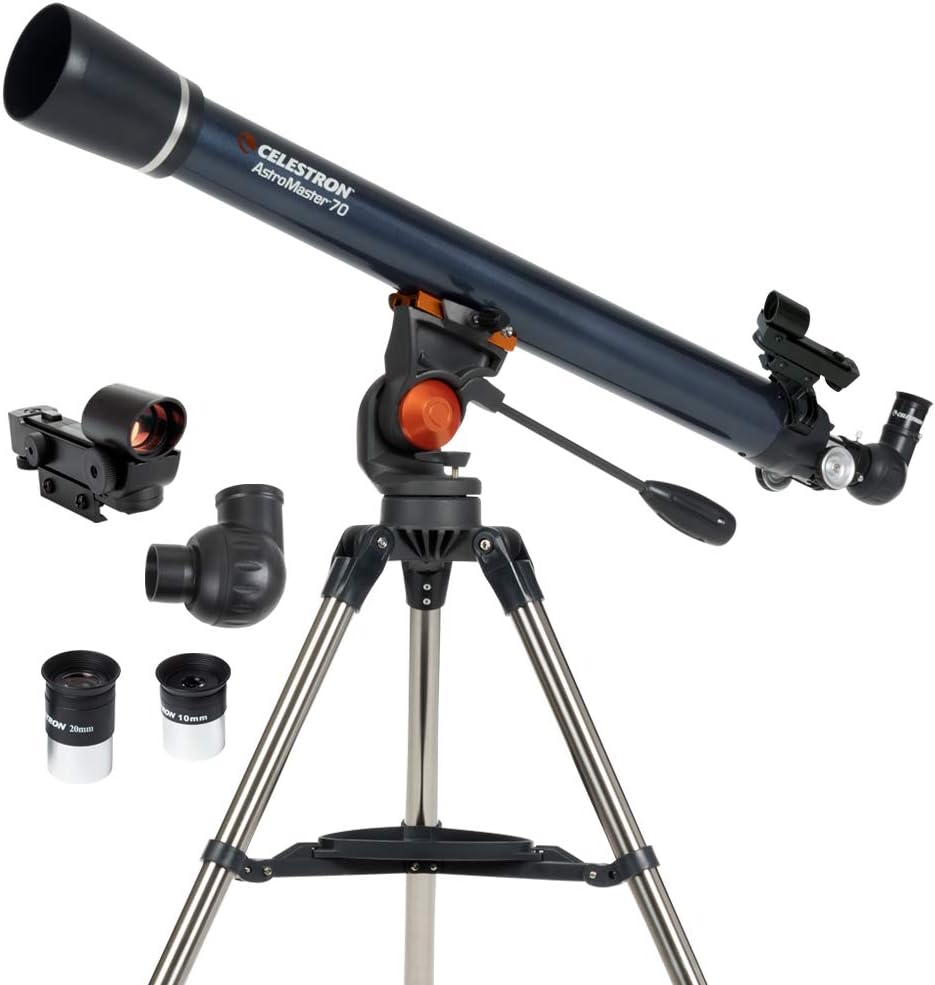
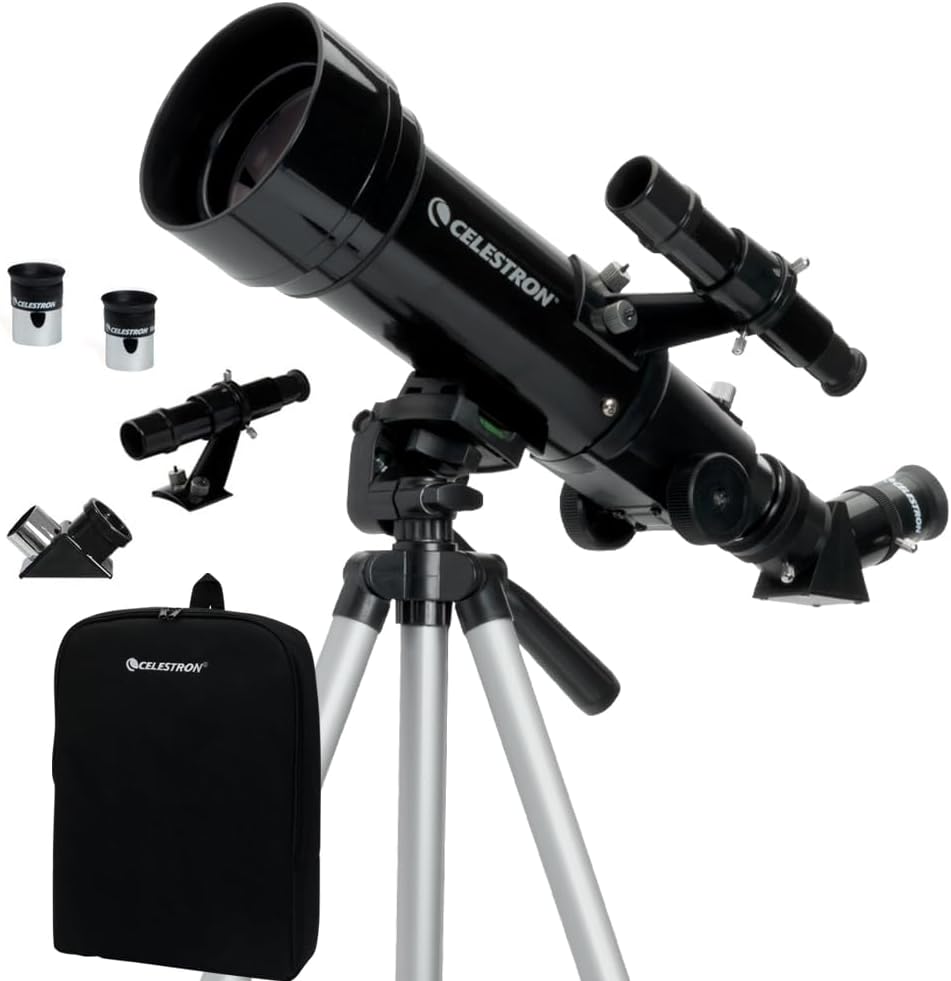
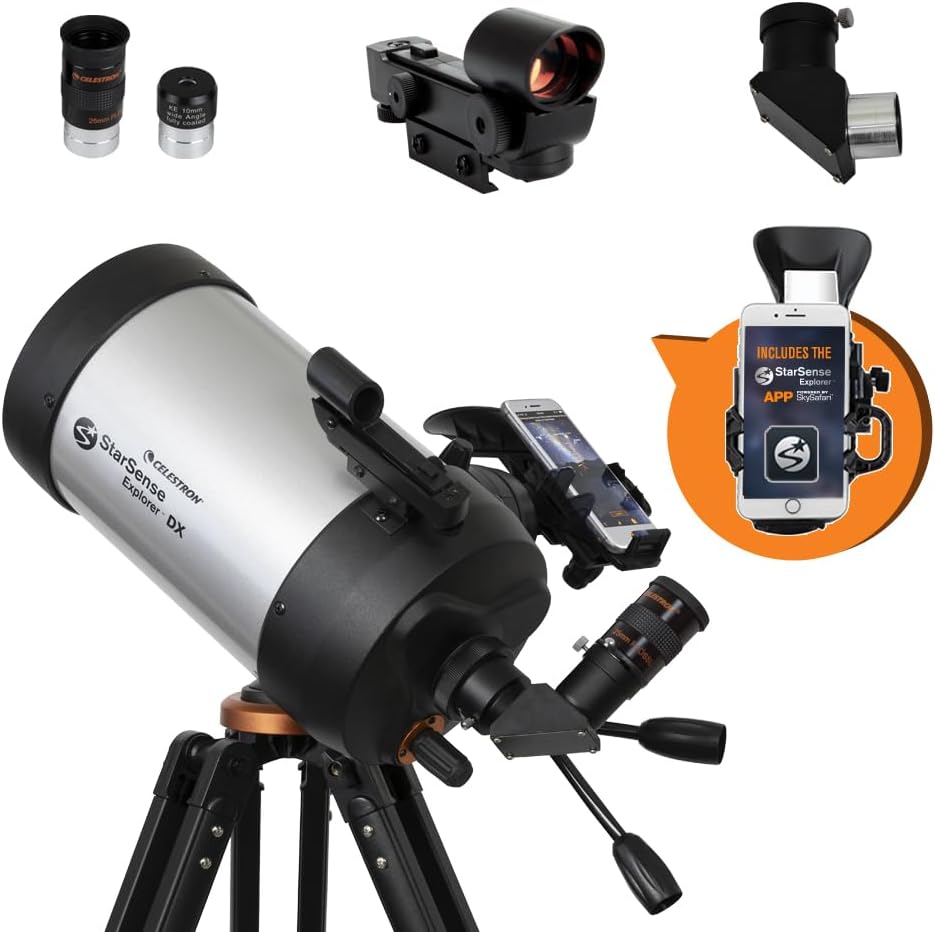
Some imagers eventually conclude that the Seestar's all-in-one form factor, while elegant, simply cannot match a mains-powered Schmidt-Cassegrain rig for unattended overnight automation. If you find yourself swapping power banks every clear night or losing imaging time to battery management, a tethered telescope with an AC adapter and dedicated camera can be the better long-term tool. Below are three Celestron systems frequently mentioned alongside the Seestar S50 in upgrade discussions, included because they specifically solve the overnight power problem with bundled AC operation or proven third-party powering.
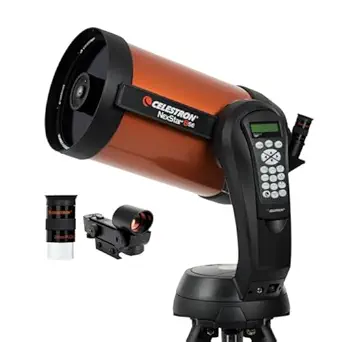
Celestron NexStar 8SE with AC Adapter and Smartphone Kit
If "never think about battery again" is the goal, this bundle is the most direct fix. The 8-inch Schmidt-Cassegrain delivers roughly 2.5x the light-gathering area of the Seestar S50's 50 mm aperture, and the included Celestron 18778 AC adapter lets the mount run indefinitely from a wall outlet or a 110V inverter on a marine deep-cycle battery. Pair it with a planetary or cooled astro camera and you have a permanent backyard rig. Check the NexStar 8SE + AC adapter kit on Amazon.
Celestron NexStar 8SE Computerized Telescope
The standalone 8SE optical tube and SkyAlign mount remain the most popular intermediate deep-sky platform of 2026, with 40,000+ objects in the hand controller database and a focal length suited to galaxies, planetary nebulae, and globular clusters that the Seestar can only resolve as small smudges. Power it from any 12V LiFePO4 power station (Bluetti, Jackery, EcoFlow) and you bypass lithium-ion cold collapse entirely. See the NexStar 8SE listing on Amazon.
Celestron NexStar 6SE Computerized Telescope
For travelers who like the Seestar's grab-and-go ethos but want bigger aperture and AC-power capability, the 6SE is the sweet spot. The single-fork-arm mount weighs under 30 lbs assembled, runs from the same external power options as its bigger sibling, and offers true visual deep-sky observation alongside imaging. View the NexStar 6SE on Amazon.
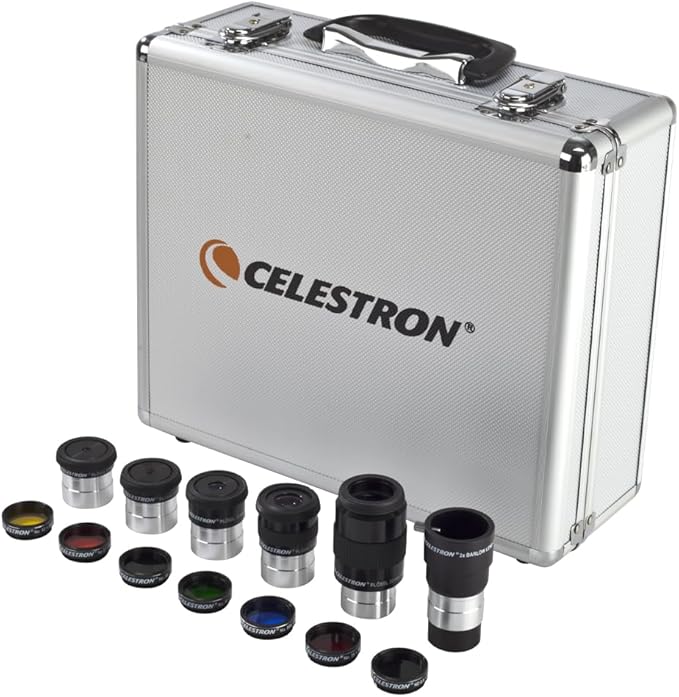
Celestron NexStar 8SE with Eyepiece and Filter Kit
If you want to add visual observation to your deep-sky workflow and never worry about screen battery during star-hopping, the eyepiece-and-filter bundle adds plossls, a moon filter, and color planetary filters that the Seestar S50's closed optical path cannot accommodate. It is the most versatile of the four bundles for hybrid imaging/visual nights. Browse the NexStar 8SE eyepiece kit on Amazon.
Comparison: overnight imaging platforms in 2026
| Platform | Aperture | Stock Power Source | True Overnight Capable | Best For |
|---|---|---|---|---|
| ZWO Seestar S50 (with 27,000 mAh bank) | 50 mm | Internal Li-ion + USB-C | Yes, 10-12 hours | Grab-and-go smart imaging |
| NexStar 8SE + AC Adapter Kit | 203 mm | AC adapter included | Unlimited (mains) | Permanent backyard rig |
| NexStar 8SE (standalone) | 203 mm | 8x AA / external 12V | Yes with LiFePO4 station | Deep-sky DSO work |
| NexStar 6SE | 150 mm | 8x AA / external 12V | Yes with LiFePO4 station | Portable mid-aperture |
| NexStar 8SE + Eyepiece Kit | 203 mm | 8x AA / external 12V | Yes with LiFePO4 station | Hybrid visual + imaging |
Field workflow for a 10-hour zwo seestar s50 battery overnight deep sky session
A repeatable workflow saves more battery than any single setting tweak. Forty minutes before sunset, charge the Seestar to 100% indoors at 20°C. Pre-cool the unit on the deck for 15 minutes after sunset to avoid lens dew condensation. Connect the external power bank before powering on, so the firmware initializes with mains-style supply detection. Run alignment under twilight, lock framing, and immediately switch your phone to airplane mode after enhancement begins - the Seestar keeps its own Wi-Fi access point and does not need internet. Check progress at the midpoint by waking the phone briefly, then leave it until the morning twilight cutoff. For more context on planning targets across the full night, see our deep sky imaging guide for beginners and the best smart telescopes of 2026 roundup.
Common mistakes that drain the battery faster
The biggest culprit, by far, is leaving the phone connected and screen-active in the planetarium view. The Wi-Fi radio at full broadcast strength can pull an extra 1.5 W from the scope's processor. Second is over-eager dew heating - many users crank it to high preemptively, when medium handles most temperate-zone humidity. Third is running EQ mode when alt-az would do; field rotation is only visible on integrations longer than 60 seconds per sub. Fourth is leaving the bank in cold ambient air; even a thin insulating wrap saves 15-20% of bank capacity over a winter night. For deeper troubleshooting, check our full Seestar S50 review.
Frequently Asked Questions
How long does the Seestar S50 battery actually last on a full charge in real conditions?
In real backyard conditions at 15-20°C, expect 4 to 5 hours of continuous imaging with Wi-Fi active. Cold nights below 5°C cut that to 3 to 3.5 hours. Only lab-style room-temperature tests with the phone disconnected hit ZWO's quoted 6-hour rating.
Can you charge the ZWO Seestar S50 while imaging deep sky targets?
Yes, the USB-C side port supports simultaneous charging and operation. A 5V/3A or 9V/2A USB-C PD power bank acts as an effectively unlimited supply, and the internal battery becomes a reserve buffer during slews when current draw spikes briefly above the supply rating.
What is the best power bank size for an all-night Seestar S50 session?
For 8-10 hours of imaging, choose a 20,000 mAh USB-C PD bank with low-current mode. For 10-14 hour winter nights or back-to-back two-night camping trips, step up to a 27,000 mAh (100 Wh) bank, which is also the maximum size allowed in airline carry-on luggage.
Does cold weather permanently damage the Seestar S50 internal battery?
Brief exposure to -10°C during operation does not cause lasting harm, but charging the internal battery below 0°C can plate lithium on the anode and reduce long-term capacity. Always warm the unit indoors to at least 10°C before recharging after a frigid session.
How can you tell if the Seestar S50 is running on external power versus internal battery?
In the Seestar app's status bar, a lightning-bolt icon next to the battery percentage indicates external supply is detected. If the percentage stops dropping and slowly climbs back toward 100% during imaging, your bank is delivering enough current to both run the scope and trickle-charge the internal cell.
Will a solar panel keep the Seestar S50 running overnight?
Not directly - solar panels do not produce power after dusk. The viable workflow is using a solar panel during the day to recharge a 100 Wh USB-C power station, then connecting the station to the Seestar at night. A 100 W folding panel can refill a 100 Wh station in 2-3 hours of good sun.
Is the Seestar S50 worth keeping if I need true unattended overnight automation?
For wide-field smart imaging of bright DSOs from 5 to 30 minutes per target, yes. For multi-hour single-target integration of faint galaxies or HOO narrowband mosaics, a tethered mount with an AC-powered Schmidt-Cassegrain like the NexStar 8SE remains the more reliable platform. Many imagers keep both - the Seestar for grab-and-go, the larger scope for serious overnight projects.
Key Takeaways
- Choosing the right zwo seestar s50 battery overnight deep sky means matching capacity and output ports to your actual devices
- Always check actual watt-hours (Wh), not just watts — runtime depends on Wh, not peak output
- Also covers: seestar s50 power bank session
- Also covers: seestar s50 long imaging runtime
- Also covers: seestar s50 cold weather battery
- Compare price-per-Wh across models to find the best value for your budget