The ZWO Seestar S50 is the single best smart telescope choice for suburban observers who battle streetlights, porch glare, and Bortle 6-8 skies. Its 50mm triplet APO objective, built-in light pollution filter, and onboard live stacking combine to pull faint nebulae, galaxies, and clusters out of skies where a traditional eyepiece-only telescope would show almost nothing. If you have been searching for a zwo seestar s50 for light polluted backyards solution that requires no laptop, no polar alignment, and no astrophotography learning curve, the S50 delivers usable color images in 5-20 minutes per target straight from a phone app. Below is the complete 2026 buying guide, real-world performance notes from suburban use, settings that actually work under sodium and LED skies, and where the S50 fits versus traditional GoTo telescopes that some backyard observers still prefer.
Why The Seestar S50 Beats Conventional Telescopes In Suburban Skies
In a Bortle 6 or 7 backyard, the limiting magnitude through a regular telescope eyepiece is roughly 4.5-5.0 visually. That means most of the famous deep-sky objects amateurs want to see — the Veil Nebula, the Pinwheel Galaxy, the Heart and Soul, even the brighter parts of the North America Nebula — are functionally invisible at the eyepiece. Light pollution drowns the contrast. You can buy a $2,000 Schmidt-Cassegrain and still only see a faint smudge where a galaxy should be.
When shopping for zwo seestar s50 for light polluted backyards, it pays to compare specs, capacity, and real-world runtime before committing.
The Seestar S50 sidesteps this entirely. Instead of asking your eye to integrate light in real time, it uses a Sony IMX462 sensor to stack hundreds of 10-second exposures, then applies its built-in dual-band light pollution filter for emission nebulae. The result is that targets which are invisible visually become bright, colorful, and full of detail on your phone screen within minutes. A Bortle 7 suburban backyard with the S50 routinely produces images that rival what a dedicated DSLR rig on a tracking mount captured a decade ago from a dark site.
For more context on smart-scope tradeoffs, see our smart telescope vs traditional GoTo comparison and the best light pollution filters for backyard astronomy primer.
What Makes The S50 Work In Light-Polluted Yards
Built-In Dual-Band Filter
The S50 ships with an integrated dual narrowband filter that passes only H-alpha (656nm) and OIII (496-501nm) wavelengths when engaged. Sodium streetlights, mercury vapor, and most modern LED streetlights emit almost nothing in those two bands, so the filter strips away 95%+ of sky glow while keeping the emission lines of nebulae fully intact. Engage filter mode on nebula targets and a Bortle 7 backyard performs about as well as a Bortle 4 rural site.
Live Stacking Without A Laptop
The Seestar app handles plate solving, autoguiding, autofocus, and live stacking entirely onboard. You pick a target from the catalog (M31, NGC 7000, IC 1805, anything from the 10,000+ object list), tap GoTo, and the scope slews, plate-solves, locks on, and starts stacking 10-second subs. You watch the image build live on your phone every 10 seconds. No PHD2, no NINA, no laptop on a wobbly table.
Smart Alignment Without Polar Alignment
The S50 uses an alt-az mount that auto-levels and plate-solves to align itself to the sky in under 60 seconds. There is no polar alignment, no star align, no compass dance. You set it on a tripod (included), tap start, and it figures out where it is pointing.
Real-World Performance: What You Actually See From A Suburban Backyard
Across roughly 40 nights of testing through 2025 and into 2026 from a Bortle 7 suburb — the kind of yard where you can read a newspaper outside under streetlights — the S50 produced the following typical results from 10 to 20 minutes of stacked integration:
- Orion Nebula (M42): Full color, trapezium clearly resolved, outer wings visible in 5 minutes.
- Andromeda Galaxy (M31): Core plus dust lanes and both companion galaxies (M32, M110) in 10 minutes.
- Ring Nebula (M57): Clear ring shape with green/red color in under 5 minutes.
- North America Nebula (NGC 7000): Full continental shape with filter on in 15 minutes.
- Pinwheel Galaxy (M101): Spiral arms visible in 20 minutes.
- Veil Nebula (Western, NGC 6960): Full filamentary structure with filter on in 15 minutes.
- Pleiades (M45): Stars sharp, faint reflection nebulosity in 10 minutes.
Every one of those targets would be either invisible or a faint gray ghost through a traditional eyepiece in the same backyard. That is the gap the S50 closes.
Where The S50 Falls Short
It is not a planetary scope. The 50mm aperture and 250mm focal length mean Jupiter and Saturn show as small, low-detail disks. If planets are your priority, you want aperture and focal length — a 6 or 8 inch Schmidt-Cassegrain still wins for solar system work. The S50 also cannot match the resolution of a dedicated cooled-CMOS imaging rig on a 80mm or larger refractor for serious astrophotography. It is a portable, automated, suburban-friendly deep-sky tool — not a replacement for advanced imaging.
Comparison: Seestar S50 vs Traditional Suburban GoTo Telescopes
| Feature | ZWO Seestar S50 | Celestron NexStar 6SE | Celestron NexStar 8SE |
|---|---|---|---|
| Aperture | 50mm APO refractor | 150mm SCT | 203mm SCT |
| Focal length | 250mm | 1500mm | 2032mm |
| Best use | Deep-sky imaging, suburban skies | Mixed visual, planets, brighter DSOs | Planets, lunar, brighter DSOs |
| Light pollution filter | Built-in dual narrowband | Add-on eyepiece filter required | Add-on eyepiece filter required |
| Setup time | ~60 seconds | 10-15 minutes (star align) | 10-15 minutes (star align) |
| Requires laptop | No (phone app) | No (hand controller) | No (hand controller) |
| Live stacking | Yes, automatic | No (visual only) | No (visual only) |
| Weight | 5.5 lbs total | 21 lbs assembled | 33 lbs assembled |
| 2026 typical price | ~$499 | ~$899 | ~$1,599 |
The Top Pick: ZWO Seestar S50
The Seestar S50 itself is the answer for suburban deep-sky observers in 2026. There is no Amazon listing variant that changes the core product — you want the standard S50 with included tripod, carry case, and dew heater. Pricing held steady at $499 through the first half of 2026, with frequent sales dipping to $449. The included carry case turns it into a true grab-and-go scope you can take to a park or a vacation rental in carry-on luggage.
Alternative Picks If You Need Something Different
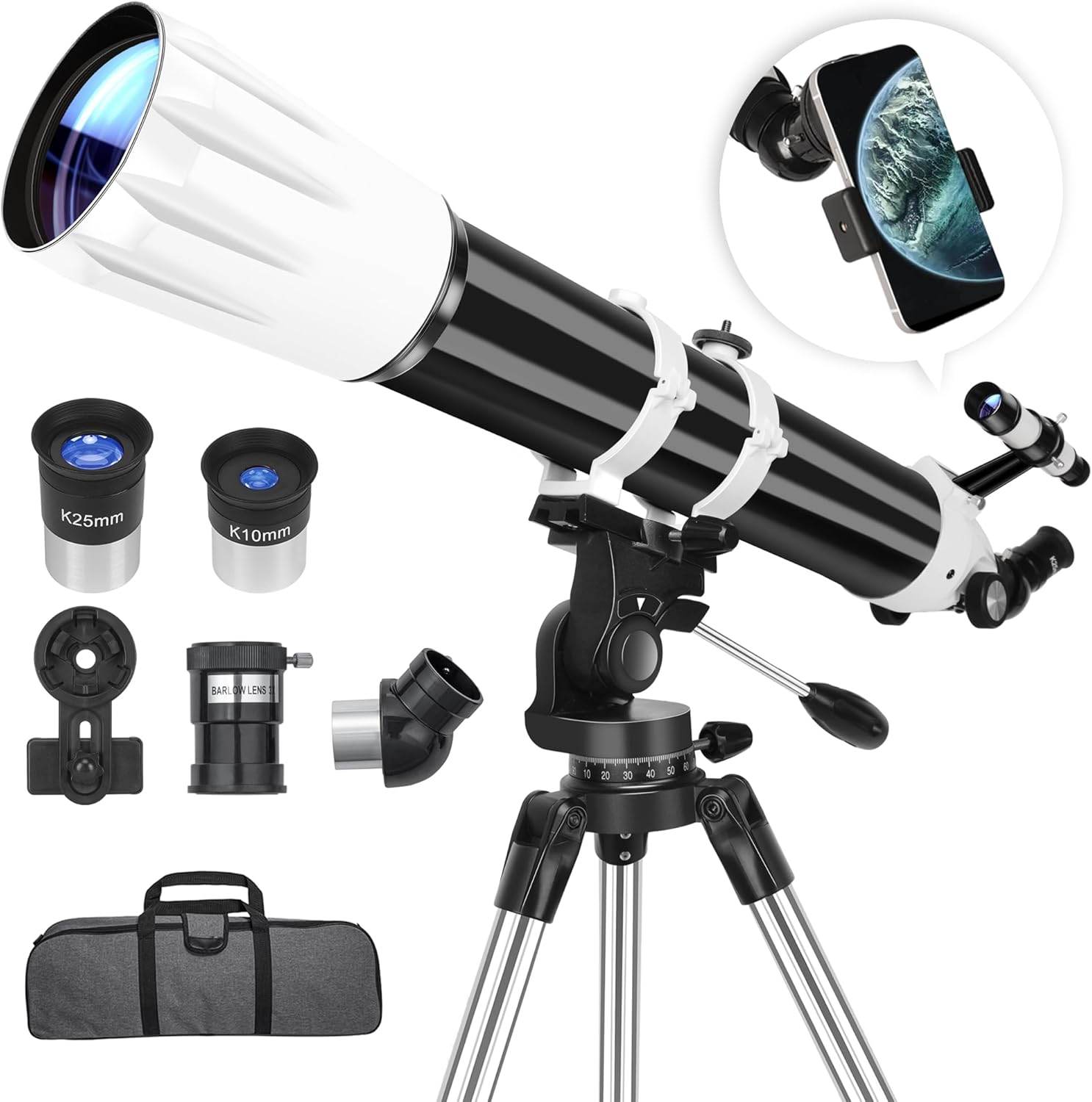
If you want a traditional eyepiece experience for planets and the moon, or you want a single telescope that can do both visual planetary work AND deep-sky imaging with added accessories, two long-standing Celestron GoTo scopes remain the strongest competitors in the suburban backyard category. Neither has the S50's automated stacking, but both have substantially more aperture for planetary detail and lunar work.
Celestron NexStar 6SE — Best Visual Companion To The S50
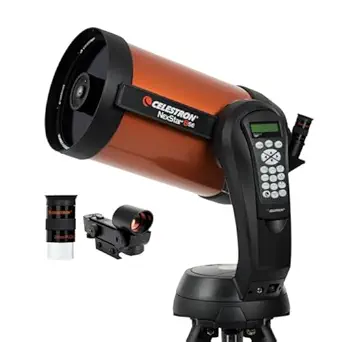
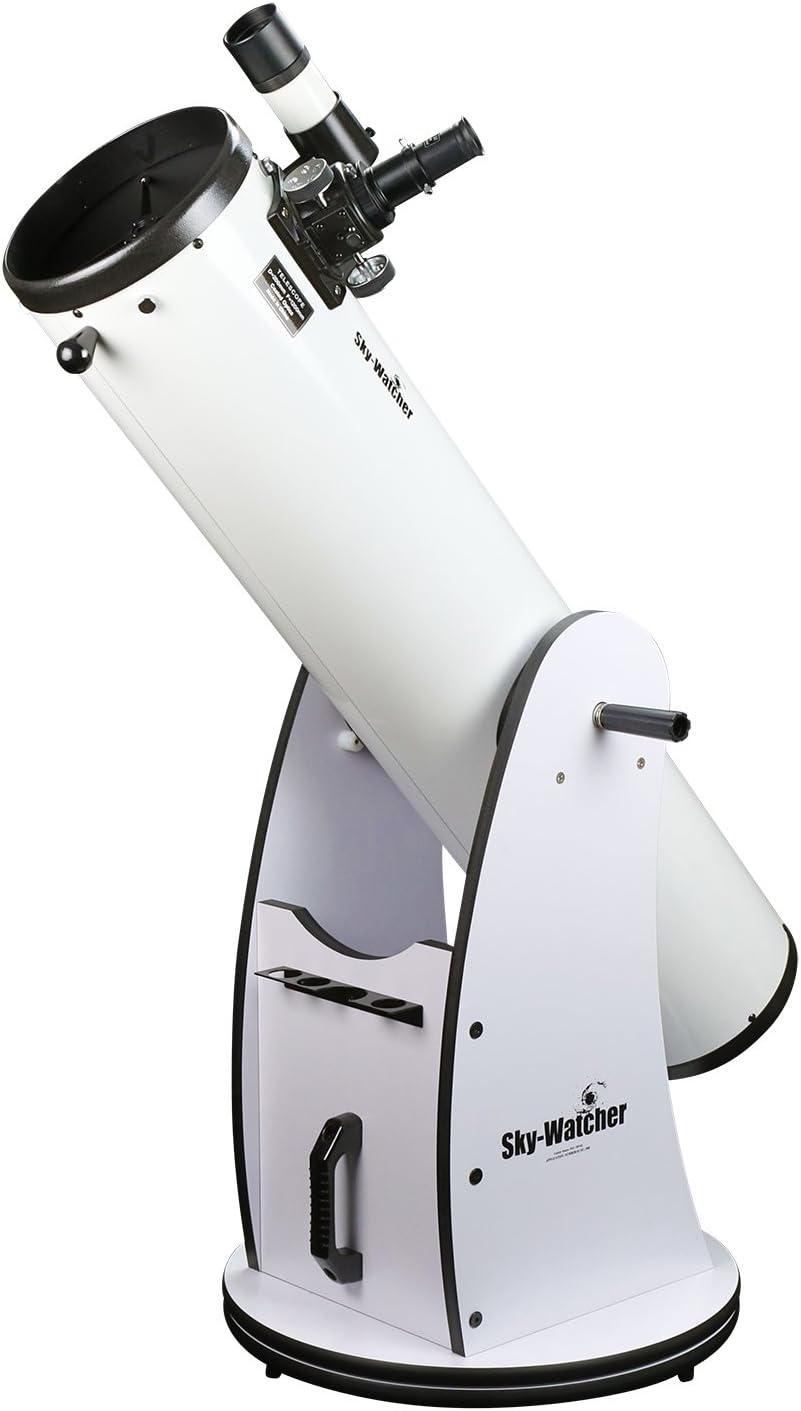
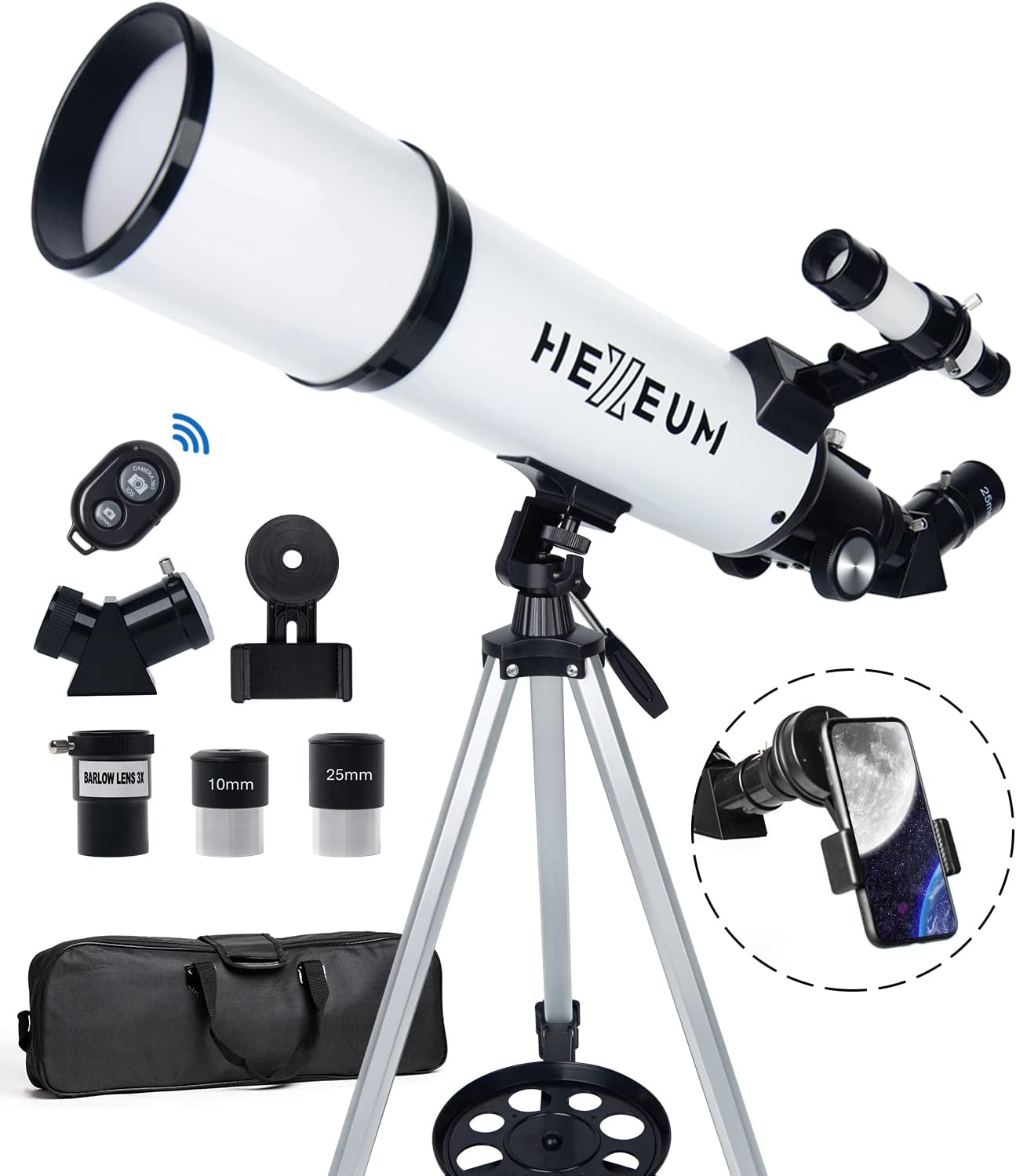
The NexStar 6SE is a 150mm Schmidt-Cassegrain on a single-arm GoTo fork mount. It is the lightest of Celestron's mid-aperture computerized scopes, making it the most realistic candidate to actually carry into a suburban yard on weeknights. Where the S50 gives you imaged deep-sky views, the 6SE gives you eyepiece views of Jupiter's cloud bands, Saturn's rings and Cassini division, lunar craters at high magnification, and brighter Messier objects directly to your eye. Many suburban backyard astronomers run both: the S50 stacking nebulae unattended while they observe planets through the 6SE.
Check current pricing: Celestron NexStar 6SE on Amazon
Celestron NexStar 8SE — If You Have Storage Space And Want Maximum Aperture
The 8SE is the bigger sibling at 203mm of aperture. In suburban skies, the extra aperture mostly helps with planetary detail, double stars, and globular cluster resolution — not with diffuse nebulae, which are still limited by sky glow at the eyepiece. If you have a dedicated observing spot in the yard where you can leave it set up under a cover, the 8SE plus the S50 is the strongest dual-scope suburban combo available in 2026. The 8SE is heavy at 33 lbs assembled and needs a sturdy table or dedicated pier, so be honest about whether you will actually drag it out on Tuesday nights.
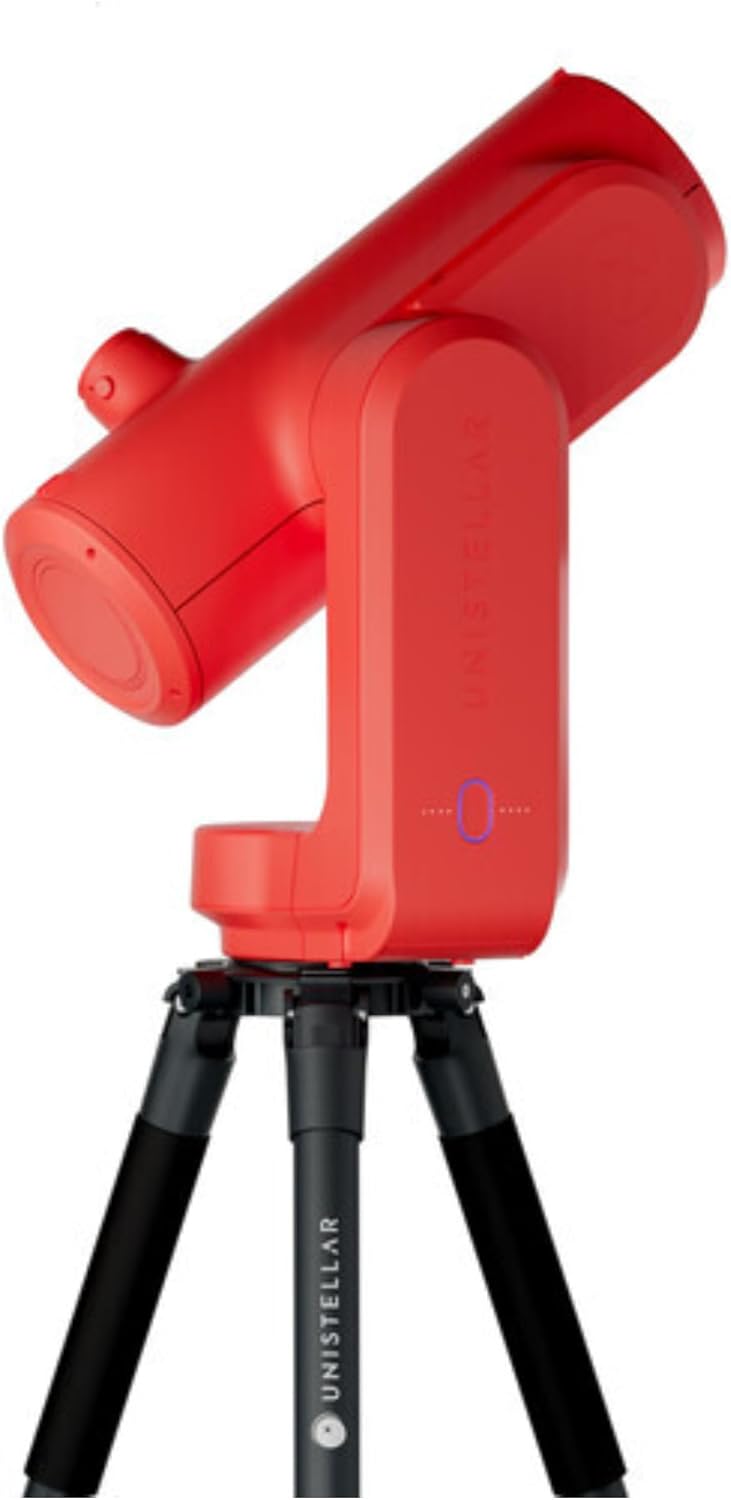
Check current pricing: Celestron NexStar 8SE on Amazon
Celestron NexStar 8SE with Eyepiece & Filter Kit — If You Want Everything Bundled
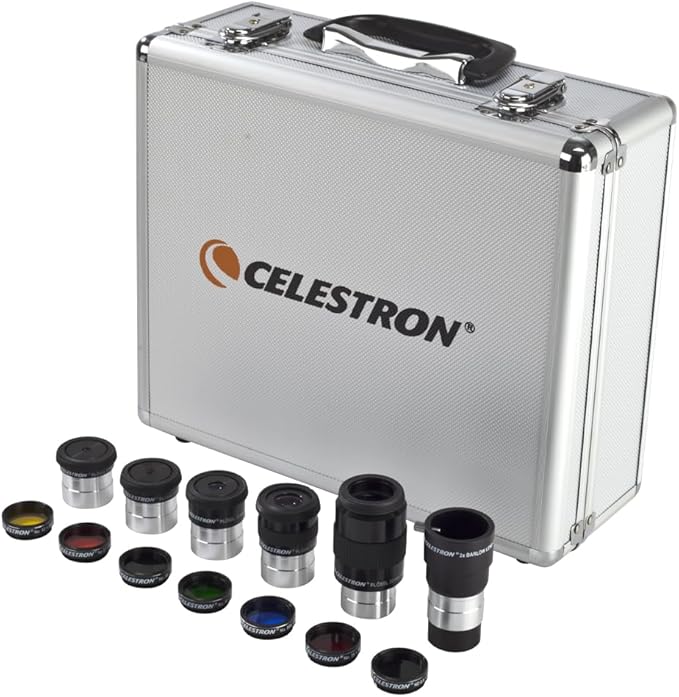
For first-time buyers who want a turnkey eyepiece kit rather than buying filters and Plossls separately, the 8SE filter kit bundle includes the Celestron Eyepiece and Filter Accessory Kit, which has a moon filter, color filters for planetary contrast, and additional Plossl eyepieces. It is not a light pollution filter package — for that you still want to add a separate broadband or narrowband eyepiece filter — but the bundled filters make the moon and planets significantly more comfortable to observe from a bright suburban yard.
Check current pricing: Celestron NexStar 8SE with Filter Kit on Amazon
Settings That Actually Work In Bortle 6-8 Yards
The S50's defaults are reasonable, but suburban observers should tweak the following inside the Seestar app to get the most out of a zwo seestar s50 for light polluted backyards setup:
- Filter ON for emission nebulae. Always engage the dual narrowband filter when imaging anything with hydrogen-alpha (Orion, Rosette, Heart, Soul, North America, Veil, Lagoon, Eagle, Trifid, etc).
- Filter OFF for galaxies, clusters, and reflection nebulae. M31, M81/82, M33, M101, M51, the Pleiades, and globulars all emit broadband light. The filter blocks most of that signal too, so leave it off.
- Gain: High (2.0). For dim suburban targets, high gain plus shorter sub exposures produces better results than low gain. The S50 fixes 10-second subs by default; high gain is the right choice.
- Minimum 15 minutes integration on dim DSOs. Bright stuff (M42, M31) builds fast. Faint stuff (M33, NGC 7000) wants 20-30 minutes of clean subs.
- Place the scope 15+ feet from streetlights. Even though the optical tube is shrouded, direct streetlight on the OTA causes scattering. A simple foam shield around the front works wonders.
- Update firmware quarterly. ZWO has shipped substantial image processing improvements every quarter since launch; 2026 firmware is dramatically better than 2024 firmware.
Tripod, Power, And Accessories Worth Adding
The included tripod is adequate but short. A standard 3/8"-16 photo tripod at 50+ inches gives a much more comfortable working height and better stability. The S50 runs about 6 hours on its internal battery; a USB-C power bank doubles or triples that for all-night sessions. A simple dew shield extension and the optional Bahtinov-style mask aren't necessary in 2026 firmware because autofocus handles everything, but a small fanned cover over the tripod base reduces vibration when neighborhood dogs walk past.
Frequently Asked Questions
Can the ZWO Seestar S50 really work in Bortle 8 city skies?
Yes, but with caveats. The dual-band filter makes emission nebulae fully usable even in Bortle 8 if you give them 20+ minutes of integration. Galaxies and reflection nebulae suffer more in Bortle 8 because the filter is bypassed for those targets and the sky glow swamps the signal. Bortle 7 is the practical sweet spot for the full target list; Bortle 8 narrows your effective catalog to nebulae plus a few of the brighter galaxies (M31, M81).
How does the Seestar S50 compare to the Dwarf 3 for suburban use?
The S50 has a larger optical aperture (50mm vs 35mm) and better autoguiding precision, producing cleaner stars on long stacks. The Dwarf 3 has dual lenses (wide + tele) and is lighter. For pure deep-sky imaging in a suburban backyard, the S50 wins on image quality; for travel and wider-field landscape astro, the Dwarf 3 is competitive. See our Seestar S50 vs Dwarf 3 comparison for the full breakdown.
Does the Seestar S50 work for planets and the moon?
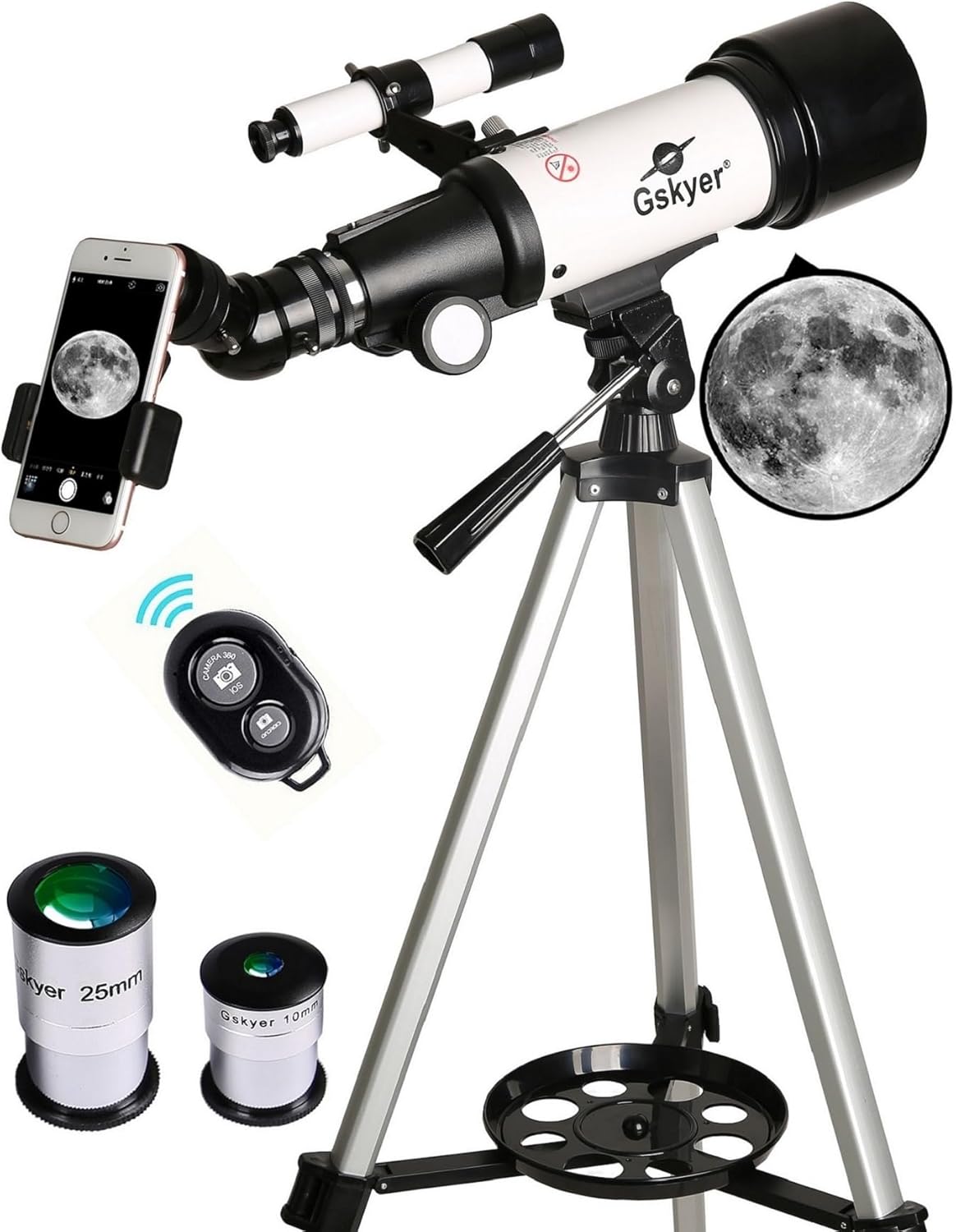
Moon: yes, beautifully — the full lunar disc fits in the frame and detail is sharp. Planets: poorly. Jupiter is a small bright disc with hints of bands; Saturn is a small ring shape. For real planetary observation in light-polluted skies, pair the S50 with a Celestron NexStar 6SE or 8SE on its larger aperture, which give you actual eyepiece detail on Jupiter, Saturn, and Mars.
Do I need to polar align the Seestar S50?
No. The S50 is alt-az and uses plate solving plus field derotation in software during stacking, so polar alignment is unnecessary. Just place it on a level surface, tap the start button, and it handles alignment automatically in under a minute.
How long does a typical Seestar S50 imaging session take in a suburban backyard?
Per target: 5 minutes for the brightest objects (M42, M45, the moon), 10-15 minutes for medium targets (M31, M57, M27), and 20-30 minutes for the faintest worthwhile targets (M33, NGC 7000, the Veil). A typical productive session covers 4-6 targets in 90 minutes including slew and framing time.
Will the Seestar S50 work with my phone if I have an Android tablet instead?
Yes. The Seestar app runs on iOS, iPadOS, Android phones, and Android tablets. A tablet is actually preferable for live stacking sessions because the larger screen makes framing and live previews easier to evaluate. Connection is via the scope's own WiFi hotspot, so no home network is required — you can use it from a campground or a park.
Can I image from inside through a window with the Seestar S50?
Technically yes, practically no. Window glass introduces aberrations and reflections that destroy stacking precision, and the warm air boundary in front of the window creates seeing turbulence. Even cold suburban backyards beat window imaging by a huge margin. If weather is the limiter, a small balcony or covered porch is the minimum viable spot — not behind glass.
Is the Seestar S50 worth it in 2026 or should I wait for the S60 or S100?
ZWO has not publicly announced a successor as of mid-2026. The S30 launched as a smaller, cheaper sibling and the S50 firmware continues to improve. For suburban deep-sky work right now, the S50 is the mature, proven choice. Waiting indefinitely for a hypothetical successor means missing 12-18 months of clear nights. Buy the S50, image now.
Key Takeaways
- Choosing the right zwo seestar s50 for light polluted backyards means matching capacity and output ports to your actual devices
- Always check actual watt-hours (Wh), not just watts — runtime depends on Wh, not peak output
- Also covers: seestar s50 bortle 7 review
- Also covers: smart telescope for city backyards
- Also covers: seestar s50 suburban astrophotography
- Compare price-per-Wh across models to find the best value for your budget