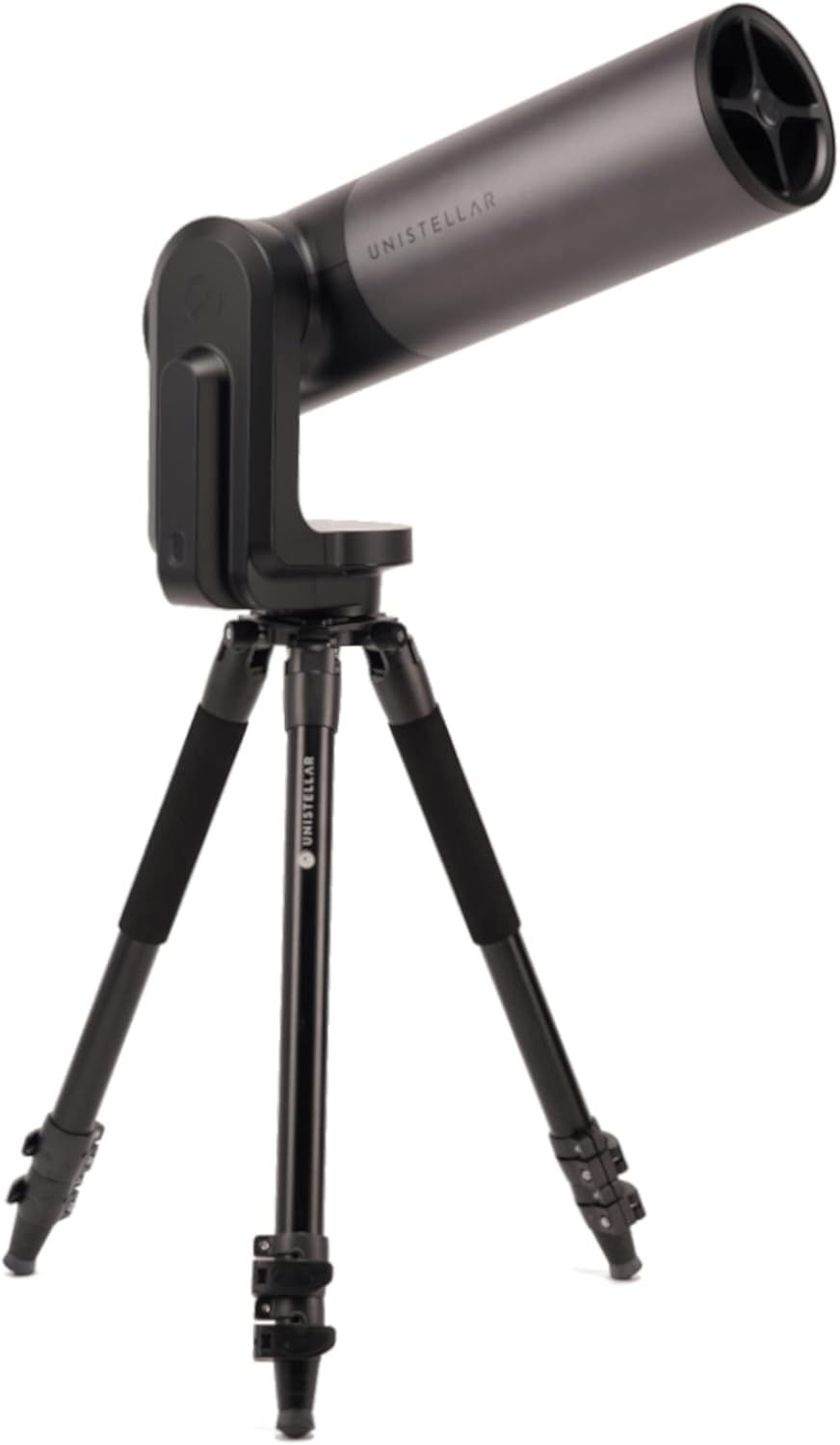
The zwo seestar s30 for librarians running monthly patio star parties is, frankly, the closest thing to a turnkey outreach kit the hobby has produced in 2026. It is a 30 mm smart telescope that fits in a tote bag, sets up in under five minutes, finds its own targets, and streams a live, stacked image of the Moon, Saturn, the Orion Nebula, or Andromeda to every patron's phone simultaneously. For a public-library program coordinator who needs predictable results, no eyepiece queue management, and a device a teen volunteer can run after a 20-minute training, the Seestar S30 is the easiest yes on the market.
Why the Seestar S30 fits a library patio program
Library star parties live or die by three things: setup time, queue flow, and weather resilience. A traditional Dobsonian or Schmidt-Cassegrain demands collimation, cooldown, and a patient line of one-eye-at-a-time viewing. The Seestar S30 sidesteps all three. It auto-levels, plate-solves on its own from the patio, and within ninety seconds of power-on is already framing a target. Patrons gather around a tablet or their own phones (the Seestar app supports multiple simultaneous viewers on the same Wi-Fi) and watch faint nebulosity emerge in real time as the device stacks sub-exposures.
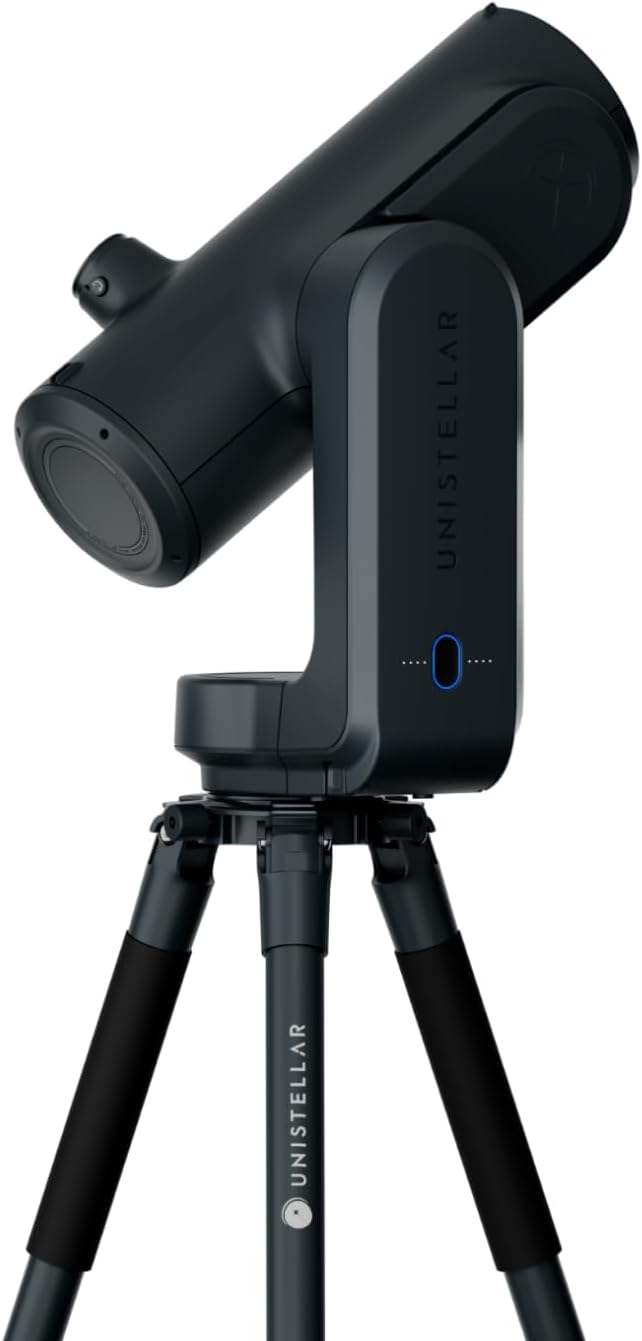
For librarians, that flow matters. Instead of a 40-person line shuffling past a single eyepiece, you get a small crowd around a screen, asking questions, and a second smaller cluster looking up with binoculars or naked eyes while a docent narrates. The zwo seestar s30 for librarians essentially turns a star party into a planetarium-style group experience without sacrificing the magic of seeing real photons land on a real sensor in real time.
What a patio star party actually demands
A library patio is rarely a dark site. You are usually contending with parking-lot sodium lamps, the glow of the children's room window, and a building HVAC unit kicking on every twenty minutes. The Seestar S30's built-in light-pollution filter and short native focal length (150 mm at f/5) make it forgiving of suburban skies. It will pull Bode's Galaxy out of a Bortle 7 sky in about three minutes of stacking, which is roughly the attention span of a curious eight-year-old.
You also need a device that survives the bump-and-grab of public handling. The S30's all-in-one enclosure means there is no diagonal to drop, no eyepiece to walk off, and no finder scope to knock out of alignment. Pack it in its case, walk it back inside, plug in the USB-C, and it is ready for next month. Most library coordinators report a single charge handles a two-hour program with battery left over.
Smart telescope vs. traditional GoTo: a quick comparison
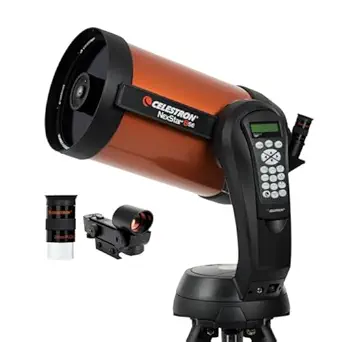
Some library systems already own a Celestron NexStar or are weighing one against a smart telescope. The honest answer is that they solve different problems. The table below compares the Seestar S30 to the two NexStar SE models most commonly recommended for outreach.
| Feature | ZWO Seestar S30 | Celestron NexStar 6SE | Celestron NexStar 8SE |
|---|---|---|---|
| Aperture | 30 mm refractor | 150 mm SCT | 203 mm SCT |
| Setup time | ~3 minutes | 15-25 minutes | 20-30 minutes |
| Viewing style | Group, screen-based | Solo eyepiece | Solo eyepiece |
| Power | Internal battery (~6 hrs) | 8 AA or AC adapter | 8 AA or AC adapter |
| Weight | ~3.3 lb | ~21 lb assembled | ~33 lb assembled |
| Best for | Crowds, deep-sky imaging | Mixed planetary/DSO viewing | Larger crowds wanting eyepiece views |
| Skill needed | Smartphone-level | Basic alignment training | Basic alignment training |
When a traditional telescope still wins
If your patrons specifically come for the eyepiece experience — that gasp-inducing first look at Saturn's rings through real glass — a screen will never replace it. That is where a Schmidt-Cassegrain like the NexStar 8SE earns its keep. It pulls in roughly 46 times more light than the S30's 30 mm objective, so planetary detail, lunar terminator shadows, and globular cluster resolution are dramatically better through the eyepiece. The catch is one viewer at a time and a much longer line.
A growing number of library systems run a hybrid program: the Seestar S30 anchors the screen-based crowd while a docent-operated NexStar handles the eyepiece queue. If your budget allows both, that pairing covers every patron preference. See our writeup on smart telescopes for library outreach for a deeper breakdown of hybrid setups.
Top picks for librarians planning 2026 patio star parties
ZWO Seestar S30 (primary recommendation)
The S30 is the version of the Seestar line specifically optimized for crowd-pleasing wide-field views — Andromeda, the North America Nebula, the Pleiades, the Heart and Soul complex — all of which fit cleanly in its frame. For a librarian, that means every monthly program has a visually impressive headliner regardless of moon phase. ZWO sells it direct and through major retailers; check current stock and pricing through your usual procurement channels. (Note: at publication time Amazon listings for the S30 vary by seller — verify the listing is shipped and sold by ZWO or an authorized dealer before purchasing with library funds.)
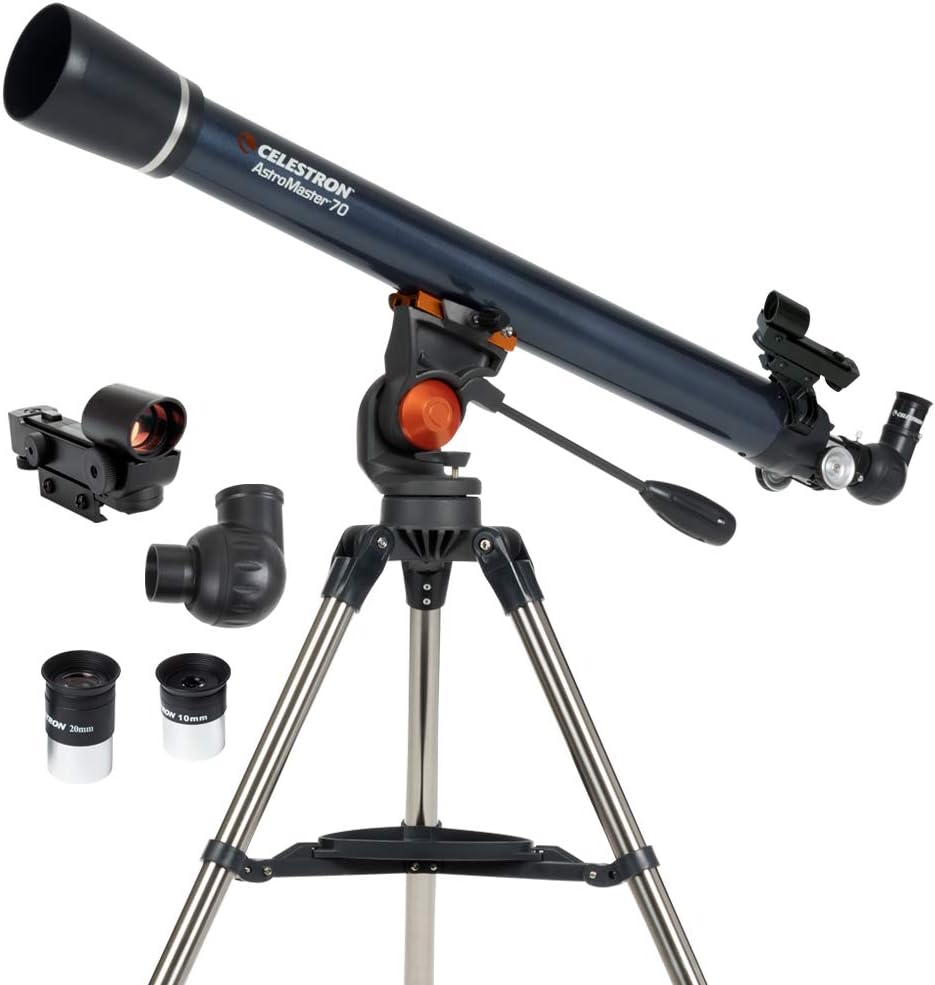
Celestron NexStar 6SE — best mid-size eyepiece companion
If you want to add a real-glass eyepiece station to your patio program without the bulk of the 8-inch, the 6SE is the sweet spot. It is light enough for one staff member to carry out from a storage closet, the SkyAlign procedure takes about ten minutes once trained, and its 1500 mm focal length renders Saturn, Jupiter, and the Moon beautifully for a queue. The 6-inch aperture handles Bortle 7 suburban skies far better than most patrons expect.
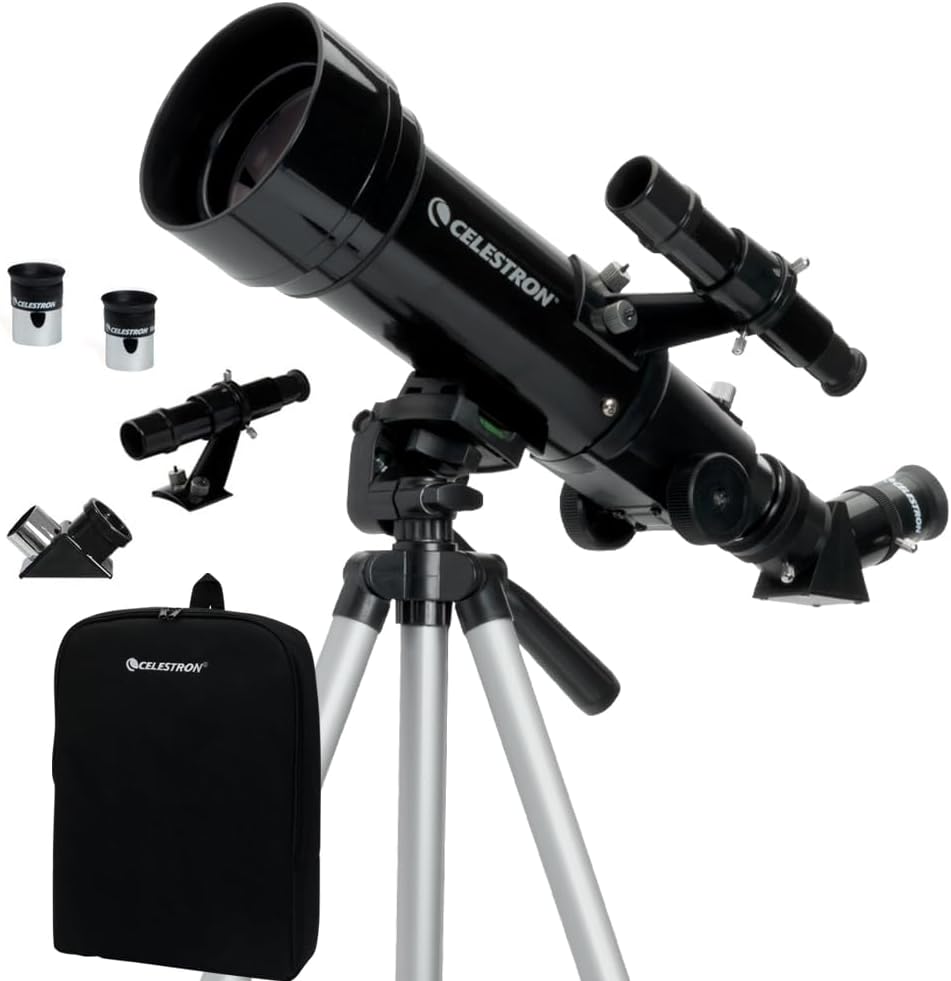
Celestron NexStar 6SE on Amazon
Celestron NexStar 8SE — for libraries expecting larger crowds
The 8SE is the flagship outreach scope of the past decade for a reason. Eight inches of aperture pulls in dramatically more detail on planets and deep-sky targets, and the SkyAlign GoTo means your trained docent can move between targets in seconds once aligned. It is heavier and requires a sturdier patio table or its own tripod base footprint of about three feet, so confirm your patio layout before committing. Pair it with the zwo seestar s30 for librarians screen station and you will cover the full range of patron expectations.
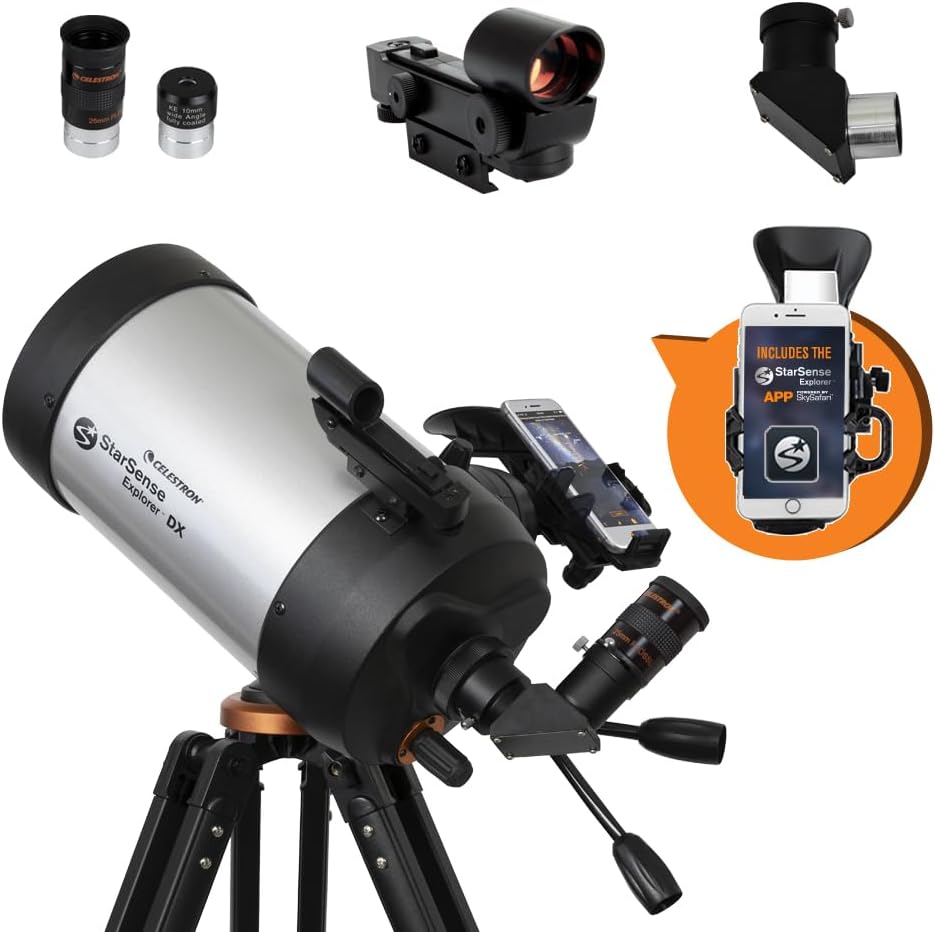
Celestron NexStar 8SE on Amazon
Celestron NexStar 8SE with eyepiece and filter kit — bundle for outreach
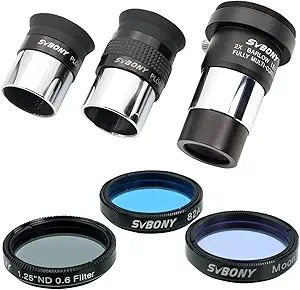
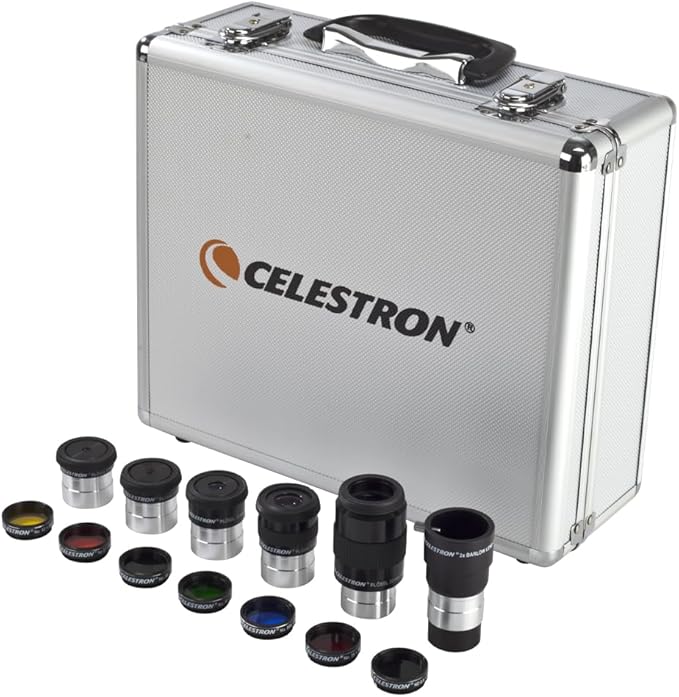
If you are buying the 8SE specifically for public programs, the bundle that ships with a 1.25-inch eyepiece and filter kit is worth the small premium. Library outreach scopes get dropped eyepieces, lost caps, and smudged optics; having a moon filter and a few extra eyepieces in the bag from day one saves a procurement cycle later. The filter set also lets you show patrons what a polarizing or color filter does to lunar contrast — a small but memorable teaching moment.
Celestron NexStar 8SE with eyepiece and filter kit on Amazon
Programming ideas for monthly patio star parties
Once the equipment question is settled, the programming sells itself. A reliable monthly rhythm helps patrons plan ahead: tie each session to a seasonal target list — Orion and the Pleiades in January, the Beehive Cluster in March, the Lagoon and Trifid in July, Andromeda and the Double Cluster in October. The Seestar's app makes it trivial to swap targets between groups of patrons; a teen volunteer can manage the queue while the librarian narrates what is forming on the screen.
Pair each star party with a small circulating display: field guides, planispheres, and a few recommended stargazing books turn the patio program into a circulation driver. Some library systems have added a Library of Things checkout option for the Seestar between programs — a topic we cover in our library of things astronomy kits guide.
Frequently Asked Questions
Is the ZWO Seestar S30 good enough for a library patio with parking-lot lights?
Yes, with a caveat. The S30's built-in light-pollution filter and short stacking exposures handle Bortle 6-7 suburban skies well for emission nebulae and brighter galaxies. Direct streetlight glare on the optics is the bigger problem — position the scope behind a shrub, low wall, or the building itself to block direct light, and you will get usable images of Andromeda, the Ring Nebula, and similar bright deep-sky targets even from a lit patio.
How long does it take to train a library staff member or teen volunteer on the Seestar S30?
About 20-30 minutes for basic operation. The app walks the user through power-on, leveling, autofocus, and target selection. Most library coordinators report that a teen volunteer can run an entire program after one supervised session. The bigger training need is crowd management — when to advance to the next target, how to handle requests, and how to talk about what is on the screen.
What about the Seestar S50 — is the larger model better for libraries?
The S50 has 50 mm of aperture versus the S30's 30 mm, with a longer 250 mm focal length. That means tighter framing on smaller targets like the Ring Nebula and planetary disks, at the cost of wide-field views of large targets like the North America Nebula or the Pleiades. For library outreach, where wide and visually obvious targets play better with crowds, the S30 is usually the right call. The S50 makes more sense for a library astronomy club or a circulating Library of Things item used by individual patrons.
Can patrons connect their own phones to the Seestar during a program?
Yes — the Seestar app supports multiple simultaneous viewers on the same local network. In practice, librarians usually run a single tablet on a stand for the main display and let interested patrons connect their phones for a closer look. Having a printed QR code with the app install link and join instructions speeds onboarding.
How do we handle weather cancellations for a monthly patio program?
Build a rain-date plan into the program description from day one, and keep a backup indoor lesson ready — a planetarium app projected on the meeting room wall, a constellation craft for kids, or a short talk on the targets you would have observed. Patrons are forgiving of weather cancellations if you communicate early (by 4 p.m. day-of) through your library's normal channels.
What is the total budget for a turnkey library star party setup in 2026?
A Seestar S30, a small tripod, a tablet for the main display, a few folding chairs, and a printed target guide come in well under $1,000 for most library systems. Adding a NexStar 6SE or 8SE for the eyepiece station roughly doubles the spend but covers the full range of patron expectations. Many state library agencies and Friends groups fund this category through STEM programming grants.
Does the Seestar S30 work for solar viewing during a daytime program?
Only with the proper ZWO solar filter, sold separately. Never point the Seestar (or any telescope) at the Sun without a certified solar filter installed on the front. With the filter, the S30 produces nice white-light views of sunspots — a great option for a summer afternoon program tied to a NASA outreach event. See our solar observing safety guide for full filter requirements.
Key Takeaways
- Choosing the right zwo seestar s30 for librarians means matching capacity and output ports to your actual devices
- Always check actual watt-hours (Wh), not just watts — runtime depends on Wh, not peak output
- Also covers: seestar s30 library programming
- Also covers: librarian star party telescope
- Also covers: seestar s30 community outreach
- Compare price-per-Wh across models to find the best value for your budget