The Vaonis Hestia for college dorm stargazers is, in 2026, the most realistic way to do real astronomy from a 10x12 cinder-block room with one window and no car. It is a passive smart-telescope: no motor, no internal sensor, no battery to charge. You drop your phone onto the top plate, the optics relay the image into your camera, and the free Gravity app stacks frames into surprisingly clean shots of the Moon, the Sun (with the included solar filter), Andromeda, the Orion Nebula and a handful of brighter Messier targets. For a smartphone-only budget — typically $249 to $349 — it is the cheapest credible entry into deep-sky imaging that exists.
Why the Hestia makes sense in a dorm
Dorms punish telescopes. You usually have no garage, no balcony big enough for a tripod that extends past your knees, an RA who doesn't want a 30-pound aluminum tube blocking the fire egress, and a roommate who needs to sleep when Saturn finally clears the campus library at 1 a.m. The Hestia weighs about 1.1 kg, folds to roughly the footprint of a hardcover novel, and fits in the same drawer as your charger bricks. There is no power cable because the phone is the sensor, the screen, the processor and the battery all at once. That single architectural decision is why the Vaonis Hestia for college dorm stargazers beats every traditional beginner scope on the dimensions that actually matter to a freshman: storage volume, setup time, and roommate noise.
When shopping for Vaonis Hestia for college dorm stargazers, it pays to compare specs, capacity, and real-world runtime before committing.
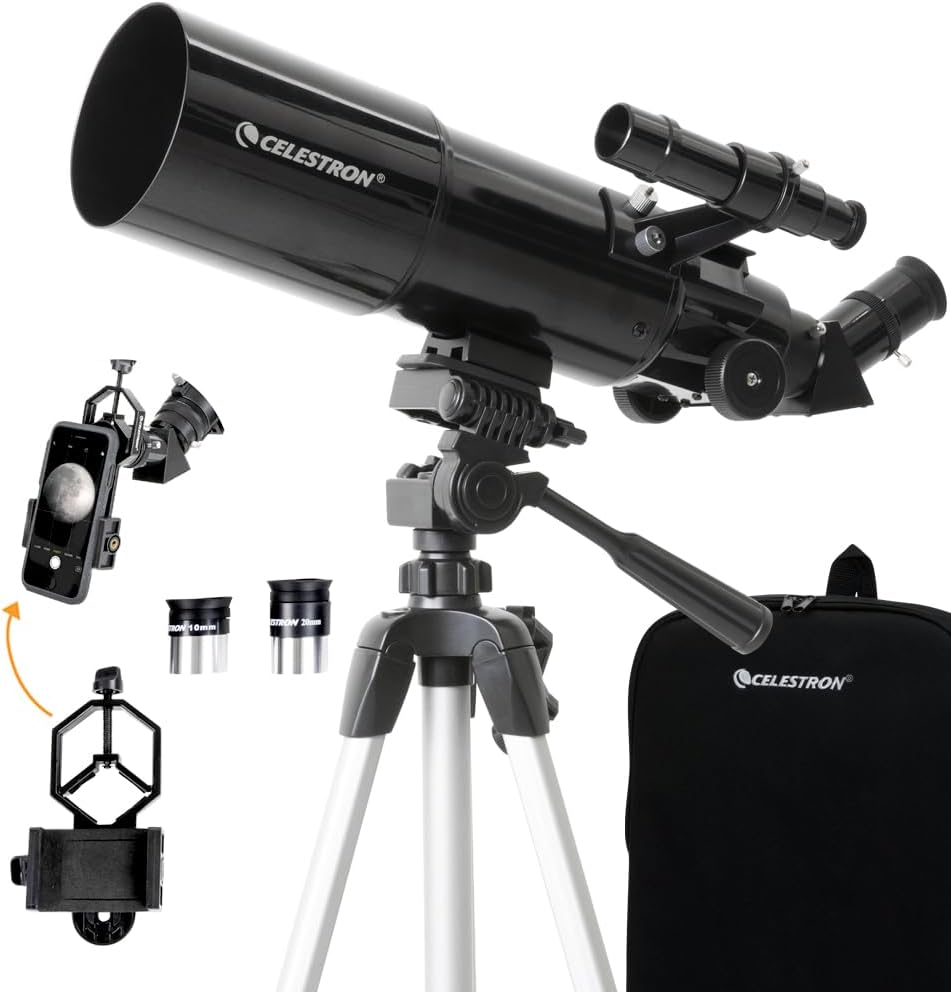
The other dorm-specific win is that you can image from inside through a closed window for the Moon and the Sun. Image quality through dorm glass is obviously compromised, but for a quick lunar grab between a 6 p.m. lab and a 9 p.m. study group it is genuinely usable — something no Newtonian or SCT will tolerate. For deep-sky you still want to walk to the quad or an unlit corner of the parking lot, but the walk is the whole transport step: scope in backpack, tripod (a phone tripod, not an astronomy one) clipped to the outside, done.
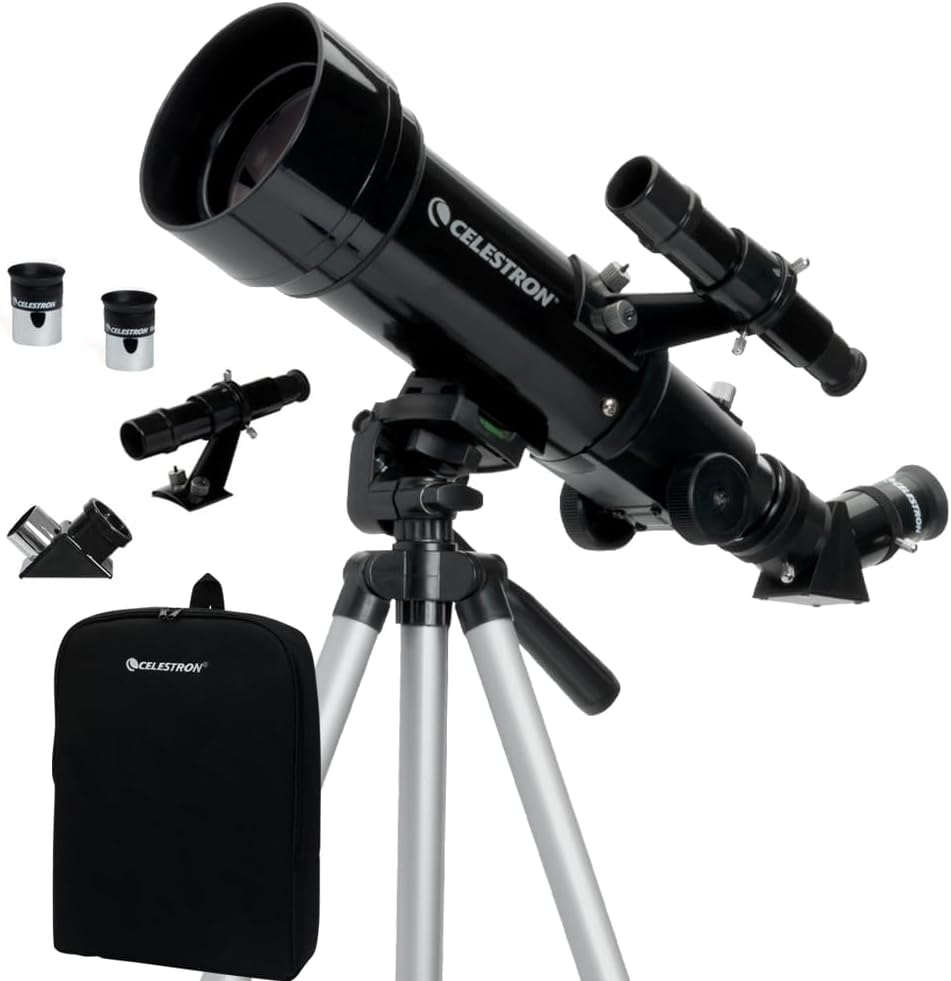
How smartphone-only capture actually works
The Hestia is not a telescope you look through with your eye. It is a 30 mm aperture, 150 mm focal length apochromatic-style optical relay that projects an image onto your phone's main rear camera lens through a precisely aligned coupler. The Gravity app (iOS and Android, free) controls exposure, ISO, stacking and plate-solving. You point roughly using the app's overlay on your phone's compass and gyro, fine-tune with two thumb wheels on the side, then let it integrate frames for two to twenty minutes depending on the target.
That "phone is the sensor" trick has two consequences a smart dorm buyer should understand before clicking buy. First, image quality scales with your phone. A Pixel 8 Pro, iPhone 15 Pro or newer pulls noticeably more detail than a four-year-old midrange Android, because the underlying CMOS, lens, and computational pipeline are doing the heavy lifting. Second, you cannot mix and match — if you change phones mid-semester you may need to re-buy or 3D-print the phone-specific adapter plate. Vaonis sells plates for most flagship models, and the campus makerspace can print one in a few hours if yours is exotic.
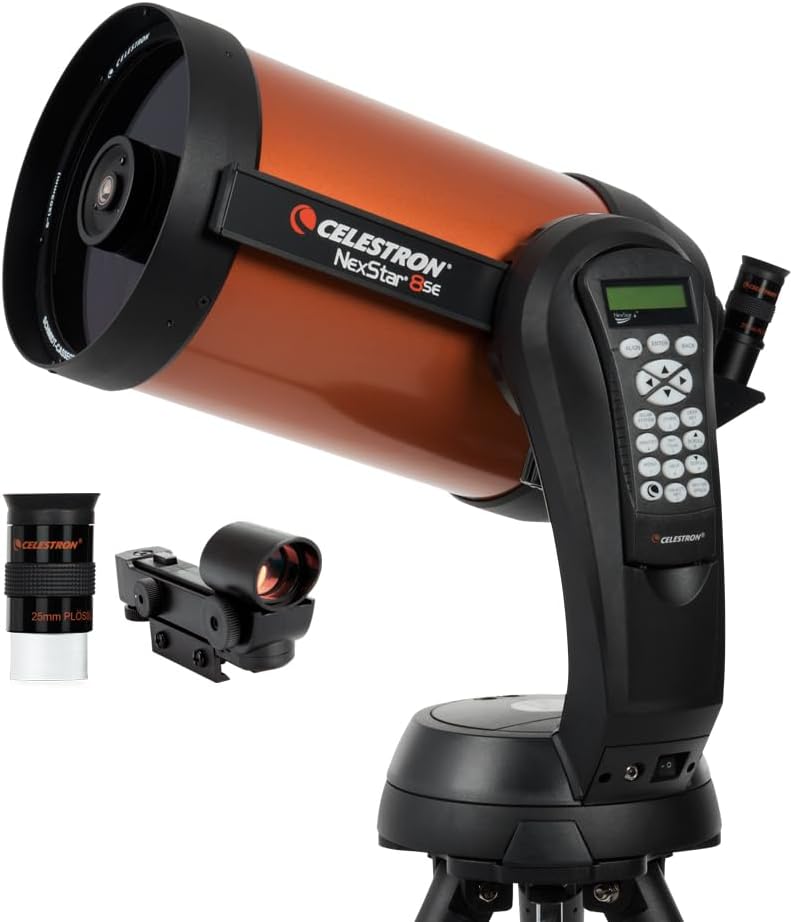
Spec snapshot vs. the usual "first telescope" advice
Most first-telescope guides will tell a college student to buy a Dobsonian or a small computerized SCT like a NexStar. Those are fine instruments — and we cover them in our best beginner GoTo telescopes for 2026 — but they assume you have a car, a yard, and storage. Here is how the Hestia compares on dorm-relevant axes against the two computerized scopes students most often ask about.
| Spec | Vaonis Hestia | Celestron NexStar 6SE | Celestron NexStar 8SE |
|---|---|---|---|
| Aperture | 30 mm | 150 mm | 203 mm |
| Weight (OTA + mount) | ~1.1 kg | ~13 kg | ~17 kg |
| Folded footprint | Hardcover book | Carry-on suitcase | Checked suitcase |
| Power source | Your phone | 8 AA or AC adapter | 8 AA or AC adapter |
| Capture device | Your smartphone | Eyepiece or adapter | Eyepiece or adapter |
| Setup time | ~60 seconds | 10–15 minutes | 15–20 minutes |
| Typical 2026 price | $249–$349 | $899–$999 | $1,499–$1,699 |
| Dorm-friendly? | Yes | Marginal | No |
The aperture column makes the Hestia look hopelessly outclassed, and on raw photons it is — a NexStar 8SE collects roughly 46x more light. But raw photons are not what limits a smartphone-only stargazer in a dorm. Storage, setup time, and power are what limit them, and on those three axes the Hestia wins by an order of magnitude.
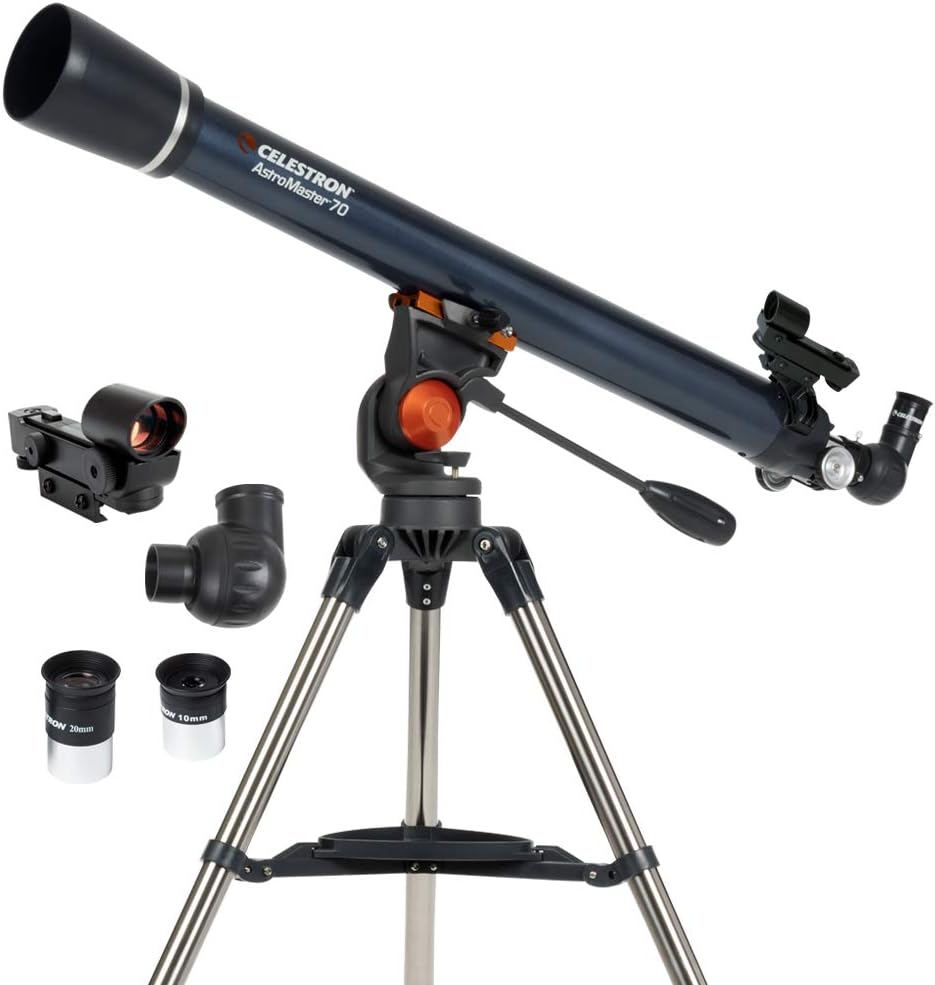
Where the Hestia stops being enough
Be honest about the ceiling. The Hestia will give you postable Moon shots, a recognizable Andromeda, the Orion Nebula's core, the Pleiades, sunspots in white light, and big star clusters like the Double Cluster in Perseus. It will not show you Jupiter's belts in any meaningful detail, will not resolve Saturn's Cassini division, and will struggle on faint galaxies from any campus inside a Bortle 6 or worse sky. If your astronomy interests are planetary or you are a physics major who wants to actually do photometry, you are buying the wrong tool.
That ceiling is why the comparison picks below exist. They are not the dorm pick — the Hestia is — they are the "I moved off-campus junior year and now have a porch and a Subaru" upgrade. Skip them entirely if you are a freshman or sophomore and stick with the Hestia.
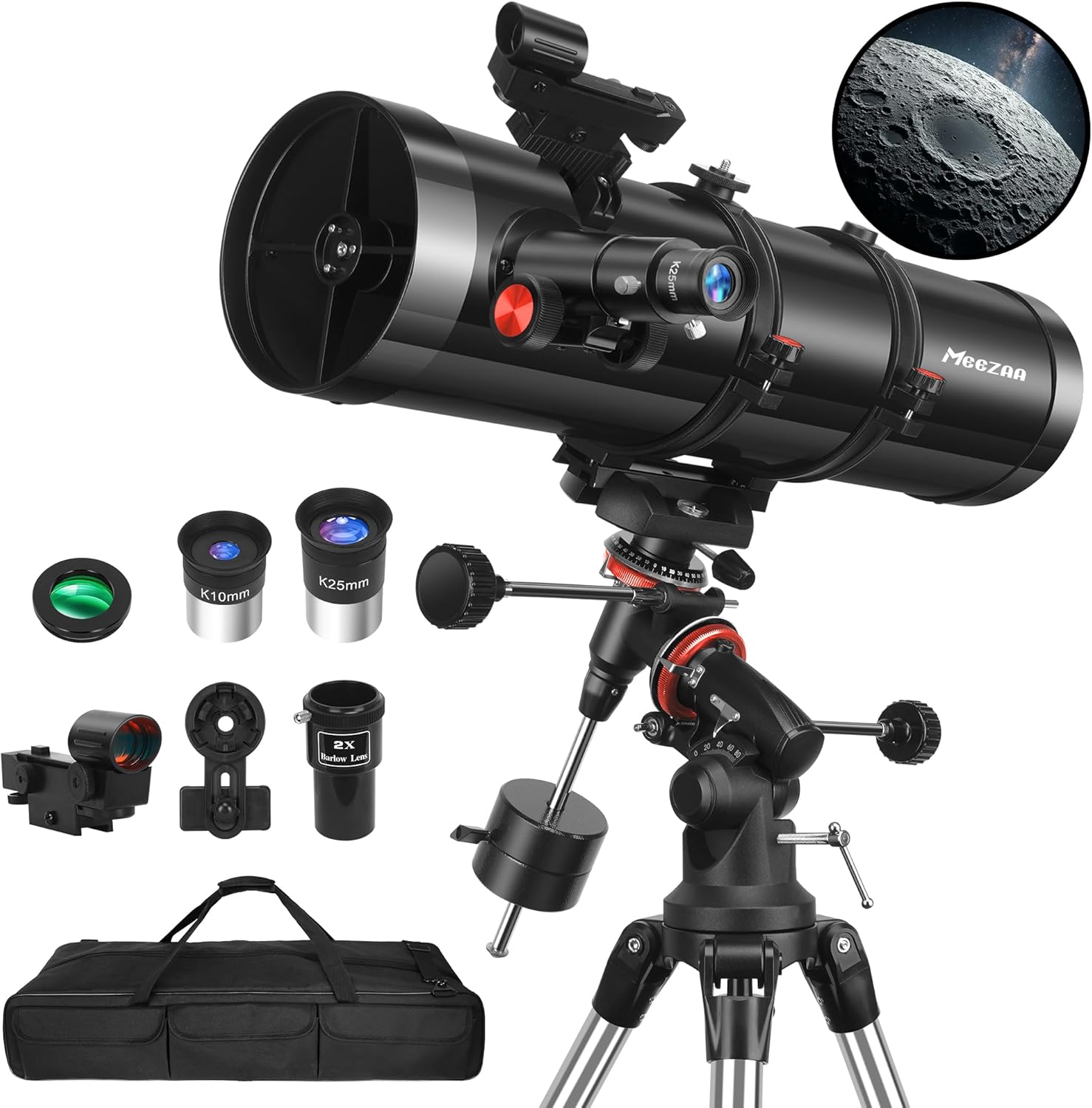
Best upgrade once you have a car: Celestron NexStar 6SE
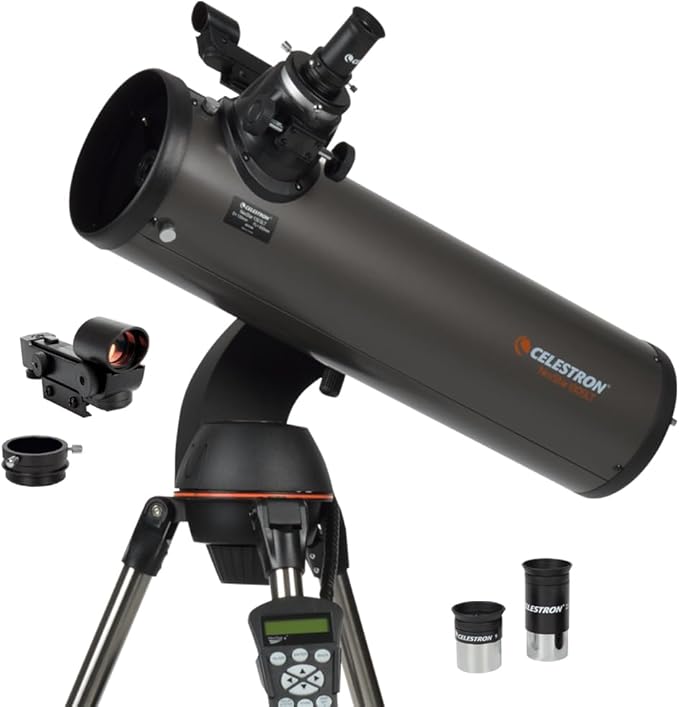
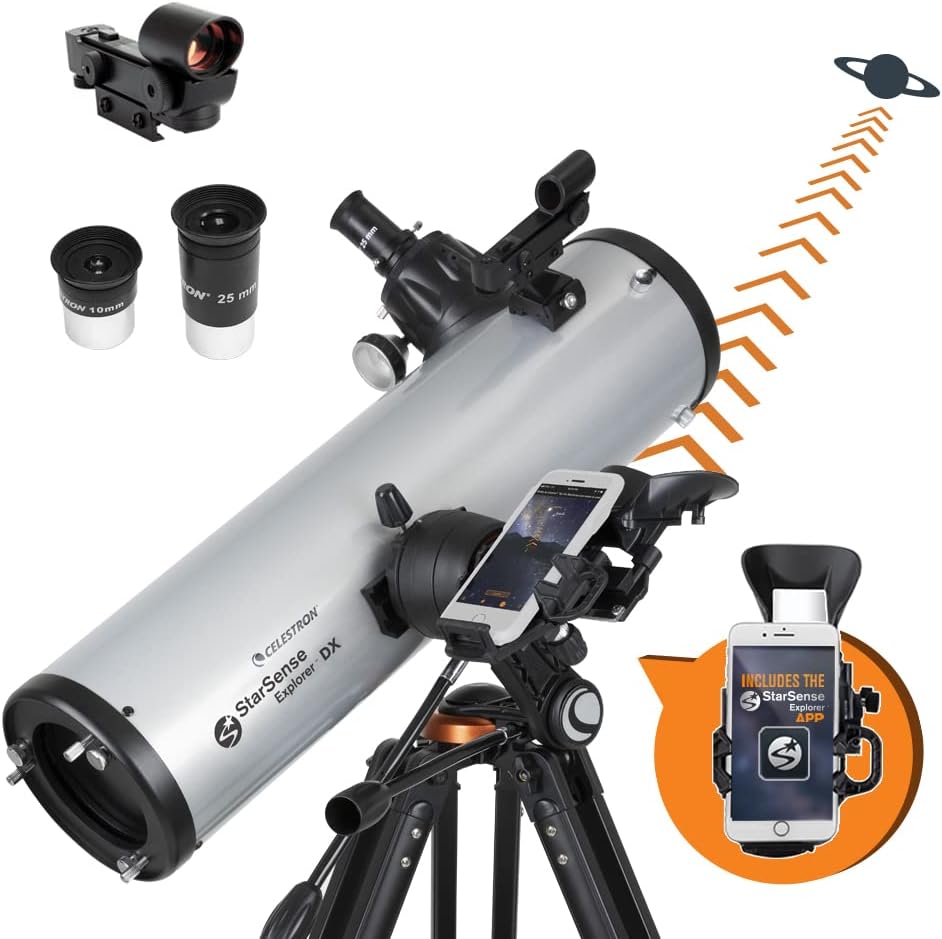
The 6SE is the sweet spot when you graduate from "I live in a dorm" to "I live in a four-person house with a driveway." Six inches of aperture is enough to split Saturn's rings, show cloud bands on Jupiter, and pull real detail from brighter galaxies and globular clusters. The single-fork-arm GoTo mount sets up in about ten minutes once you've done it twice, runs on AA batteries in a pinch, and the whole rig fits in a hatchback. Pair it with a phone adapter and you can keep using the smartphone-capture workflow you learned on the Hestia. Check the Celestron NexStar 6SE on Amazon.
Best upgrade if dark skies are reachable: Celestron NexStar 8SE with smartphone adapter kit
If your campus is within a 30-minute drive of a Bortle 4 or darker site — Cornell, Penn State, UC Santa Cruz, most state schools outside the Northeast corridor — the 8SE is the rig that will keep delivering for the next decade. The bundled NexYZ DX three-axis smartphone adapter is the specific reason to pick this kit version: it clamps to the eyepiece and lets you align your phone camera over the field in about fifteen seconds, which is the difference between actually capturing planets and giving up. Eight inches of aperture is enough to make planetary imaging genuinely rewarding. It is also too heavy and too power-hungry for most freshman dorm rooms, which is why this is a junior-year purchase, not a move-in purchase. Check the NexStar 8SE + NexYZ DX kit on Amazon.
What to budget for beyond the scope itself
A smartphone-only stargazer on a real college budget should plan for about $40–$80 of accessories on top of the Hestia. A cheap phone tripod with a Bluetooth shutter (so you are not jiggling the rig every time you tap capture), a red-cellophane-wrapped flashlight or a $10 red headlamp for preserving night vision, and a soft padded sleeve for the scope to live in your backpack. Skip the expensive carbon fiber tripod — the Hestia is light enough that a $25 aluminum phone tripod is sufficient. If you wear glasses, also budget for a microfiber cloth, because the phone-coupler plate fogs in cold weather and you will be wiping it twice an hour in February. For more on the dorm gear list, see our dorm room astronomy gear checklist.
Light pollution and the campus reality
Most universities sit in Bortle 6 to 8 skies — bright suburban to inner-city. The Hestia handles this better than a traditional scope at the same price because stacking software is fundamentally an SNR trick, and computational stacking averages light pollution down faster than it averages signal down. You will still get more out of one weekend drive to a dark site than from a semester of dorm-window sessions, but the dorm-window sessions are not useless. The Moon is unaffected by light pollution; the Sun (with the included filter — never improvise this) is unaffected; bright open clusters are largely unaffected. That is enough material to keep a casual interest alive between trips.
Frequently Asked Questions
Is the Vaonis Hestia good enough for an astronomy class assignment?
For an intro astronomy lab that asks you to photograph the Moon's phases, identify lunar craters, sketch the Pleiades, or track sunspots across a week, yes — the Hestia is more than adequate and easier to submit imagery from than any eyepiece-based scope. For an upper-division observational astronomy course that requires calibrated photometry or spectra, no, you need a real CCD-based rig or telescope time at the campus observatory.
Does the Hestia work with iPhone and Android equally well?
Both platforms run the Gravity app and both are officially supported, but iPhones currently have a slight edge because Apple's ProRAW pipeline preserves more dynamic range than most Android equivalents. Pixel and recent Samsung flagships are very close. Budget Androids under about $400 will still work but produce noisier stacks, especially on faint deep-sky targets.
Can I use the Hestia from my dorm window without going outside?
For the Moon and the Sun, yes, with two caveats: the window must be open or extremely clean single-pane glass (double-pane introduces ghosting), and you need a clear line of sight to the target at the time you want to shoot. For deep-sky targets like Andromeda you really do need to go outside — interior light leakage and window reflections will dominate the stack.
How does the Hestia compare to the Dwarf 3 or Seestar S50 for a dorm setup?
The Dwarf 3 and ZWO Seestar S50 are active smart-telescopes with their own sensors, motors, and batteries, and they produce noticeably better deep-sky images. They also cost two to three times as much, weigh five to seven times as much, and need charging. For a strict smartphone-only budget the Hestia wins on price and weight; if you can stretch to about $500 the Seestar is the better deep-sky tool. We compared all three in our Seestar S50 vs Dwarf 3 vs Hestia head-to-head.
Will the Hestia show me planets?
Mars, Jupiter, Saturn and Venus all show up as bright dots with hints of color, and you can resolve the Galilean moons of Jupiter as distinct points. You will not see surface detail, cloud bands, or ring structure — the 30 mm aperture and 150 mm focal length simply cannot deliver planetary detail. If planets are your primary interest, save for a 6-inch or 8-inch SCT instead.
Is it safe to leave the Hestia on a desk in a humid dorm room?
Yes, with normal care. The optics are sealed against casual dust and the body is glass-filled polymer, not coated metal, so humidity is not a corrosion concern. Avoid storing it on a windowsill where condensation cycles will deposit moisture on the front element, and keep the lens caps on between sessions. A silica gel packet in the storage sleeve is a $1 insurance policy worth taking.
Can two roommates share one Hestia across two phones?
Yes — this is one of the under-appreciated dorm wins. The adapter plate is phone-specific, so you need one plate per phone model, but the optical body is shared. Plates are roughly $30 each from Vaonis or free if your makerspace will print one. Two roommates splitting a Hestia and printing their own plates brings the per-person cost under $150, which is the cheapest credible astronomy entry point on the market in 2026.
Bottom line
For a freshman or sophomore with one drawer of free space, one phone, and one budget line item for a hobby, the Hestia is the right answer in 2026. It is not the best telescope you can buy, but it is by a wide margin the best telescope you can buy and actually use from a college dorm. Buy it now, learn the sky with it for two years, and revisit a 6SE or 8SE when you move into a house with a driveway.
Key Takeaways
- Choosing the right Vaonis Hestia for college dorm stargazers means matching capacity and output ports to your actual devices
- Always check actual watt-hours (Wh), not just watts — runtime depends on Wh, not peak output
- Also covers: Hestia smartphone telescope dorm room
- Also covers: college student astronomy budget
- Also covers: Vaonis Hestia window sill setup
- Compare price-per-Wh across models to find the best value for your budget