Why the Meade LX90 ACF 12 inch suburban driveway combo actually works
If you're stuck observing from a meade lx90 acf 12 inch suburban driveway with sodium and LED streetlights blasting overhead, the good news is that this scope is genuinely well suited to the job. The 12-inch aperture pulls in enough photons to punch through moderate light pollution on planets, the Moon, double stars, and brighter Messier targets. The Advanced Coma-Free optics keep stars tight to the field edge, and the fork-mounted GoTo system lets you re-acquire targets quickly between passing car headlights and porch lights. With a proper shroud, dew shield extension, and smart eyepiece choices, glare becomes manageable rather than a dealbreaker.
How streetlight glare actually hurts your view
Streetlight glare attacks a Schmidt-Cassegrain like the LX90 ACF 12" in two ways. First, direct glare hits the corrector plate and scatters inside the optical tube, washing out contrast even on bright targets like Jupiter. Second, sky glow from upward-spilling LED fixtures lifts the background brightness, eating into your faint-detail margin on galaxies and nebulae. The 12" aperture helps with the second problem because more aperture genuinely beats more sky glow on extended objects, but the first issue—stray light entering the tube—has to be solved mechanically with shrouds and shields.
The good news about ACF optics specifically: their flatter, coma-free field means glare-induced ghosting and field-edge smearing are noticeably less than older Schmidt-Cassegrain designs. You get cleaner contrast across the eyepiece field, which matters when your background sky is already compromised by neighborhood lighting.
What the LX90 ACF 12" gives you on a suburban driveway
The Meade LX90 ACF 12 inch is, by aperture alone, a serious instrument: 12 inches of light grasp, roughly 3,048 mm focal length at f/10, and Meade's AutoStar GoTo with a 30,000+ object database. On a suburban driveway with streetlight glare, here's what that translates to in practice:
- Planets and Moon: Stunning. Streetlights barely affect lunar and planetary contrast at high magnification.
- Double stars and open clusters: Excellent. The aperture splits tight pairs and resolves cluster cores.
- Globular clusters: Very good. M13, M5, and M22 resolve to the core even from Bortle 7 skies.
- Galaxies: Bright Messier galaxies (M31, M81, M82, M51) show structure with a UHC or broadband filter, but faint NGC targets struggle.
- Nebulae: Emission nebulae respond well to OIII or UHC filters; reflection nebulae are tough.
Building a streetlight shield system for your driveway
You can't always move the scope, so you have to block the lights. A few proven approaches:
- Extended dew shield: Add 12–18 inches beyond the corrector plate. A flexible Kendrick or AstroZap shield blocks side glare and reduces dew loading at the same time.
- Driveway shroud: A blackout-cloth wall on PVC frames, positioned between you and the worst streetlight, eliminates roughly 80% of direct glare.
- Observing hood: A dark towel or proper observing hood over your head and the diagonal cuts ambient light reaching your eye.
- Strategic parking: Park your car between the scope and the streetlight. The car body becomes a free, mobile glare shield.
For more on light-pollution mitigation gear, see our guide to best light pollution filters for 2026 and our dew shield buyer's guide.
If the LX90 ACF 12" is too much: realistic alternatives
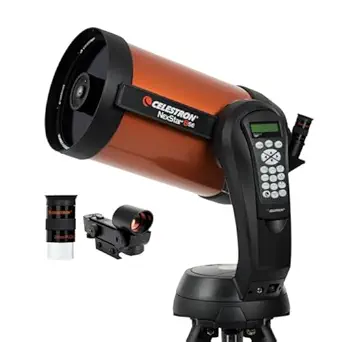
Here's where we have to be honest: the LX90 ACF 12" is a 60-pound fork-mounted SCT. Setup on a driveway means wheeling it out, leveling, and waiting for thermal equilibrium. If you observe casually one or two nights per week, that friction is real. Many driveway astronomers are better served by an 8" or 6" Schmidt-Cassegrain with a single-arm GoTo mount you can carry out in two trips. The Celestron NexStar SE line is the most popular suburban-driveway scope family for exactly this reason, and it scales the same f/10 optical experience down to manageable weights.
Comparison: 12" LX90 vs. 8" and 6" suburban alternatives
| Spec | Meade LX90 ACF 12" | Celestron NexStar 8SE | Celestron NexStar 6SE |
|---|---|---|---|
| Aperture | 305 mm (12") | 203 mm (8") | 150 mm (6") |
| Focal length | 3,048 mm f/10 | 2,032 mm f/10 | 1,500 mm f/10 |
| Optical design | ACF (coma-free) | Schmidt-Cassegrain | Schmidt-Cassegrain |
| Mount type | Dual-fork GoTo | Single-arm GoTo | Single-arm GoTo |
| Total setup weight | ~60 lb | ~33 lb | ~30 lb |
| Setup time | 10–15 min | ~5 min | ~4 min |
| Driveway portability | Wheeled cart needed | Two trips | One trip |
| Streetlight glare handling | Excellent w/ shroud | Very good w/ shroud | Good w/ shroud |
| Best for | Serious suburban observer | All-around suburban | Casual driveway use |
Recommended scopes for the meade lx90 acf 12 inch suburban driveway buyer
If you're shopping in this category, you're either committing to the LX90 ACF 12" or, more often, looking for a more practical setup. The Celestron NexStar SE line uses the same Schmidt-Cassegrain optical principles and the same f/10 ratio, so the observing experience scales down predictably. Here are the picks I'd point a suburban-driveway buyer toward in 2026.
Celestron NexStar 8SE — best all-around suburban driveway alternative
The NexStar 8SE is the most popular driveway scope in North America, and for good reason. Eight inches of aperture is the sweet spot for suburban skies—big enough to pull deep-sky detail through moderate light pollution, small enough to set up in five minutes. The SkyAlign system gets you aligned without knowing constellations, which matters when streetlights are washing out half the sky and you can't see textbook alignment stars. The 40,000+ object database keeps you observing instead of star-hopping. Pair it with a UHC filter and you have a genuinely capable suburban rig.
Check the Celestron NexStar 8SE on Amazon
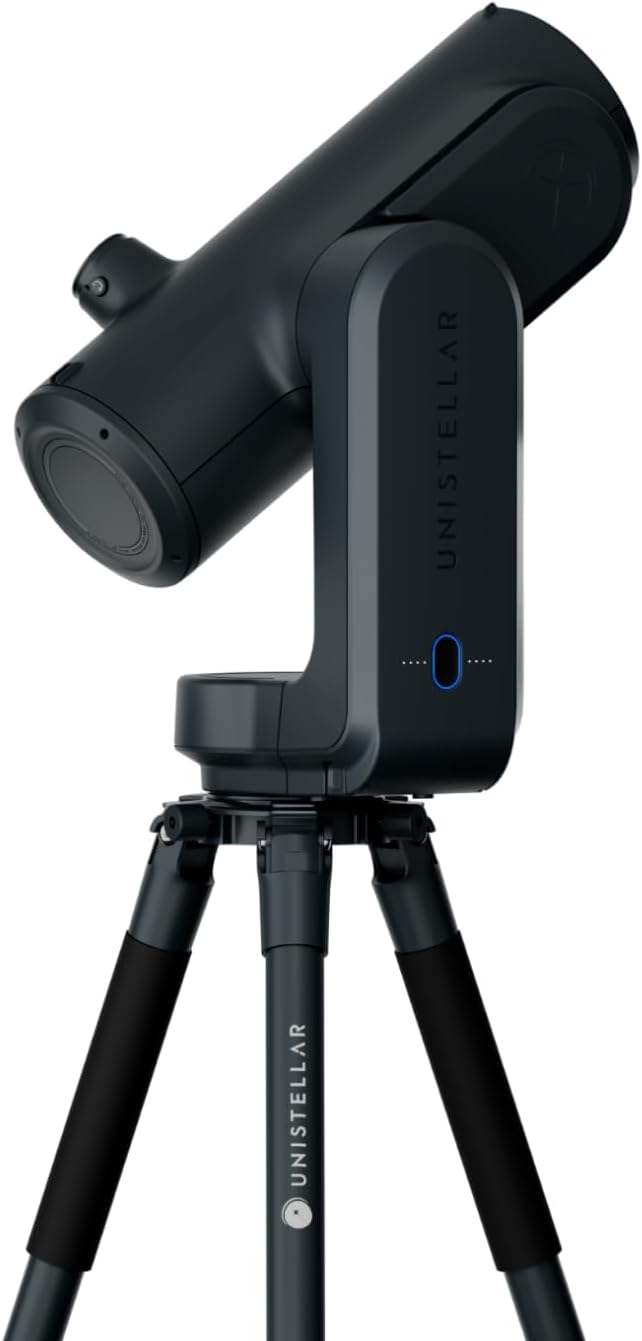
Celestron NexStar 8SE with NexYZ Smartphone Adapter — best for shareable views
If you want to photograph what you see and share it with family or social, this bundle pairs the 8SE with the NexYZ DX three-axis smartphone adapter and an AC adapter. The NexYZ aligns your phone camera precisely with the eyepiece, so lunar and planetary phone shots are sharp instead of off-axis. The AC adapter eliminates battery anxiety during long suburban sessions—critical because GoTo mounts drain eight AA cells fast in cool weather. For a meade lx90 acf 12 inch suburban driveway shopper who wants modern conveniences without the 60-pound setup, this is the easier path.
Check the NexStar 8SE + NexYZ kit on Amazon
Celestron NexStar 6SE — best lightweight grab-and-go for tight driveways
If your driveway is small, your storage is tight, or you simply don't want to lift more than 20 pounds at a time, the 6SE is the right answer. You lose roughly 1.8x the light grasp versus the 8SE, but you gain genuine grab-and-go convenience. On planets, the Moon, double stars, and bright clusters, the 6SE performs nearly identically to the 8SE under streetlight glare conditions—because contrast on those targets is light-pollution-resistant. It's the scope you'll actually use on weeknights.
Check the Celestron NexStar 6SE on Amazon
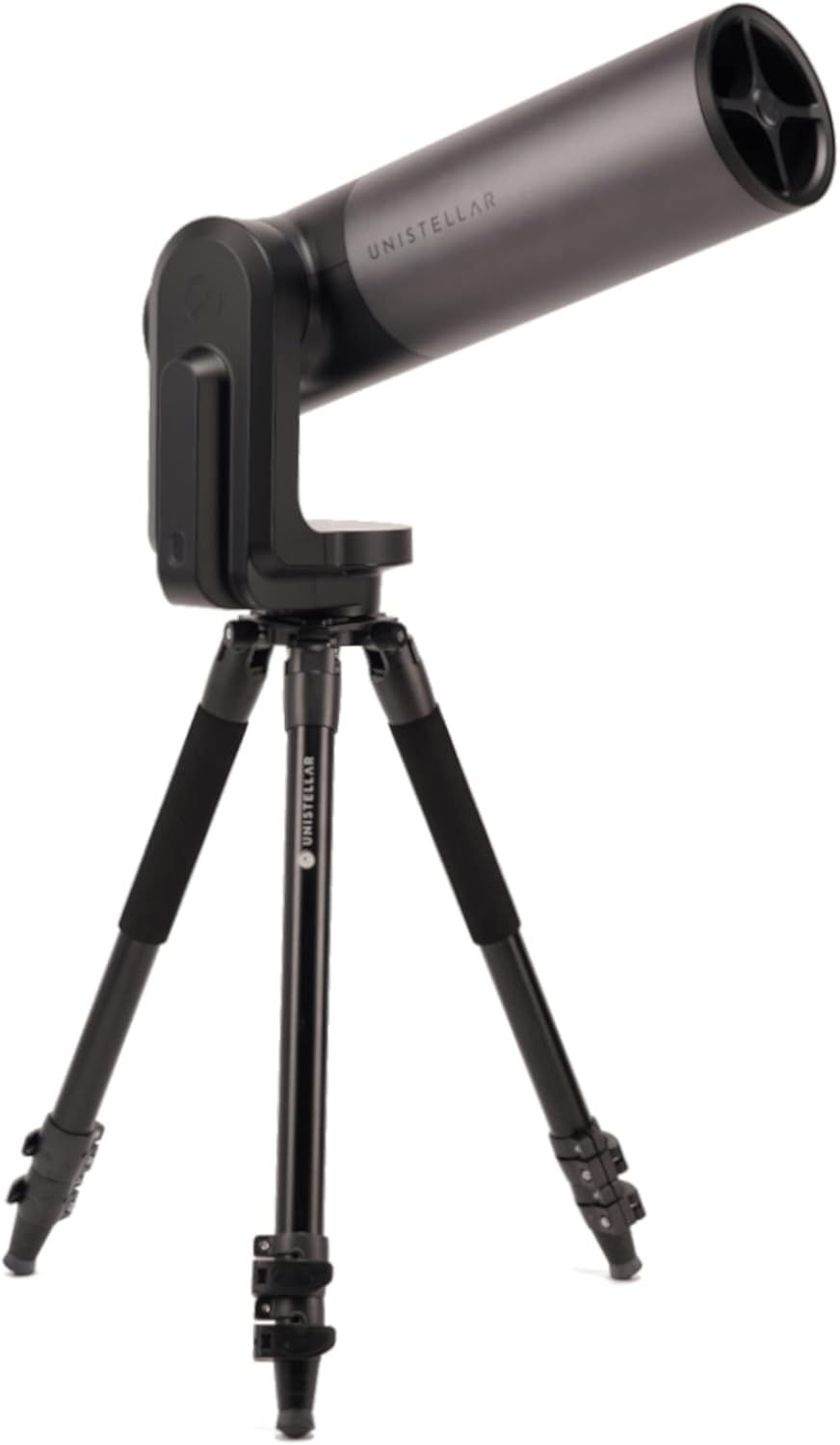
Celestron NexStar 8SE with Eyepiece and Filter Kit — best ready-to-observe bundle
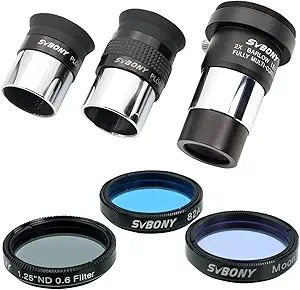
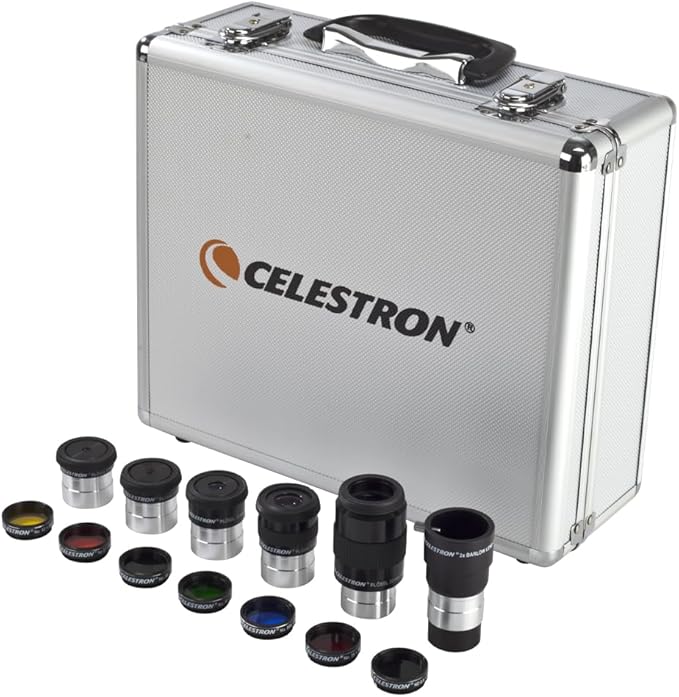
This bundle adds a 1.25" eyepiece and filter kit to the standard 8SE, which solves the single biggest beginner problem: the stock 25 mm eyepiece alone isn't enough for serious observing. The kit typically includes additional focal lengths plus colored planetary filters and a Moon filter. On a streetlight-affected driveway, a Moon filter is critical—the Moon at full phase through any large SCT is genuinely uncomfortable without one. The colored filters help isolate planetary features that contrast-poor sky tends to mask.
Check the NexStar 8SE Eyepiece & Filter Kit on Amazon
Eyepieces and filters for streetlight-affected suburban skies
Aperture matters, but glass and filters matter just as much from a driveway. For a 12" LX90 ACF (or any large SCT under streetlights), prioritize:
- A narrowband UHC filter: Lifts contrast on emission nebulae (M42, M8, M17, Veil) by 2–3 magnitudes against light-polluted sky.
- An OIII filter: The strongest light-pollution rejection filter for planetary nebulae and the Veil. Makes the Ring Nebula stand out even under Bortle 7.
- A 13–17 mm wide-field eyepiece: Sweet spot for galaxies and clusters at f/10. Avoid Plossls beyond 32 mm—they're useless on an SCT.
- A 6–8 mm planetary eyepiece: The 12" aperture happily takes 400x+ on Jupiter and Saturn when seeing allows.
For a deeper dive, see our piece on best eyepieces for Schmidt-Cassegrain telescopes in suburban skies.
Driveway-specific operating tips
A few practical habits that separate satisfied driveway astronomers from frustrated ones:
- Thermal equilibrium: A 12" SCT needs 60–90 minutes to fully equilibrate. Roll it out at sunset. An 8" needs 30–45 minutes.
- Asphalt heat plumes: Asphalt radiates heat for hours after sunset, degrading planetary seeing. Set up on grass if possible, or wait until after midnight.
- Neighbor diplomacy: Ask your neighbors to shield their porch lights or use warm bulbs. Most are happy to help once they understand.
- Power management: Run GoTo mounts off an AC adapter or a dedicated 12V power tank, never AA batteries for serious sessions.
- Dew control: A heated dew strap on the corrector plate is non-negotiable in humid climates. Streetlights don't dry your optics—heated wraps do.
Frequently Asked Questions
Is the Meade LX90 ACF 12 inch too big for a typical suburban driveway?
Not too big optically—12" of aperture is genuinely useful even under streetlights, especially for planets, double stars, and brighter deep-sky objects. The real question is ergonomics. The total package is around 60 pounds and requires a wheeled cart for repeated setups. If your driveway is flat and you can store the scope assembled in a garage, it works well. If you have to lift it down stairs or carry it across grass, you'll use it less often than an 8SE.
How much does streetlight glare actually reduce what I can see with a 12" SCT?
On planets and the Moon, almost zero impact—contrast on bright targets is dominated by aperture and seeing, not sky brightness. On galaxies and faint nebulae, the impact is large: a Bortle 6 driveway typically costs you 1.5–2 magnitudes of limiting visual magnitude compared to a dark site. The 12" aperture partially compensates by capturing more total photons, so you still see more than an 8" under the same conditions.
What's the best light-pollution filter for a 12" SCT in 2026?
For emission nebulae, a quality narrowband UHC filter (Lumicon, Astronomik, or Optolong) is the single most impactful purchase. For planetary nebulae, an OIII filter is dramatic. Broadband "light pollution" filters help less than they used to because modern LED streetlights have continuous spectra that don't respond to broadband rejection. Skip the broadband CLS-style filters unless you're imaging.
Can I do astrophotography from a streetlight-affected driveway with an LX90?
Short exposures of the Moon and planets—yes, easily. Long-exposure deep-sky imaging—technically possible but limited. The fork mount in alt-az mode produces field rotation, so you need an equatorial wedge for unguided long exposures. Even with the wedge, the light-polluted sky background limits you to 30–60 second subs before saturation. Narrowband imaging with H-alpha, OIII, and SII filters can produce excellent results from any suburban driveway.
Is the Celestron NexStar 8SE really comparable to the Meade LX90 ACF 12" for suburban use?
Not optically equivalent—the LX90 12" has more than twice the light-gathering area and resolves finer detail. But for the casual suburban observer who gets out one or two nights per week, the 8SE delivers about 85% of the practical experience at roughly half the weight and a fraction of the cost. The honest answer: if you'll observe twice as often with the 8SE, you'll see more cumulatively than with a 12" that stays in the garage.
How do I align a GoTo telescope when streetlights wash out my alignment stars?
Use a one-star or solar-system alignment if available—most modern GoTo systems including the Meade AutoStar and Celestron SkyAlign support aligning on the Moon or a bright planet. Polaris is usually visible even from Bortle 7 driveways. If you can see only one or two stars total, prioritize alignment stars on opposite sides of the sky rather than near each other for the best pointing accuracy.
Should I get a dew heater for driveway use even in summer?
Yes. SCT corrector plates dew up dramatically faster than refractors or Newtonians because they face the cold sky directly. In summer, dew typically forms 60–90 minutes after sunset. A heated strap around the corrector cell, powered by your 12V tank, prevents this entirely. It's one of the highest-value accessories you can buy for any SCT, including the LX90 ACF 12" or any of the Celestron NexStar models.
Key Takeaways
- Choosing the right meade lx90 acf 12 inch suburban driveway means matching capacity and output ports to your actual devices
- Always check actual watt-hours (Wh), not just watts — runtime depends on Wh, not peak output
- Also covers: meade lx90 streetlight glare
- Also covers: lx90 acf 12 inch suburban observing
- Also covers: meade lx90 light pollution driveway
- Compare price-per-Wh across models to find the best value for your budget