If you live in a condo and your only piece of "sky" is a 4 by 8 foot balcony with railings, a neighbor's air conditioner, and a streetlight glaring up from below, the dwarf 3 vs seestar s30 balcony condo question really boils down to two things: which smart telescope tolerates the most obstructed sky, and which one packs away fastest when you have to retreat indoors. The short answer for 2026 is that the ZWO Seestar S30 is the better grab-and-shoot all-in-one for narrow balconies because of its built-in tripod, integrated dual-band filter, and smaller footprint, while the DwarfLab Dwarf 3 wins for wider field landscape astrophotography, dual-camera framing, and daytime versatility.
Below is a detailed head-to-head built specifically around the realities of balcony-only condo stargazing: limited horizon, sky glow, weight limits, and the constant fear of dropping a telescope eleven floors down. We will also touch on traditional GoTo alternatives that some condo dwellers consider when they outgrow smart scopes.
The best dwarf 3 vs seestar s30 balcony condo for your situation depends on how you plan to use it and where.
Quick Verdict for Condo Balcony Users
For 90% of condo stargazers, the Seestar S30 is the easier recommendation. It weighs just 1.65 kg, includes a built-in tripod that opens like a camera stand, and the integrated light pollution filter actually delivers usable shots of the Rosette, North America, and Heart nebulae from a Bortle 7 or 8 balcony. The Dwarf 3 is the better pick if your balcony faces a wide, low horizon and you want a 35mm + 150mm dual-lens system that can also do wildlife, landscape timelapses, and solar work in daytime.
Comparison Table: Dwarf 3 vs Seestar S30 for Balcony Use
| Spec | DwarfLab Dwarf 3 | ZWO Seestar S30 |
|---|---|---|
| Aperture | 35mm wide + 35mm tele | 30mm refractor |
| Focal length | 150mm telephoto / 6.7mm wide | 150mm |
| Sensor | IMX678 (8.4MP) + IMX415 wide | IMX662 (2.1MP) |
| Weight | 1.3 kg | 1.65 kg |
| Tripod | Sold separately or kit-included | Built-in folding legs |
| Light pollution filter | Optional VIS / Astro filters | Built-in dual-band filter |
| Battery life | ~5 hours | ~6 hours |
| App | DwarfLab | Seestar (ZWO) |
| Balcony setup time | 3-5 minutes | 60-90 seconds |
| Daytime use | Yes (wildlife, landscape, solar) | Limited (solar only) |
| Best for | Versatility, wide-field, dual framing | Pure deep-sky from light polluted sky |
Why the Balcony Environment Changes Everything
A condo balcony is not just a small backyard. The roof or upper balcony above you typically blocks anything higher than 50 to 60 degrees altitude. The railing eats the bottom 15 degrees. Your neighbors' lights bleed sideways into the optics. And vibration from foot traffic, HVAC units, or the building itself can ruin a 30-second sub-exposure.
Smart telescopes like the Dwarf 3 and Seestar S30 mitigate every one of those issues. They use plate-solving instead of star alignment, so a tree-blocked Polaris does not matter. They stack short exposures (10 to 30 seconds), which means building vibration is averaged out instead of smeared across a single 5-minute exposure. And they are app-controlled, so you can sit on your couch in 22°C comfort while the scope shivers in winter air on the balcony.
Field of View: The Hidden Balcony Killer
This is where the two scopes differ the most. The Seestar S30 at 150mm focal length and a small 1/2.8" sensor gives roughly a 1.29° x 0.73° field. That is wide enough to fit the Andromeda Galaxy across two mosaic panels, the full Veil Nebula in a 4-panel mosaic, and most large emission nebulae.
The Dwarf 3 telephoto camera shares the same 150mm focal length but uses the larger IMX678 sensor, delivering a roughly 3° x 1.7° raw field, expandable through EQ mode mosaics. On a balcony with limited sky access, a wider native field means more targets are reachable in the slice of sky you can actually see. This is a real advantage for the Dwarf 3 if your balcony faces north or has heavy obstruction from the building above.
Light Pollution Handling on a Bortle 7-8 Balcony
Most condo balconies sit in Bortle 7-9 skies. The Seestar S30 has a built-in dual-band (Ha/OIII) filter that swings into the optical path automatically when you select a nebula target. This is the single biggest reason it punches above its weight class. From a downtown balcony, you can image the Heart Nebula in two hours and get color that rivals what a 6-inch refractor produces under suburban skies.
The Dwarf 3 does not have a built-in narrowband filter by default. DwarfLab sells the Astro Filter (dual-band) and VIS filter as accessories. If you buy the Dwarf 3 specifically for balcony deep-sky work, budget for the Astro filter, which adds about $130 and a small assembly step.
Setup Time and Storage
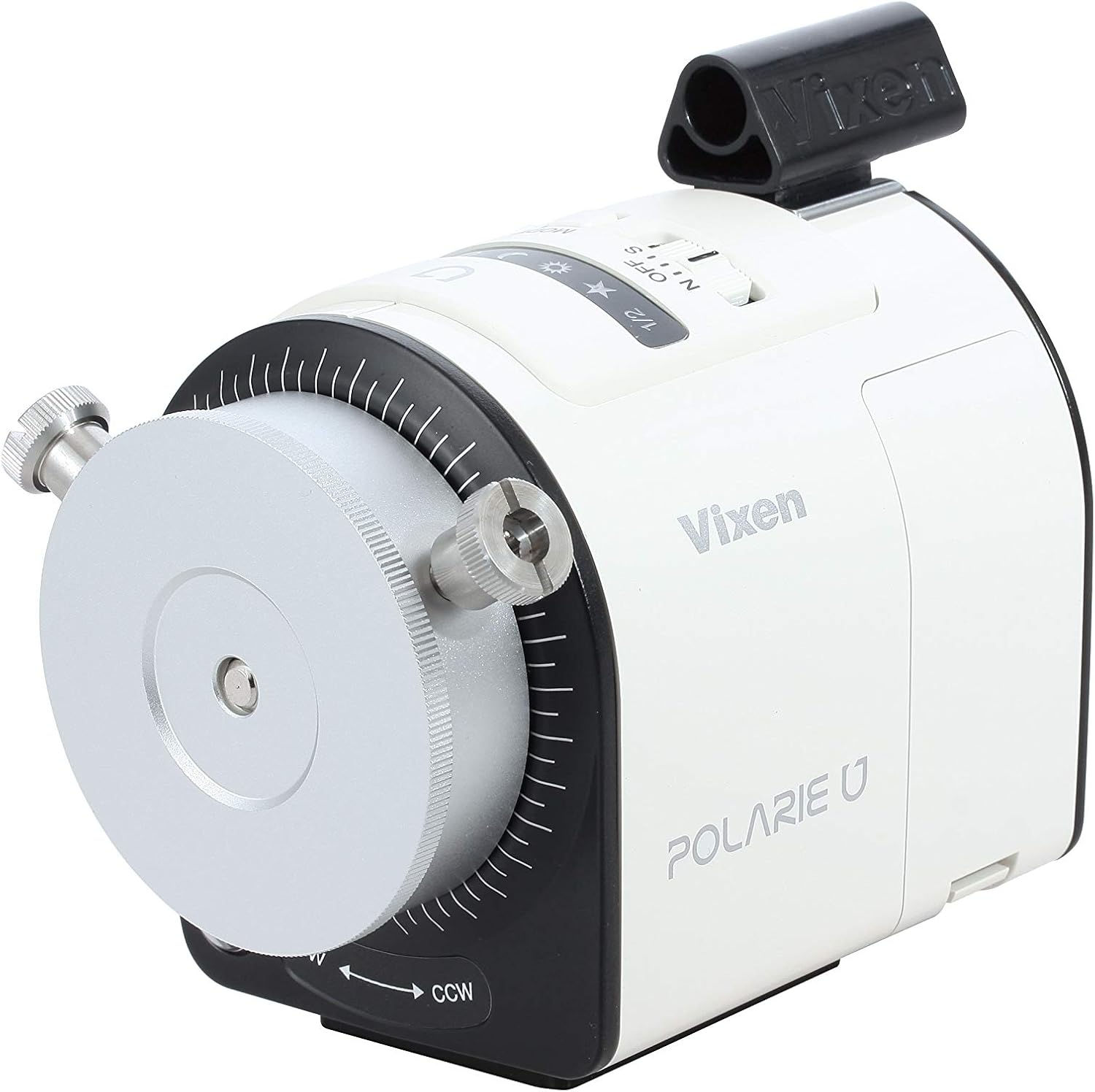
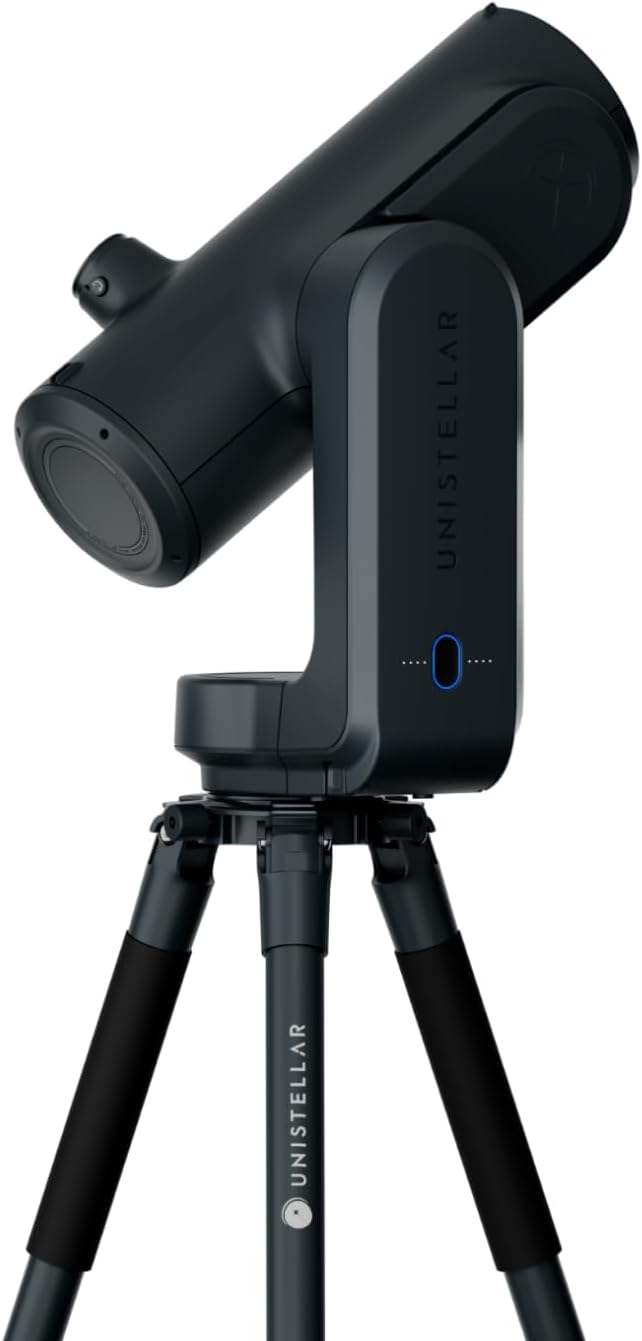
Condo dwellers know the ritual: drag the gear onto the balcony, set it up, image for two hours, then break it all down before bed. The Seestar S30 has built-in folding tripod legs and goes from case to first image in under 90 seconds. The Dwarf 3 is technically faster to deploy on a table, but most users put it on a separate tripod, which adds steps. The Dwarf 3's bag is smaller though, so for closet storage in a 600 square foot studio, it wins on packed volume.
Top Picks for Balcony Condo Stargazers
Best Overall Smart Pick: ZWO Seestar S30
For pure deep-sky imaging from a small condo balcony with light pollution, nothing else in the sub-$500 category competes with the Seestar S30. The built-in dual-band filter, autofocus, and one-tap mosaic mode make it almost foolproof. The trade-off is no daytime versatility and a relatively small sensor. Pair it with a tablet for live stacking review and you'll image targets your eye could never see from your balcony.
Best for Versatility: DwarfLab Dwarf 3
The Dwarf 3 is the right answer if your balcony is just one of many uses. The dual-camera design (wide + tele) means you can compose nightscapes with the Milky Way framed behind a city skyline, then switch to the tele camera and capture deep-sky in the same session. Add the wildlife and landscape timelapse modes and the Dwarf 3 becomes a year-round camera, not just a winter astrophotography tool.
Best Traditional Alternative: Celestron NexStar 6SE
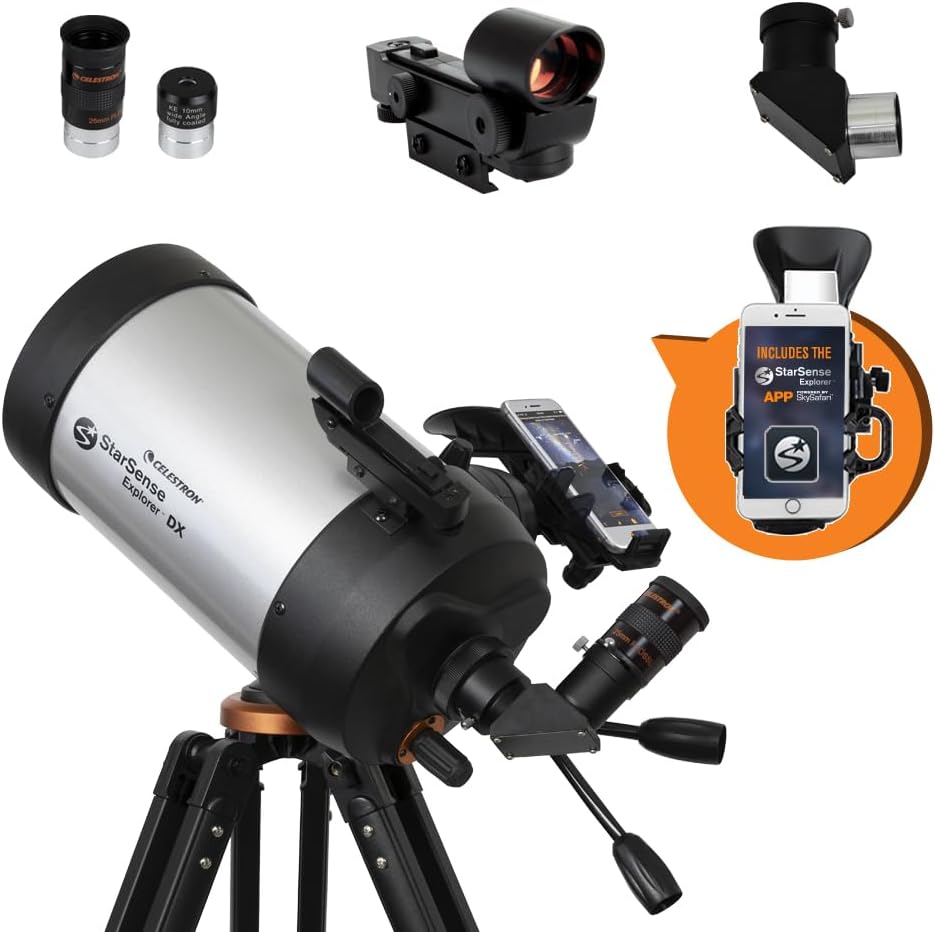
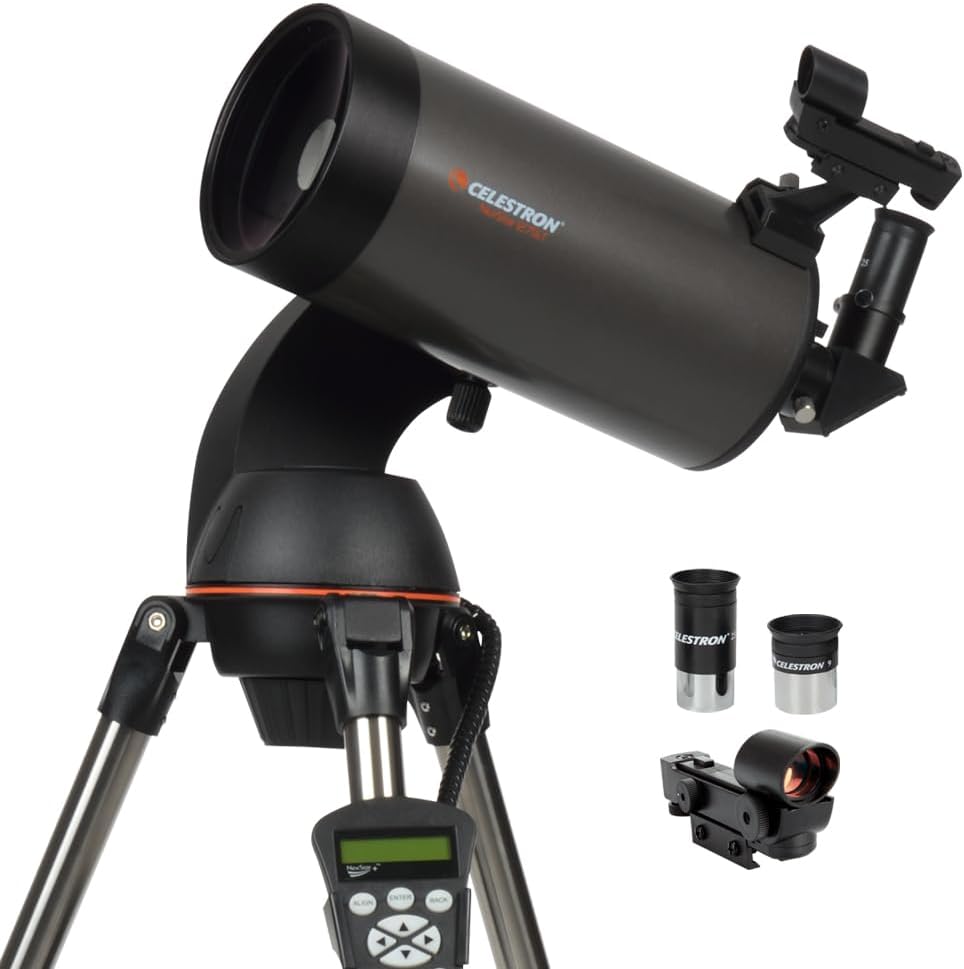
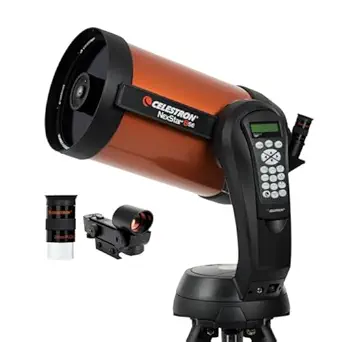
Some balcony stargazers eventually want to do visual observing too: actually putting an eye to an eyepiece and seeing Saturn's rings live. Smart telescopes cannot replicate that experience. The Celestron NexStar 6SE is the most balcony-friendly traditional GoTo scope because its single fork-arm mount footprint is under 24 inches square, the optical tube weighs 8 pounds, and SkyAlign works even when only one or two bright stars are visible above your railing. It does require power and a level surface, but for planetary, lunar, and bright deep-sky visual work from a condo balcony, it remains the top recommendation in 2026.
View the Celestron NexStar 6SE on Amazon
Best Upgrade Path: Celestron NexStar 8SE
If you have a larger balcony (say 6 by 10 feet or bigger) and your building has freight elevator access for the 33-pound total weight, the NexStar 8SE delivers genuinely impressive views of galaxies and globular clusters that the smart scopes simply cannot match visually. The 8-inch Schmidt-Cassegrain optical design keeps the tube relatively short (17 inches), which matters when maneuvering through condo doorways. The 40,000+ object database means you can spend a year exploring without ever picking the same target twice.
View the Celestron NexStar 8SE on Amazon
If you want to share what you see through it, the kit version bundles a 3-axis smartphone adapter that makes it trivial to capture Moon and Jupiter photos to send to friends. See the NexStar 8SE + NexYZ DX adapter kit for the bundle option.
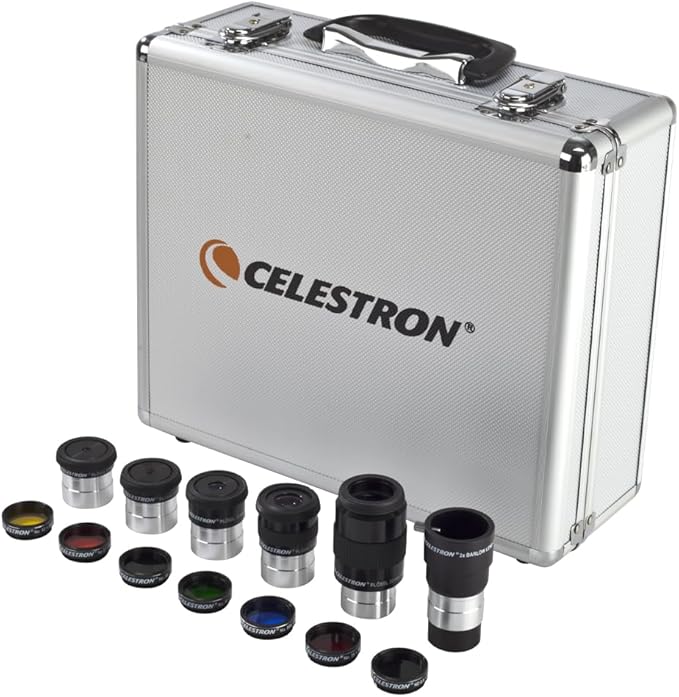
Best Eyepiece-Ready Bundle: NexStar 8SE with Eyepiece & Filter Kit
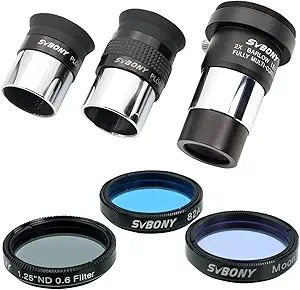
If you go the traditional route, an eyepiece and filter kit becomes essential. A Moon filter cuts brightness for lunar work, and color planetary filters bring out Jupiter's belts and Mars's polar caps. This NexStar 8SE bundle includes both, saving the usual fragmented purchase across multiple accessories.
Real Workflow: Imaging M31 From a 9th Floor Balcony
Here is what a typical session looks like with each scope from a Bortle 8 condo balcony in autumn 2026. With the Seestar S30, you place it on the balcony floor or a small side table, level using the app bubble, hit "Andromeda" in the target list, and the scope plate-solves and centers in about 45 seconds. After 90 minutes of 10-second stacked subs, you have a respectable color image with visible dust lanes.
With the Dwarf 3, you mount it on a tripod, run the EQ mode calibration (which adds 2-3 minutes), and let it run for the same 90 minutes. The wider field captures more of M31's outer halo, but the lack of a built-in filter means the background sky glow is harder to suppress in post-processing without the optional Astro filter installed.
For more on filter strategies, see our guide to light pollution filters for condo astronomy.
Vibration and Wind Considerations
High balconies sway. It is imperceptible to your feet but very obvious to a 150mm telescope. Both smart scopes handle this through short subs, but the Seestar S30's lower center of gravity (built-in legs splay outward) is noticeably more wind-stable than the Dwarf 3 on a typical lightweight travel tripod. If your balcony catches consistent wind above the 10th floor, weight the tripod or choose the Seestar.
For comparison shopping across the smart scope category, our best smart telescopes for balcony stargazing roundup covers six current models including the Seestar S50 and Vespera II.
Frequently Asked Questions
Can the Dwarf 3 see deep-sky objects from a city balcony as well as the Seestar S30?
Without the optional Astro filter, no. The Seestar S30's built-in dual-band filter gives it a real advantage in Bortle 7+ skies. Once you add the Dwarf 3 Astro filter (~$130 extra), results are comparable on emission nebulae, and the Dwarf 3 actually pulls ahead on broadband targets like galaxies because of its larger sensor.
Which smart telescope is quieter for late-night balcony use in a condo?
Both are nearly silent, but the Seestar S30's motors are slightly quieter during slewing. Neither will wake a neighbor through a wall. Cooling on the Dwarf 3 sensor is also extremely quiet. For very late sessions after midnight, either is appropriate, and both can be operated entirely from inside via Wi-Fi.
Do I need a tripod for the Seestar S30 on a balcony floor?
No, the built-in folding legs work directly on the balcony floor or any flat table. Many users prefer a small 30cm tripod to raise it above the railing for a clearer horizon, but it is not required. A travel tripod with a 3/8" or 1/4" stud works for elevation.
Can either scope image planets like Jupiter or Saturn from a balcony?
Both can capture planetary disks, but neither rivals a 6-inch or 8-inch traditional scope for planetary detail. The Seestar S30 produces a small Jupiter image with two or three cloud belts visible. The Dwarf 3 telephoto camera does slightly better due to its larger sensor. For serious planetary imaging from a balcony, look at the Celestron NexStar 6SE or 8SE instead. Our Seestar S30 vs S50 comparison goes deeper on planetary performance differences.
What about cold weather operation in winter from an unheated balcony?
Both scopes are rated for operation down to about -10°C. Battery life drops significantly below 0°C, sometimes by 40-50%. The Seestar S30 has slightly better cold-weather battery performance in real-world testing. Bring an external USB-C power bank if you plan sessions longer than 90 minutes in winter conditions.
Is the Dwarf 3 good for solar observing during the day from a south-facing balcony?
Yes, with the DwarfLab solar filter accessory installed. The Dwarf 3 also has dedicated solar tracking modes and can capture full-disk Sun images showing sunspots. The Seestar S30 includes a solar filter and also handles daytime solar work well. For dedicated solar imaging, the Dwarf 3's dual-camera design lets you frame the sky context simultaneously.
Which is easier for a complete beginner with no telescope experience?
The Seestar S30 has the gentler learning curve. Open the app, pick a target from the curated list, tap "Go." The Dwarf 3 offers more features and modes, which means more menus and more to learn. If you want to be capturing usable images on your first balcony session, choose the Seestar. If you enjoy exploring features, the Dwarf 3 rewards the curiosity.
Bottom Line
For pure balcony-only condo stargazing in 2026, the ZWO Seestar S30 is the easier and more cost-effective choice thanks to its built-in tripod and dual-band filter. The DwarfLab Dwarf 3 is the better choice if you want one device that handles deep-sky, landscapes, wildlife, and solar. If you eventually want true visual observing of planets and globular clusters from your balcony, add a Celestron NexStar 6SE alongside your smart scope rather than replacing it.
Key Takeaways
- Choosing the right dwarf 3 vs seestar s30 balcony condo means matching capacity and output ports to your actual devices
- Always check actual watt-hours (Wh), not just watts — runtime depends on Wh, not peak output
- Also covers: dwarf 3 vs seestar s30 condo balcony
- Also covers: smart telescope condo balcony
- Also covers: dwarf 3 seestar s30 comparison
- Compare price-per-Wh across models to find the best value for your budget