For Scoutmasters and den leaders planning an Astronomy merit badge campout in 2026, the Celestron StarSense LT 80AZ for scout troops is the most practical entry-level telescope on the market. Its 80mm refractor pairs with the free StarSense Explorer app, which uses your phone's camera to plate-solve the sky and walk a 12-year-old to the Moon, Jupiter, Saturn, and bright deep-sky objects in under five minutes. That means an entire patrol can rotate through the eyepiece, knock out merit badge requirements 4 and 5 (identifying constellations and observing planets), and still have time for cocoa before lights-out.
Below we break down exactly why the LT 80AZ suits merit badge nights, when a troop should step up to a computerized NexStar instead, and how to run a smooth observing session for 8–10 scouts.
Why the LT 80AZ Fits Merit Badge Night
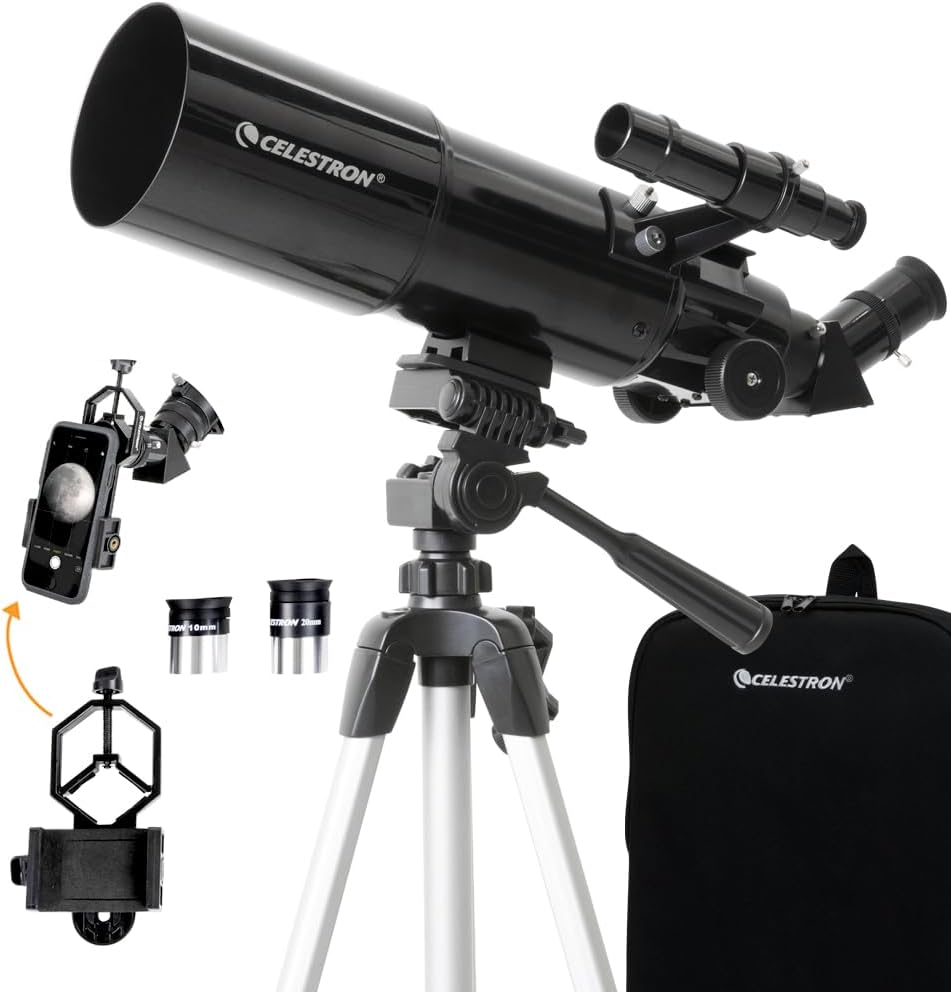
The Boy Scouts of America Astronomy merit badge requires scouts to identify ten constellations, sketch a planet, observe the Moon, and find Messier or Caldwell deep-sky objects. Traditional manual scopes assume the scout already knows where to point — a fair assumption for a hobbyist parent, an unfair one for a 6th grader standing in a dewy field at 9 p.m. The Celestron StarSense LT 80AZ for scout troops collapses that knowledge gap into a smartphone dock. The scout cradles their phone over the eyepiece tube, the app reads the star field, and arrows on the screen point them toward Albireo, the Pleiades, or whatever target the merit badge counselor named.
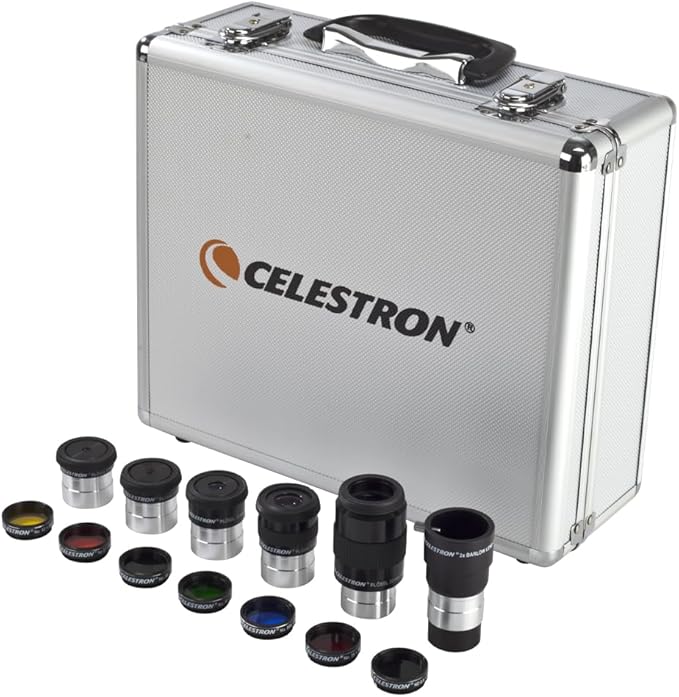
Key specs that matter for a troop environment:
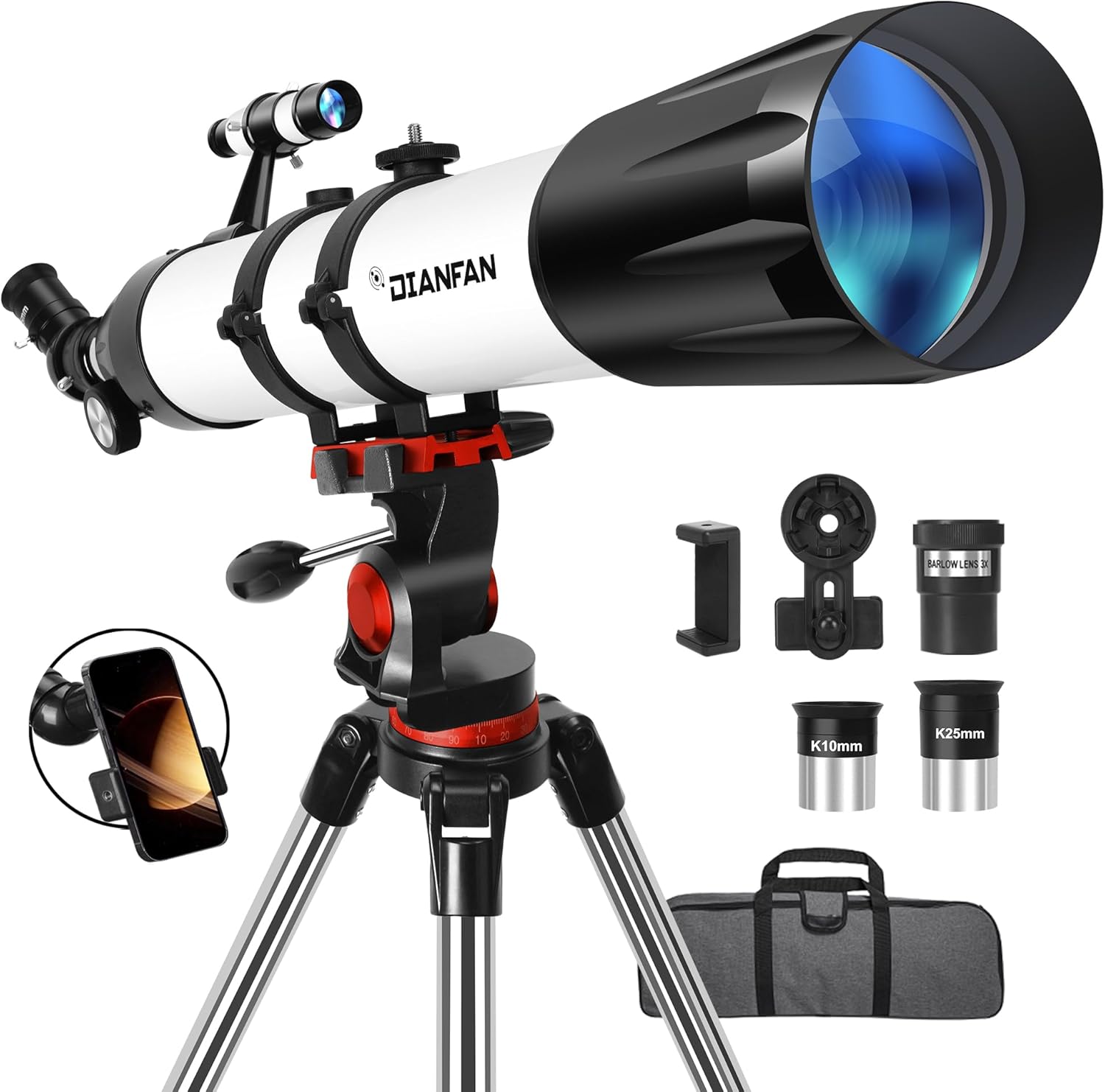
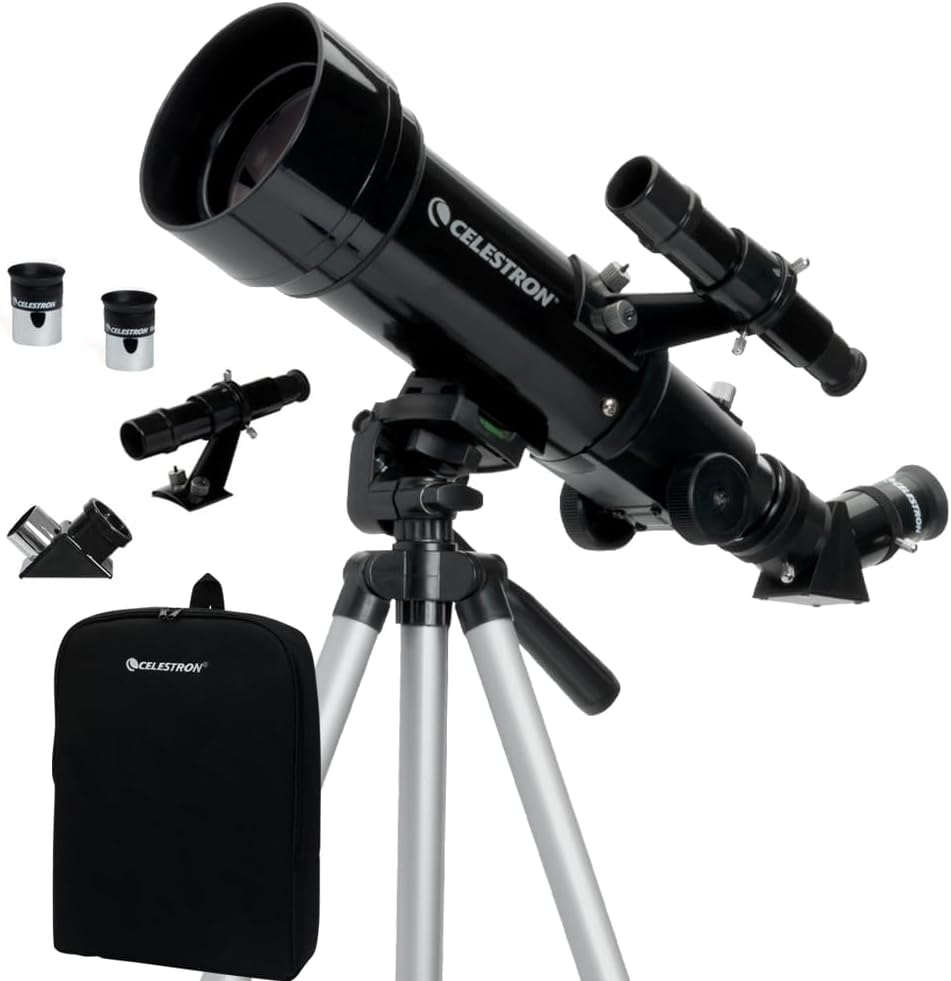
- 80mm aperture refractor — enough light grasp to split Mizar, show Saturn's rings, and resolve the Galilean moons.
- 900mm focal length, f/11 — forgiving focus, sharp lunar views, less chromatic aberration than shorter achromats.
- Alt-azimuth mount with slow-motion control — no equatorial setup, no polar alignment, no “which way is north” confusion.
- StarSense Explorer dock — works with most phones from the last six years; no GPS, no Wi-Fi, no battery in the scope itself.
- Total assembled weight under 14 lb — a scout can carry it from the trailer to the field without adult help.
For most troops, the LT 80AZ hits the merit-badge floor without forcing your committee to fundraise for a four-figure rig. If your council camp already owns one, ask to borrow it before buying — they're popular for a reason.
When a Troop Should Step Up to a NexStar
The LT 80AZ shines on the Moon, planets, and the brightest open clusters. It struggles on faint galaxies and small planetary nebulae, especially under suburban skies. If your troop runs an annual astronomy-themed high-adventure trip — say, a dark-sky weekend at Cherry Springs or a Philmont astronomy track — a computerized Schmidt-Cassegrain pulls down dramatically more targets per night and lets the assistant scoutmaster pre-program a tour while scouts queue up.
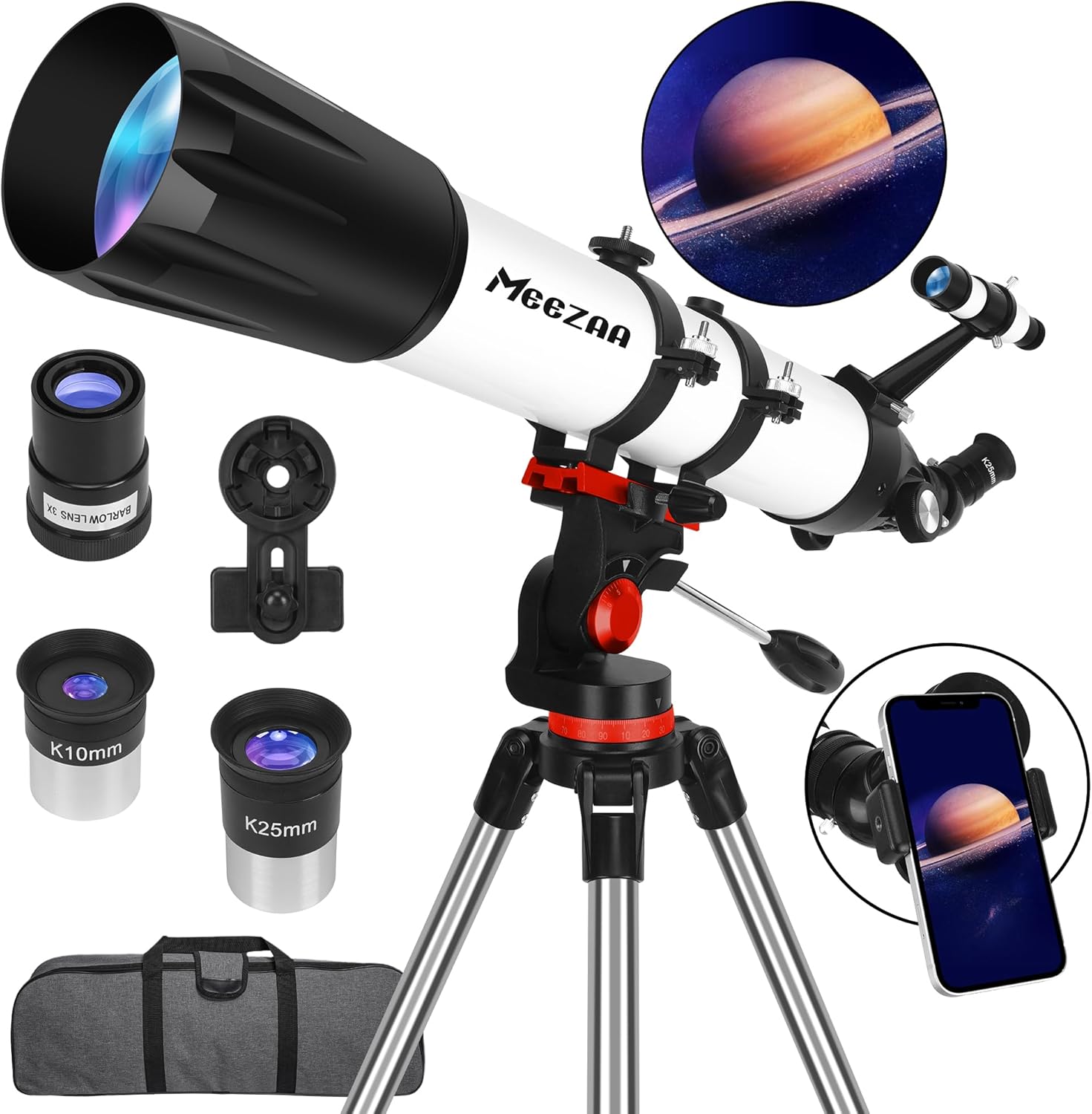
Two upgrade paths are worth knowing. The Celestron NexStar 6SE doubles the aperture, adds a full GoTo motor, and stays portable enough for car camping. The NexStar 8SE, the perennial bestseller, jumps to 8 inches of aperture and reveals galaxy structure, the Cassini Division, and faint globulars that an 80mm refractor only hints at. Both are overkill for a single merit badge night, but they pay dividends if your troop runs astronomy programming three or four times a year.
Quick Comparison: LT 80AZ vs. Troop-Level Upgrades
| Model | Aperture | Mount | Setup Time | Best For | Typical Price (2026) |
|---|---|---|---|---|---|
| StarSense Explorer LT 80AZ | 80mm refractor | Manual alt-az, phone-guided | ~5 min | Merit badge nights, cub scout overnights, patrol rotations | $200–$230 |
| Celestron NexStar 6SE | 150mm Schmidt-Cassegrain | Computerized GoTo | ~10 min | Troops running multiple star parties per year | $899–$999 |
| Celestron NexStar 8SE | 203mm Schmidt-Cassegrain | Computerized GoTo | ~10–15 min | Council-level events, dark-sky high adventure, faint DSOs | $1,499–$1,699 |
Troop-Level Telescope Picks
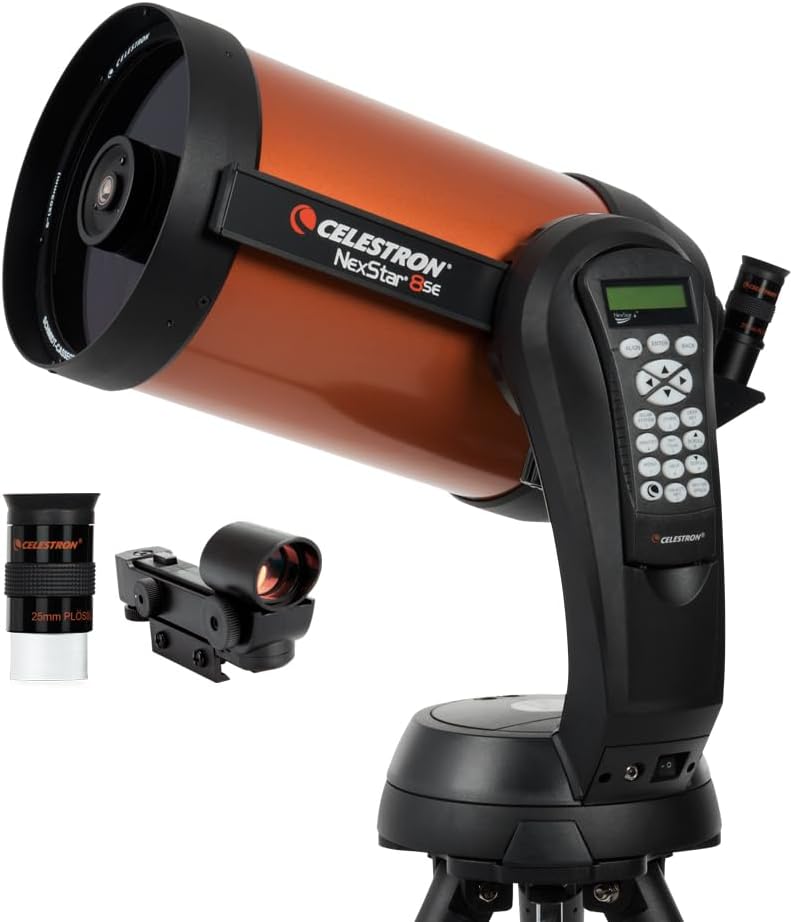
Celestron NexStar 6SE — Best Mid-Tier Upgrade for Active Troops
If your troop's astronomy program has outgrown a single 80mm refractor, the NexStar 6SE is the sweet spot. The 6-inch Schmidt-Cassegrain optical tube gathers roughly 3.5x the light of the LT 80AZ, the SkyAlign procedure lets a scoutmaster level the tripod and align on any three bright objects without knowing their names, and the 40,000-object database means scouts can punch in “M13” and watch the great Hercules cluster slew into view. It runs on 8 AA batteries for short sessions, though a deep-cycle 12V pack is a smart investment for weekend campouts. Compact enough for the back of a Tahoe.
Check the Celestron NexStar 6SE on Amazon
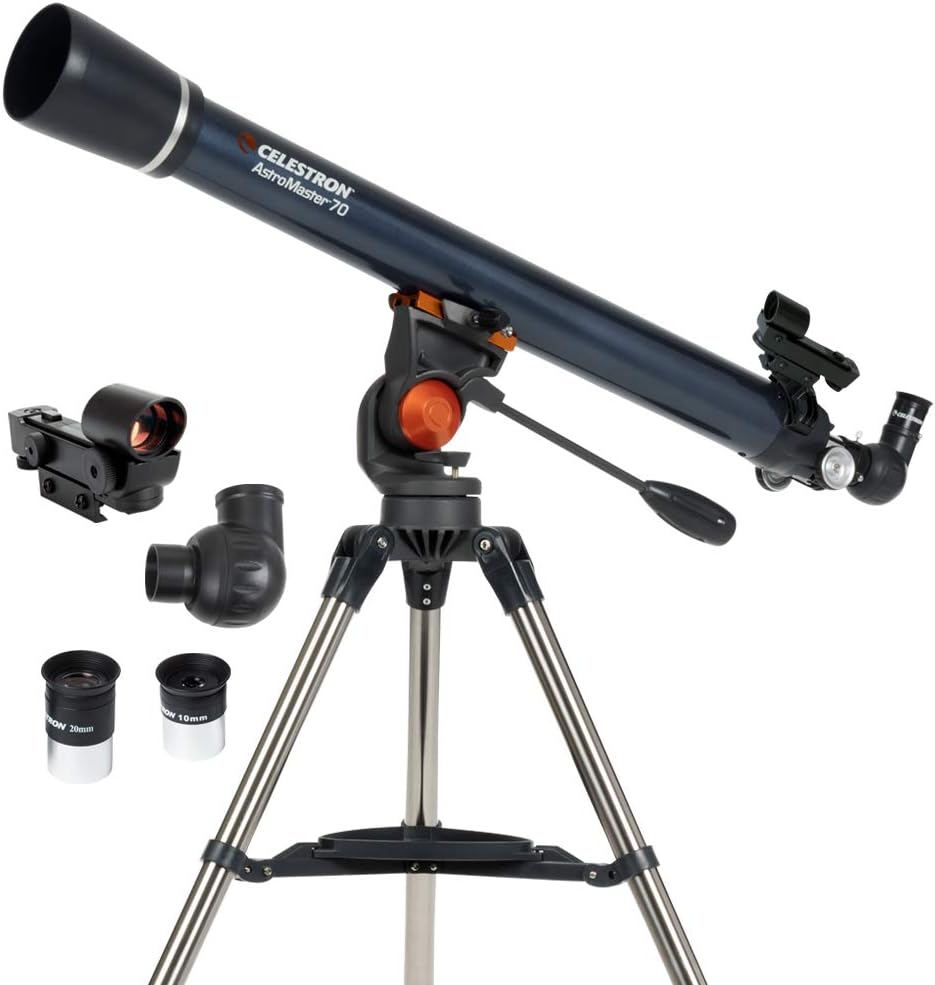
Celestron NexStar 8SE — Best for Council Events and Dark-Sky Trips
For a troop committee willing to invest in long-term astronomy programming, the NexStar 8SE is the rig that turns scouts into lifelong observers. Eight inches of aperture reveals the swirl of the Whirlpool Galaxy, the dust lane in Andromeda, and crisp lunar terminator detail at 200x or more. Same SkyAlign system as the 6SE, same 40,000-object database, same single-fork-arm mount — just more glass and more weight. Plan on a two-scout carry from the trailer and a sturdy folding table for the hand controller. This is the scope merit badge counselors borrow when they want to teach scouts what “surface brightness” actually looks like.
Check the Celestron NexStar 8SE on Amazon
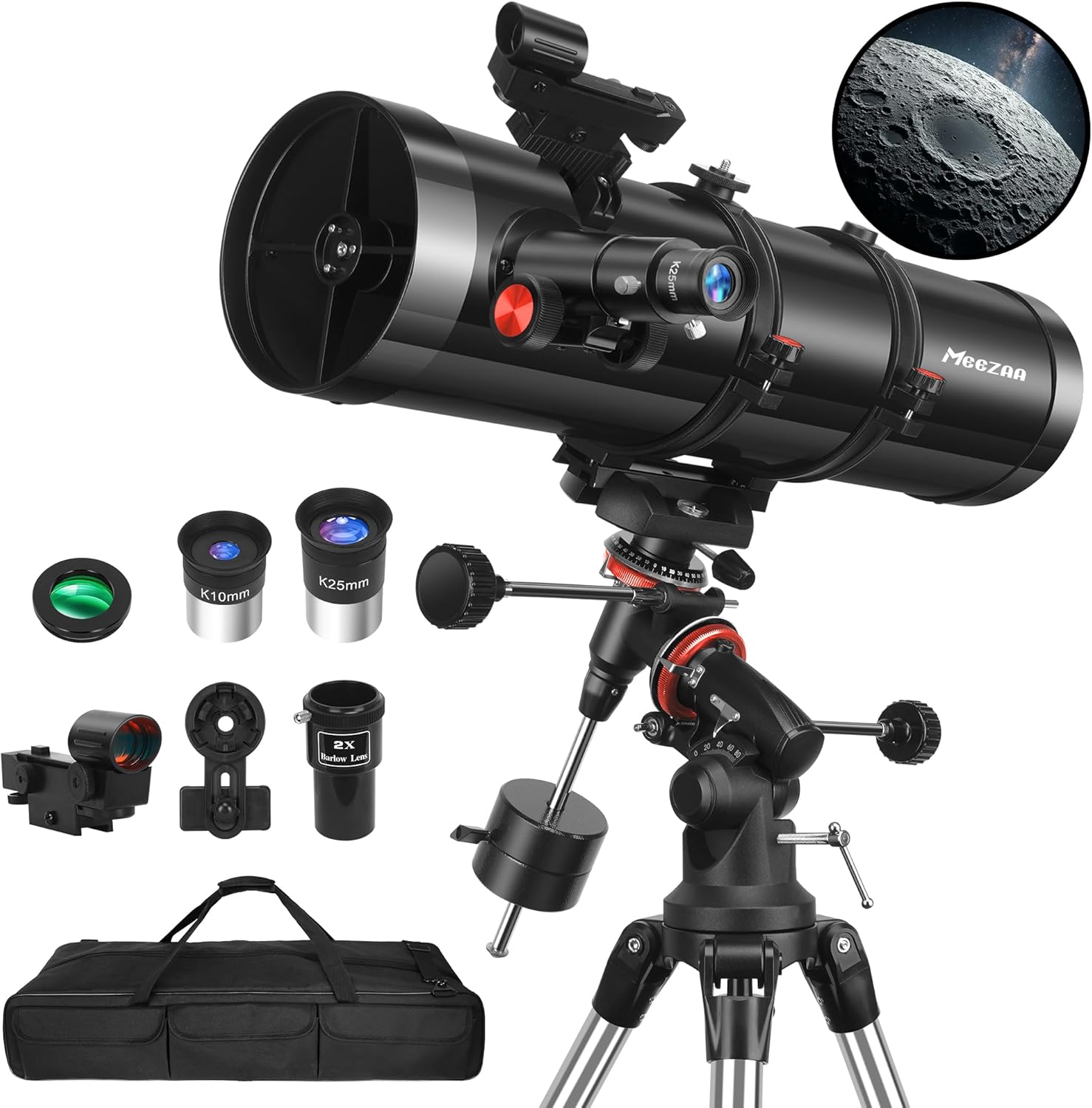
Celestron NexStar 8SE + NexYZ Smartphone Adapter Bundle — Best for Documentation Requirements
Several merit badge requirements ask scouts to sketch or photograph what they see. The NexYZ three-axis smartphone adapter clamps any modern phone over the eyepiece and lets scouts capture genuinely good lunar and planetary shots — the kind of evidence a counselor happily signs off on. The bundle also includes an AC adapter, which matters if you're running the scope off a camp pavilion outlet rather than batteries. For troops that want one purchase to cover both the optical horsepower and the documentation workflow, this kit removes a lot of friction.
Check the NexStar 8SE + NexYZ Bundle on Amazon
Celestron NexStar 8SE Eyepiece & Filter Kit — Best Accessory Add-On
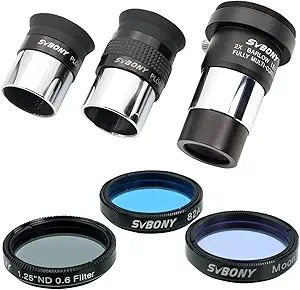
The factory 25mm eyepiece on any NexStar is a starting point, not a destination. The accessory kit version bundles a 1.25-inch filter set and additional eyepieces so scouts can compare a Moon filter view to a naked-eye view, swap to a higher-magnification planetary eyepiece for Jupiter, and learn what a UHC filter does to the Orion Nebula. Great teaching moments built into the box.
Check the NexStar 8SE with Eyepiece & Filter Kit on Amazon
Running the Observing Night: Scoutmaster Checklist
Even the best telescope flops without a plan. After running merit badge nights with a Celestron StarSense LT 80AZ for scout troops at a dozen council camps, these are the habits that separate a smooth session from a chaotic one:
- Arrive at the field by sunset. Let scouts assemble the tripod in daylight. Aluminum legs and thumbscrews are easier to wrangle when you can see them.
- Pre-charge two phones. The StarSense app is bright; an iPhone burns 20% per hour. Designate a “scope phone” and a backup.
- Calibrate the phone dock in daylight. Use a distant treetop or chimney. Five minutes saved here equals zero frustration once it's actually dark.
- Build a target list in advance. Moon, Venus or Jupiter if up, Saturn, Albireo, the Pleiades or Orion Nebula (season-dependent), and one Messier object. That's a full merit badge sign-off list right there.
- Set a 90-second eyepiece rotation. Eight scouts through the eyepiece in twelve minutes. Use a kitchen timer.
- Bring red flashlights. White light destroys dark adaptation. A roll of red cellophane and rubber bands fixes the troop's headlamps for free.
- Have a cloud-out plan. Print constellation maps and run a naked-eye identification activity if the sky closes in.
For deeper planning resources, see our Astronomy merit badge requirements checklist and our best beginner telescopes for kids guide — both cover age-appropriate targets and what scouts realistically retain after one night under the stars.
What Scouts Actually See Through an 80mm Refractor
Managing expectations is half the battle. The LT 80AZ will not show galaxy spiral arms or nebula color the way social media posts suggest. Here's what 11- to 14-year-olds actually see, and what counts toward merit badge sign-off:
- The Moon: Razor-sharp craters along the terminator, mare boundaries, Tycho's ray system at full phase. Universally a crowd-pleaser.
- Jupiter: Two clear cloud belts, four Galilean moons in a line. The Great Red Spot is visible when transiting under steady seeing.
- Saturn: Rings clearly separated from the disk — the moment that makes a scout gasp. Titan is visible as a tiny star nearby.
- Venus: Phases like a tiny moon, no surface detail (it's all cloud).
- Albireo: The famous gold-and-blue double star in Cygnus. Counts toward double-star observation.
- Pleiades / Hyades: Sparkling open clusters, easy targets for the StarSense app.
- Orion Nebula (M42): Visible as a misty glow with the four Trapezium stars at its heart. Counts as a Messier observation.
- Andromeda Galaxy (M31): A faint elongated smudge under suburban skies; a clearer disk and dust lane under dark skies.
That target list satisfies the observational portion of the Astronomy merit badge cleanly. For everything beyond — globular cluster resolution, galaxy detail, planetary nebulae — you want the aperture of a 6SE or 8SE.
Frequently Asked Questions
Is the Celestron StarSense LT 80AZ powerful enough to complete the Astronomy merit badge?
Yes. The Boy Scouts of America Astronomy merit badge requires observation of the Moon, a planet, and a deep-sky object — all comfortably within the LT 80AZ's reach. The phone-guided StarSense Explorer app also helps scouts independently identify constellations, which satisfies requirement 4 without a parent hovering over them.
How many scouts can use one LT 80AZ in a single evening?
Plan on eight to ten scouts per scope over a two-hour session with 90-second eyepiece rotations. If your patrol is larger than ten, either schedule a second night or borrow a second scope from your council camp. Trying to push twelve scouts through one telescope in one evening leads to bored scouts at the back of the line.
Does the StarSense Explorer app work without cell service at a remote campout?
Yes. The app uses your phone's camera to plate-solve the actual sky overhead, not GPS or cellular data. You should download the app and any star map data before leaving home, but once installed it runs fully offline. This is exactly why it suits backcountry merit badge nights.
What's the difference between the LT 80AZ and the DX 130AZ for troop use?
The DX 130AZ is a 130mm reflector with more aperture and better deep-sky reach, but it's heavier, requires occasional collimation, and is harder for a younger scout to manage. The LT 80AZ is lighter, more forgiving, and never needs alignment of the optics — better fits a rotating troop equipment officer. Pick the DX only if your troop has a parent who can act as designated keeper of the scope.
Should our troop buy individual telescopes or share one troop scope?
For most troops, a single shared scope handled by the equipment officer is the smarter call. Telescopes get dropped, dewed up, or left in hot cars; a $200 LT 80AZ owned by the troop survives that better than ten family-owned units arriving in varying condition. Encourage scouts who catch the bug to buy their own scope after merit badge completion — our family telescope buying guide walks parents through that decision.
How long does it take to learn the StarSense Explorer app well enough to teach scouts?
Roughly one solo evening. Assemble the tripod, dock your phone, calibrate against a daytime landmark, then run through three or four targets after dark. Once you've found Jupiter and the Moon using the app's arrows, you're qualified to show scouts. The app does all the actual finding — the scoutmaster just confirms the target is centered in the eyepiece.
Can scouts photograph what they see for documentation?
With the bare LT 80AZ, only crude handheld phone shots of the Moon work well. For real astrophotography documentation, you need a phone adapter like the Celestron NexYZ. Pair that with one of the NexStar bundles above and scouts can capture genuinely usable lunar and planetary images. For tripod-mounted phone options, see our roundup of the best smartphone telescope adapters for 2026.
The Bottom Line for Scout Leaders
For a single merit badge night or annual astronomy campout, the Celestron StarSense LT 80AZ for scout troops is the right tool: cheap enough that the troop committee approves without debate, simple enough that a first-year scout runs it, and capable enough to satisfy every observational requirement in the BSA Astronomy merit badge pamphlet. Step up to a NexStar 6SE or 8SE only when your troop runs astronomy programming so often that the aperture limits of an 80mm refractor become the bottleneck. Either way, the path from “we should do astronomy this fall” to “everyone has their badge signed” is shorter in 2026 than it has ever been.
Key Takeaways
- Choosing the right Celestron StarSense LT 80AZ for scout troops means matching capacity and output ports to your actual devices
- Always check actual watt-hours (Wh), not just watts — runtime depends on Wh, not peak output
- Also covers: StarSense Explorer scout astronomy badge
- Also covers: BSA astronomy merit badge telescope
- Also covers: LT 80AZ troop leader gear
- Compare price-per-Wh across models to find the best value for your budget