For suburban stargazers eyeing the celestron cpc 1100 cul-de-sac driveway setup, the short answer is yes: the CPC 1100 Deluxe HD is genuinely usable from a typical suburban driveway, but only if you accept three trade-offs. First, the fork-mounted 11-inch Schmidt-Cassegrain weighs roughly 65 pounds assembled, so you need a flat concrete pad and a wheeled cart for storage. Second, Bortle 6-7 skies will limit deep-sky contrast, but lunar, planetary, and double-star observing remain spectacular. Third, the EdgeHD optics reward patient thermal equilibrium—30 to 45 minutes outside before serious viewing. If those terms fit your cul-de-sac, the CPC 1100 is arguably the best fixed-driveway scope under $5,000 in 2026.
Why the CPC 1100 Deluxe HD Suits a Suburban Cul-de-Sac
A cul-de-sac driveway is a surprisingly good observing site. You typically get a paved, level surface; tree-blocked horizons that screen neighbor headlights; and the social cover of being on your own property at 2 a.m. without anyone calling about a stranger in the park. The CPC 1100 Deluxe HD leans into those advantages. Its 2,800mm focal length and 11-inch aperture pull detail out of Jupiter’s belts, resolve Saturn’s Cassini Division, and split tight double stars—targets that don’t care much about light pollution. The EdgeHD coma-corrected optics also keep stars pinpoint across an APS-C imaging sensor, opening planetary lucky-imaging from your own driveway with minimal travel friction.
When shopping for celestron cpc 1100 cul-de-sac driveway, it pays to compare specs, capacity, and real-world runtime before committing.
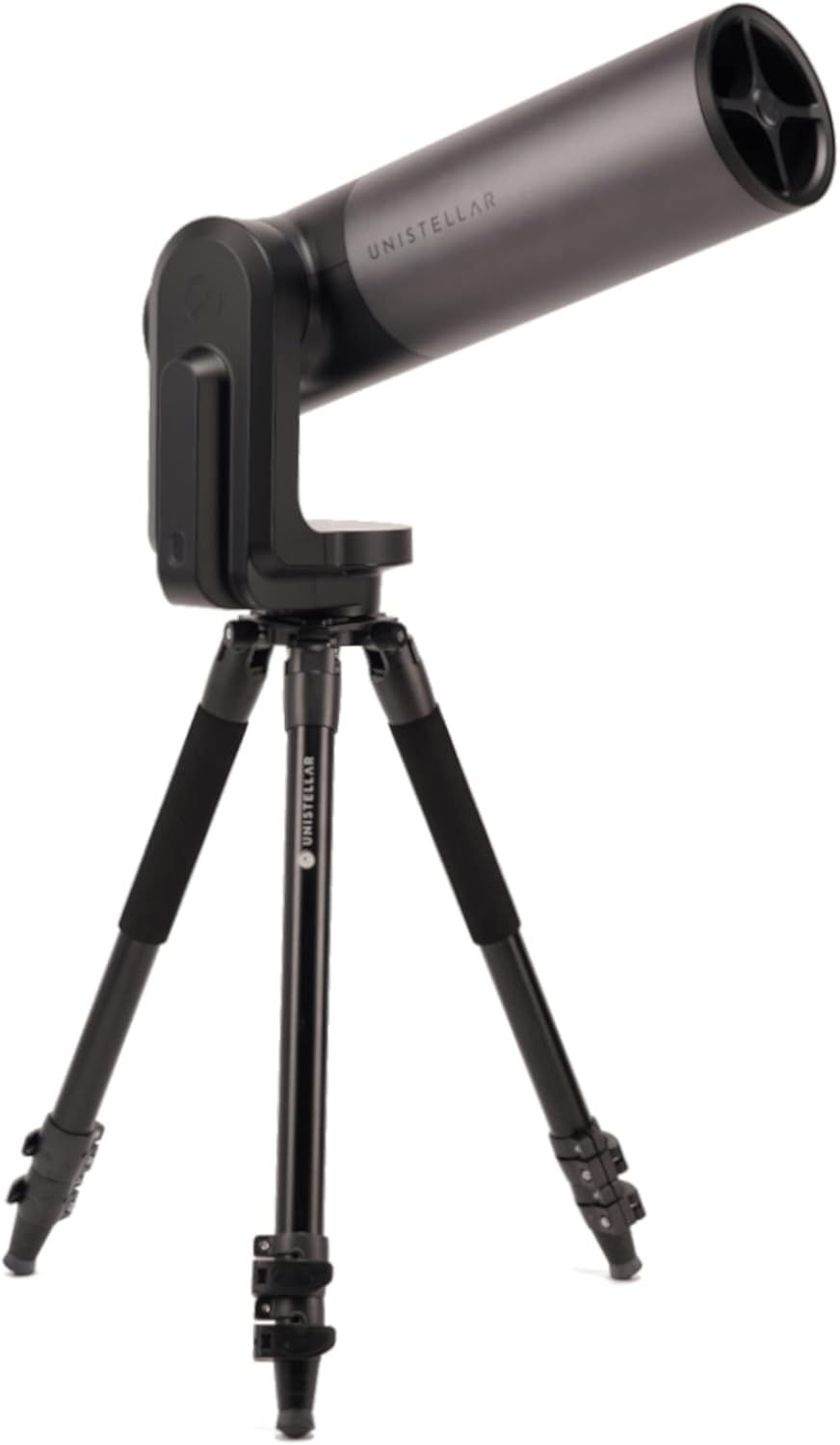
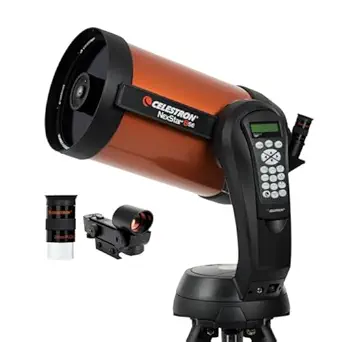
The catch is mass. The CPC 1100 is not a grab-and-go instrument. A realistic celestron cpc 1100 cul-de-sac driveway workflow involves a Celestron-branded wheeled HD tripod dolly, a garage staging area, and a 15-minute setup ritual. If that ritual sounds like a chore rather than a meditation, step down to an 8-inch Schmidt-Cassegrain—you’ll observe more often, which beats observing better but less.
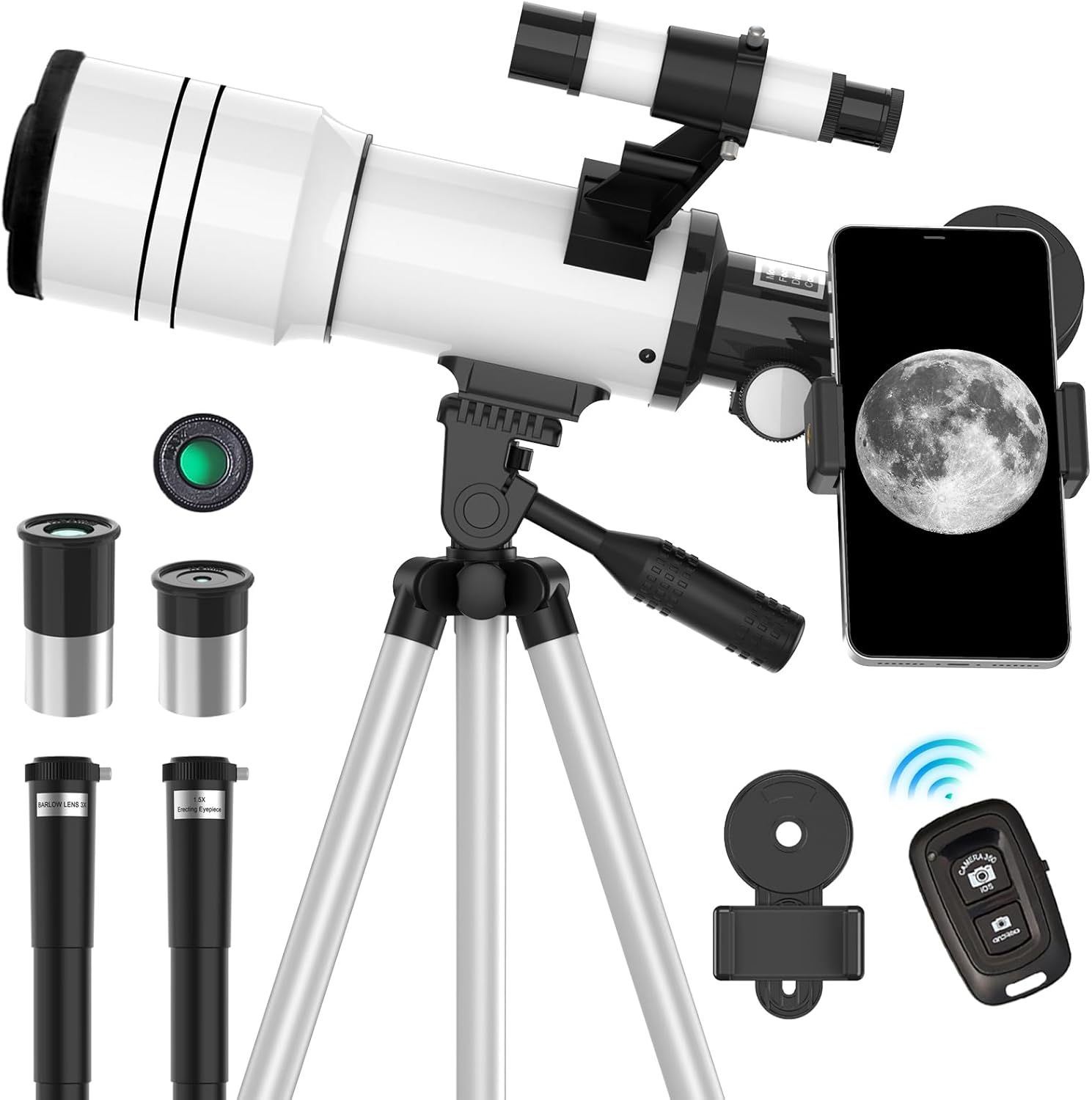
What the Driveway Itself Needs
Before buying any 11-inch scope, audit the pad. You want a level concrete slab—asphalt softens in summer and the tripod feet sink. Check for at least 25 degrees of clear sky above the southern horizon; that’s the minimum altitude where the ecliptic crosses for most U.S. cul-de-sacs and the line below which atmospheric extinction kills planetary contrast. Walk the cul-de-sac at midnight on a weeknight and note every streetlight, motion-sensor porch light, and neighbor’s upstairs bathroom window. Each one is a contrast killer. A simple 6-foot privacy panel or a parked SUV positioned strategically can rescue an otherwise compromised site.
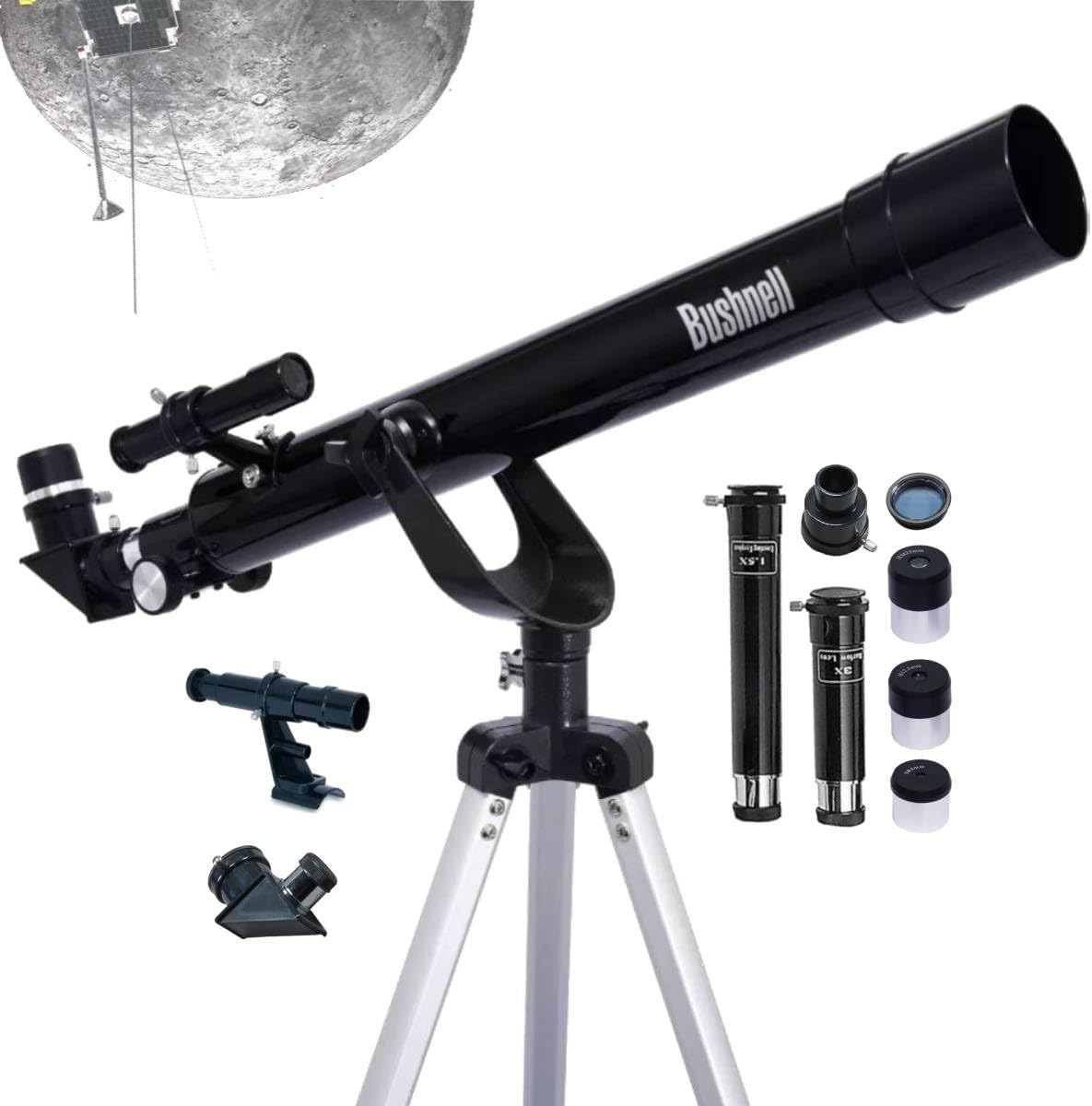
CPC 1100 vs. The 8SE: Which Aperture Fits Your Driveway?
The CPC 1100 Deluxe HD itself isn’t always in stock at Amazon, and many cul-de-sac observers ultimately decide the 8-inch NexStar 8SE is the smarter long-term purchase—lighter, faster to cool, and roughly a third of the price. Here’s how the realistic Amazon-available alternatives stack up against the CPC 1100 ideal:
| Spec | CPC 1100 Deluxe HD (reference) | NexStar 8SE | NexStar 6SE |
|---|---|---|---|
| Aperture | 280mm (11") | 203mm (8") | 150mm (6") |
| Focal length | 2,800mm | 2,032mm | 1,500mm |
| Assembled weight | ~65 lb | ~24 lb (OTA+mount) | ~21 lb (OTA+mount) |
| Setup time | 15-20 min | 5-8 min | 5 min |
| Cool-down | 45-60 min | 20-30 min | 15-20 min |
| GoTo database | 40,000+ objects | 40,000+ objects | 40,000+ objects |
| Best driveway use | Planetary imaging, deep-sky | All-around suburban king | Quick-session observing |
| Approx. 2026 street price | $4,000-$4,500 | $1,400-$1,600 | $900-$1,100 |
Notice the cool-down column. Every minute your scope spends warmer than ambient is a minute of mushy planetary detail. The 11-inch corrector plate stores a remarkable amount of heat, and in a hot July driveway you may legitimately need an hour before Saturn looks like Saturn.
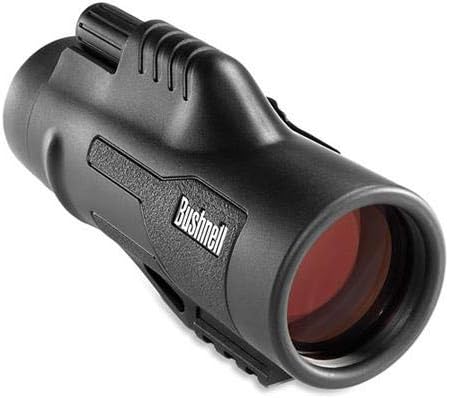
Realistic Amazon Picks for the Cul-de-Sac Observer
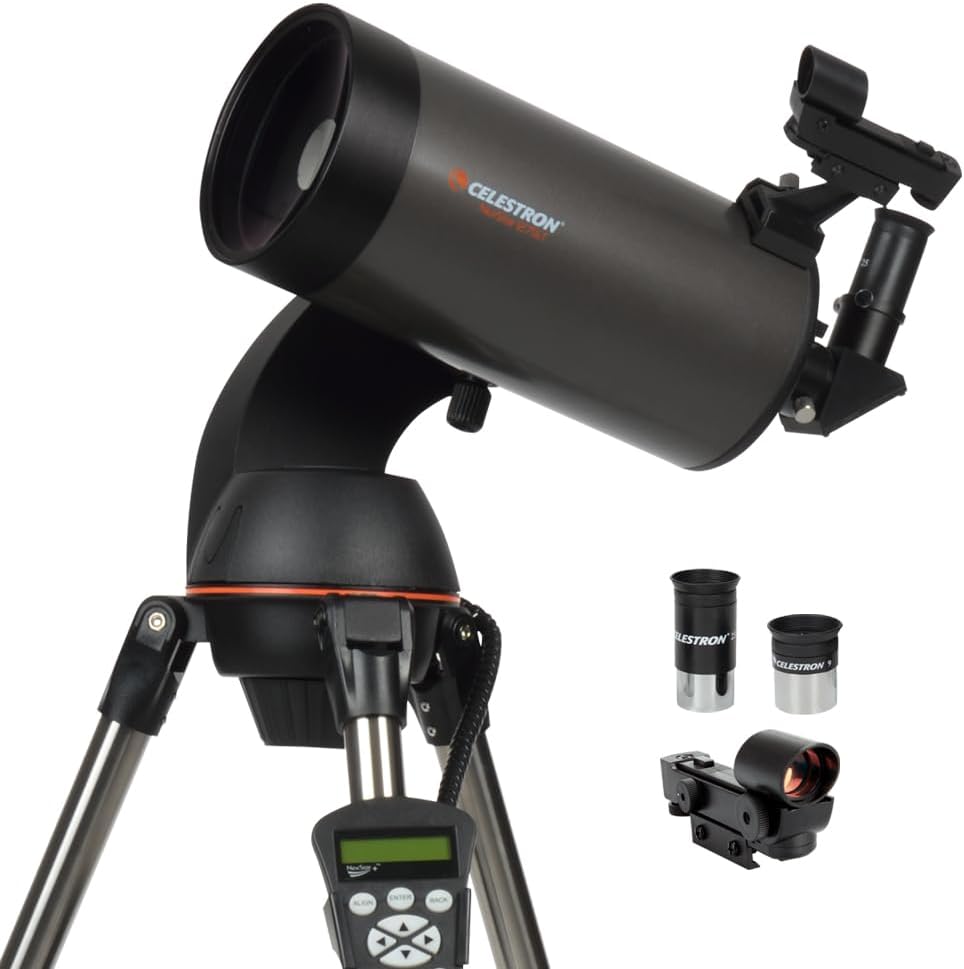
Celestron NexStar 8SE – The Sweet Spot for Most Driveways
If you’re researching the CPC 1100 but haven’t actually lifted 65 pounds in your garage yet, do this first: buy the NexStar 8SE, observe twice a week for a year, then upgrade if and only if you’re running out of capability. The 8SE delivers about 65% of the CPC 1100’s light grasp at roughly a third of the weight and price. It uses the same SkyAlign three-star alignment routine, the same 40,000+ object database, and the same Schmidt-Cassegrain optical formula. For a suburban cul-de-sac under Bortle 6 skies, the 8SE is genuinely the highest-leverage purchase in amateur astronomy. Check current price on Amazon.
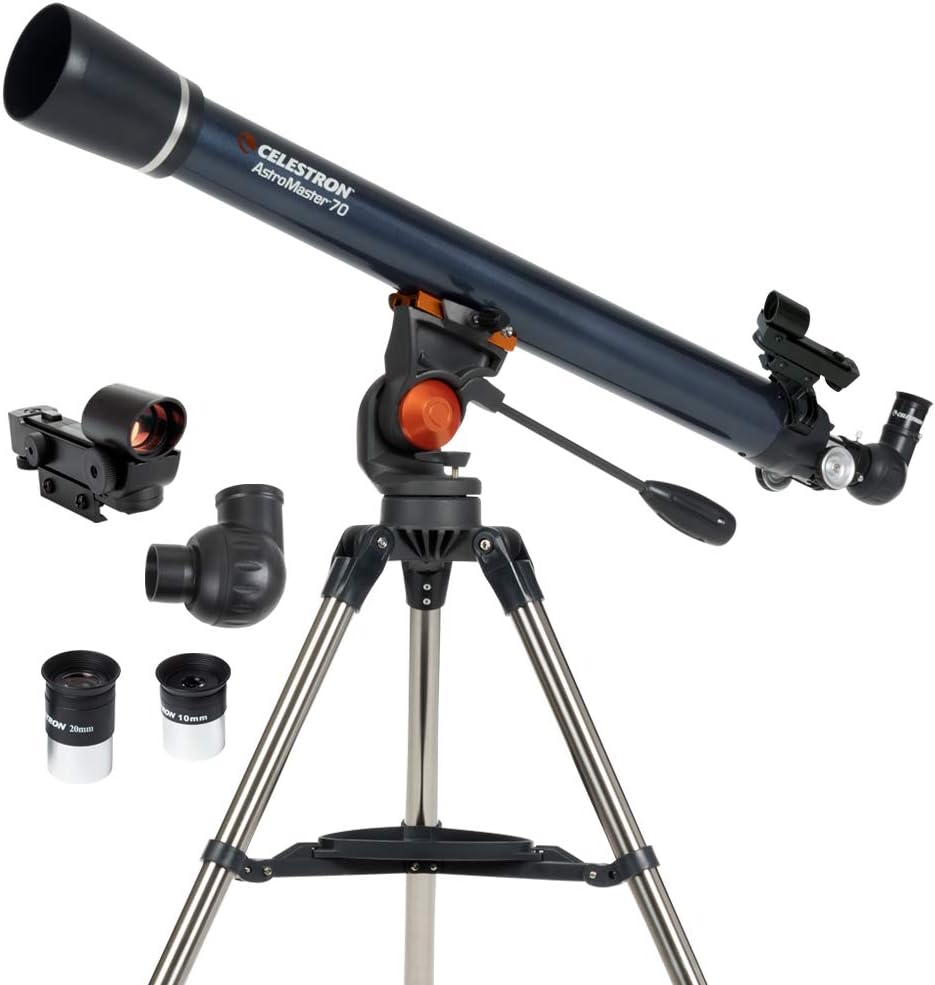
Celestron NexStar 8SE + NexYZ DX Smartphone Adapter Bundle
Cul-de-sac observing is inherently social—kids wander over, neighbors get curious about why your driveway has a robot in it. The NexYZ DX bundle ships the same 8SE optical tube with a three-axis smartphone adapter and AC power supply. The smartphone adapter solves the universal driveway problem: showing Saturn to a six-year-old who can’t quite get their eye in the right spot. The included AC adapter also eliminates the cold-night drama of dying AA batteries mid-Messier marathon. View the bundle on Amazon.
Celestron NexStar 8SE with Eyepiece & Filter Kit
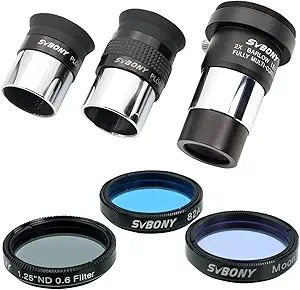
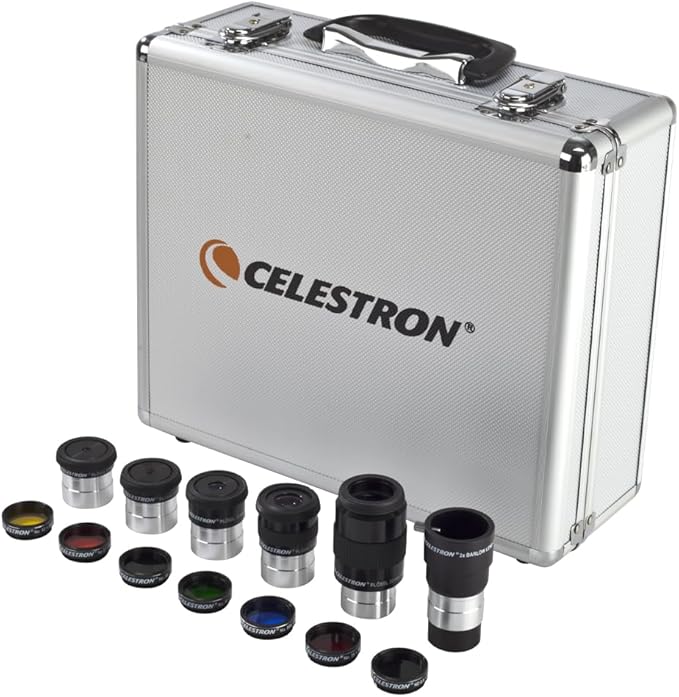
The single weakness of every Celestron GoTo bundle is the included eyepiece selection—one 25mm Plossl, period. For driveway lunar and planetary observing you want at least three magnifications and a moon filter to tame the glare that ruins your dark adaptation for the next 20 minutes. The eyepiece-and-filter-kit version of the 8SE solves this in one purchase: you get multiple Plossls, a Barlow, color planetary filters, and the moon filter, all in a fitted aluminum case that fits under the back seat of a sedan if you ever want to escape the cul-de-sac for a dark-sky weekend. See the kit on Amazon.
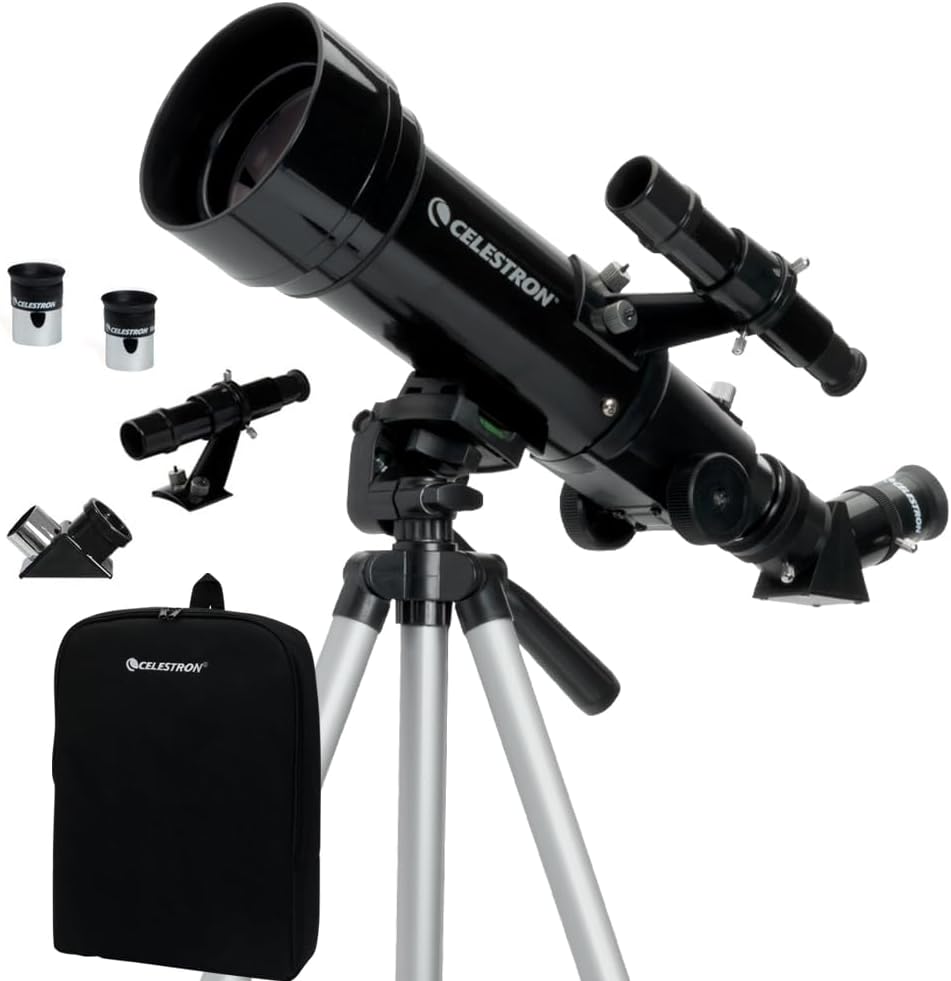
Celestron NexStar 6SE – The Quick-Session Driveway Scope
If your honest observing pattern is “20 minutes after the kids are in bed” rather than “three hours every clear Saturday,” the 6SE is the right tool. It cools down in 15 minutes, the OTA-and-fork combo weighs about as much as a bag of dog food, and it lives comfortably on a closet shelf rather than demanding garage real estate. You lose about half a magnitude of limiting brightness versus the 8SE, but you gain the single most important variable in amateur astronomy: nights actually used. Check the 6SE on Amazon.
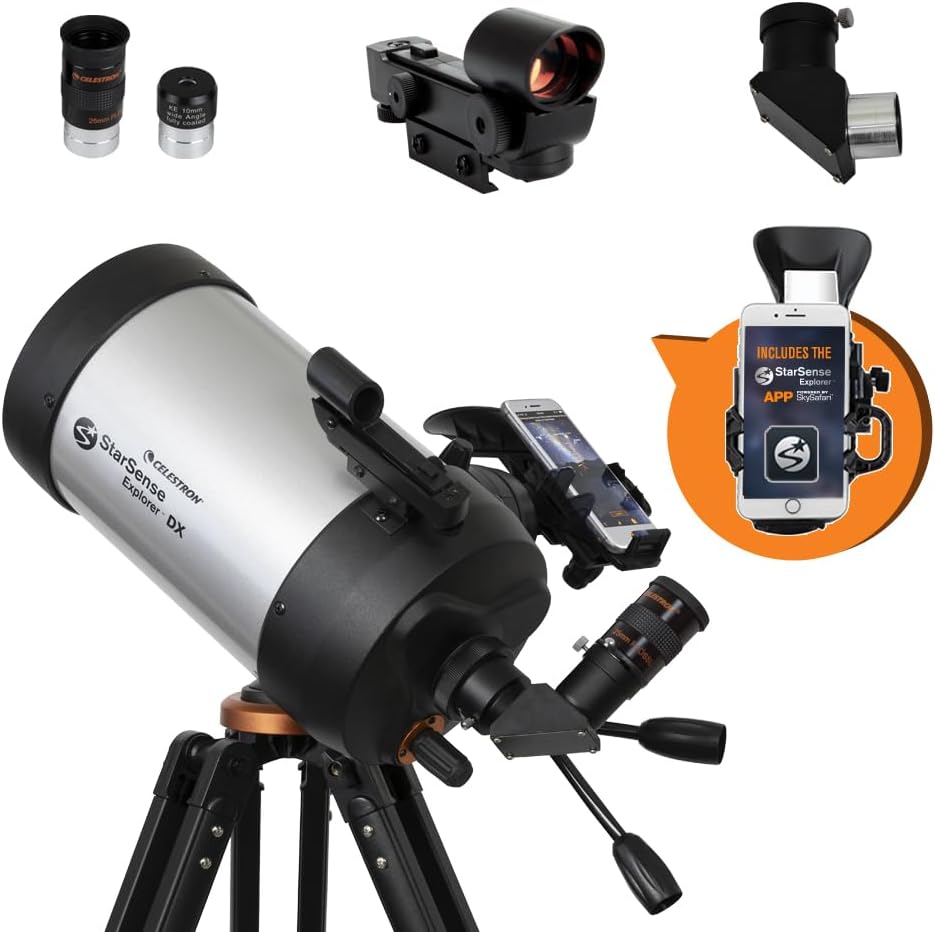
The Cul-de-Sac Observing Routine
Whichever Schmidt-Cassegrain you land on, a repeatable driveway routine is what turns equipment into observing time. Roll the scope out 45 minutes before astronomical twilight ends. Power on the mount, do a daylight rough leveling using the bubble level, and let the optics equilibrate while you set up a folding table for charts, a red-LED headlamp, and a thermos. Run SkyAlign on the first three stars that pop out of twilight—don’t wait for ideal conditions; the alignment routine works better when you can’t accidentally pick a planet thinking it’s a star. Once aligned, slew to a low-altitude planet first while the seeing column above your roof finishes settling. By the time you’ve burned through the lunar terminator, the rest of the sky will be cooperating.
Suburban cul-de-sacs have a specific failure mode worth naming: the 11 p.m. SUV. Someone in the neighborhood will pull into the cul-de-sac at full headlight brightness around 11, and your dark adaptation goes with them. Position the scope so that your observing eye is shielded by your house—either behind the garage or with your back to the road—and accept that you’ll lose 90 seconds of adaptation once or twice per session. It’s a small tax for the convenience of not loading a car.
Power, Dew, and the Other Cul-de-Sac Realities
The CPC 1100 and the NexStar SE series both run on 12V power. Eight AA batteries will get you through a short session, but a deep-cycle lithium power bank or the optional Celestron AC adapter is the only sensible long-term answer for driveway use—you have a wall outlet 30 feet away; use it. Dew is the second silent killer of driveway sessions. Schmidt-Cassegrain correctors fog within 45 minutes on a humid summer night. A simple dew shield handles three-season observing; for serious humidity, a dew heater strip on a controller is mandatory.
For more on accessory priorities, see our companion guides on dew control for SCT owners and eyepiece selection under Bortle 6 skies. If you’re still weighing aperture against portability, our broader suburban driveway telescope rundown for 2026 covers Dobsonians and refractors as well.
Imaging From the Driveway in 2026
The CPC 1100 Deluxe HD was specifically optimized for short-exposure planetary imaging—lucky imaging—and that’s where its driveway value really compounds. A ZWO ASI662MC planetary camera and free software like FireCapture and AutoStakkert! turn a Bortle 7 cul-de-sac into a Jupiter factory; light pollution doesn’t meaningfully affect planetary work because the planets are far brighter than the sky background. You can get Hubble-poster-style Jupiter details from your own driveway, full stop. Deep-sky imaging with the same scope is harder from suburbia and usually requires narrowband filters, but it’s genuinely achievable on emission nebulae like the Veil and the North America.
If you’re building toward imaging on the 8SE instead, the equatorial wedge accessory and a quality field flattener are the first two upgrades. The NexStar mount is alt-azimuth out of the box, which is fine for visual use but introduces field rotation on long exposures.
Frequently Asked Questions
Is the Celestron CPC 1100 too big for a suburban driveway?
Not too big, but it is too heavy for a casual setup. The fully assembled scope weighs about 65 pounds and is awkward to lift. A wheeled HD tripod dolly transforms it into a 90-second roll-out from a garage. If your garage doesn’t connect directly to a flat concrete pad, the logistics get painful enough that the 8SE becomes the smarter buy.
Can I use the CPC 1100 Deluxe HD under Bortle 7 suburban skies?
Yes, for planetary, lunar, double-star, planetary-nebula, and globular-cluster work—all of which are essentially unaffected by light pollution. Galaxies and faint diffuse nebulae will be muted, but a UHC or narrowband filter recovers a surprising amount of emission-nebula detail even in suburbia.
How long does the CPC 1100 take to cool down on a summer driveway?
Plan on 45 to 60 minutes from garage to thermal equilibrium on a warm summer night, less in winter. The 8SE cuts that to 20-30 minutes, and the 6SE to about 15. Cool-down is the single biggest reason cul-de-sac observers report better views from smaller scopes—they’re actually thermally ready when the session starts.
Is the NexStar 8SE a real substitute for a CPC 1100 in the suburbs?
For visual observing in Bortle 6-7 skies, the 8SE delivers roughly 65% of the CPC 1100’s light-gathering at a third of the weight and price. The aperture difference matters most on faint galaxies. For everything else—planets, moon, double stars, brighter Messier objects—the 8SE is genuinely competitive and gets used more often, which is the metric that actually determines how much astronomy you do.
What’s the best mount setup for a cul-de-sac driveway in 2026?
For visual-only use, the stock fork mount on any Celestron SCT is fine. For imaging, you want either the CPC 1100’s fork on a wedge or a dedicated equatorial mount like a Celestron CGX. Pier-mounting in a driveway is rarely practical because of HOA aesthetics and the need to back cars in; a removable tripod with a marked alignment position on the concrete is the practical compromise.
Do I need a permit or HOA approval to observe from my driveway?
Telescopes themselves almost never trigger HOA rules. Permanent piers, sheds, or roll-off observatories often do. Check your covenants before pouring concrete. For a portable scope rolled out for a few hours per session, you’re operating well within normal residential use of your own property in nearly every U.S. municipality.
How do I show planets to neighborhood kids without ruining my dark adaptation?
Three tactics. Use a smartphone adapter so they look at a phone screen instead of the eyepiece—the NexStar 8SE NexYZ bundle is built for this. Keep a moon filter screwed into a low-power eyepiece for kid-friendly lunar views that don’t fry anyone’s eyes. And accept that the first 15 minutes of any session with company is social outreach, not serious observing—plan your faint deep-sky targets for after everyone goes back inside.
Bottom Line for Cul-de-Sac Observers
The CPC 1100 Deluxe HD is a genuinely great driveway telescope for the specific observer who has a flat concrete pad, a garage with direct access, the budget for a dolly, and the discipline to set up an hour before observing. For everyone else in 2026, the NexStar 8SE is the realistic Amazon-available answer—and the bundles with smartphone adapters or eyepiece kits remove the two most common new-owner frustrations in a single purchase. Whichever way you go, the cul-de-sac itself is a more capable observing site than most amateurs give it credit for. Optimize the routine, manage the dew, ignore the 11 p.m. SUV, and the sky from your own driveway will keep you busy for a decade.
Key Takeaways
- Choosing the right celestron cpc 1100 cul-de-sac driveway means matching capacity and output ports to your actual devices
- Always check actual watt-hours (Wh), not just watts — runtime depends on Wh, not peak output
- Also covers: cpc 1100 suburban observer
- Also covers: celestron 1100 deluxe hd driveway
- Also covers: cpc 1100 cul-de-sac stargazing
- Compare price-per-Wh across models to find the best value for your budget