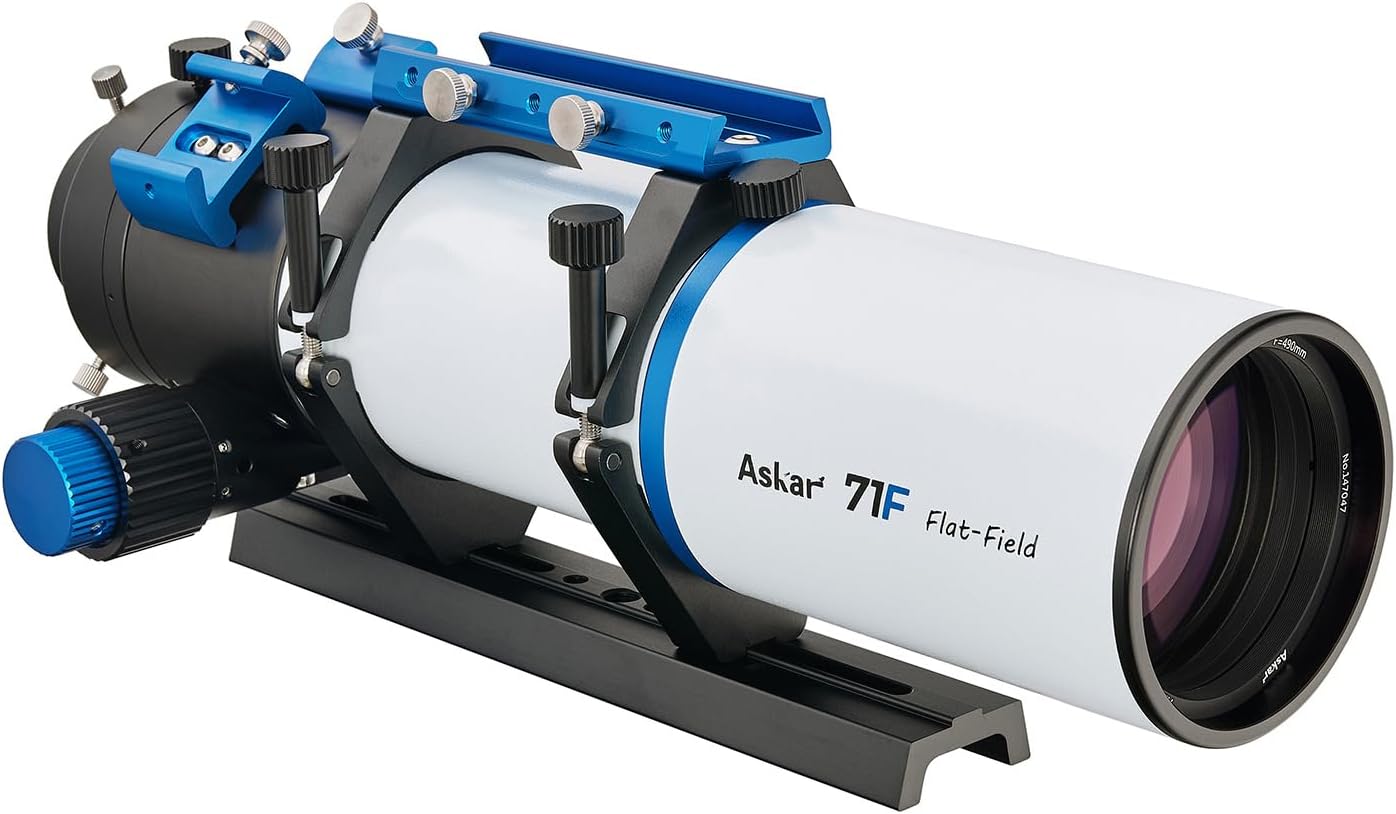
For 2026 imagers weighing the Askar FRA500 vs William Optics GT81 for condo rooftop narrowband targets, the short answer is this: the Askar FRA500 wins on flat field, focal-length flexibility, and signal-per-minute, while the William Optics GT81 wins on weight, polar-align ergonomics, and resale value. If your rooftop pad is cramped and your sky is dripping with sodium-vapor glow, the FRA500's 90 mm aperture, built-in Petzval flattener, and optional 0.7x reducer pull Ha and OIII photons faster. The GT81's 81 mm triplet APO stays lighter on a Star Adventurer GTi or AM3, which matters when you are hauling gear up three flights of stairs each clear night.
Why these two scopes dominate condo rooftop narrowband shortlists
Rooftop and balcony imagers face a specific set of constraints that desert-dwelling DSO shooters never deal with. Pier height is fixed by the parapet wall. The horizon is chopped by elevator housings and HVAC units. Bortle 7-9 skies make broadband galaxy work pointless, so emission nebulae become the obvious target list. And every kilogram of mount payload matters when the "observatory" is a folding camp chair behind a satellite dish.
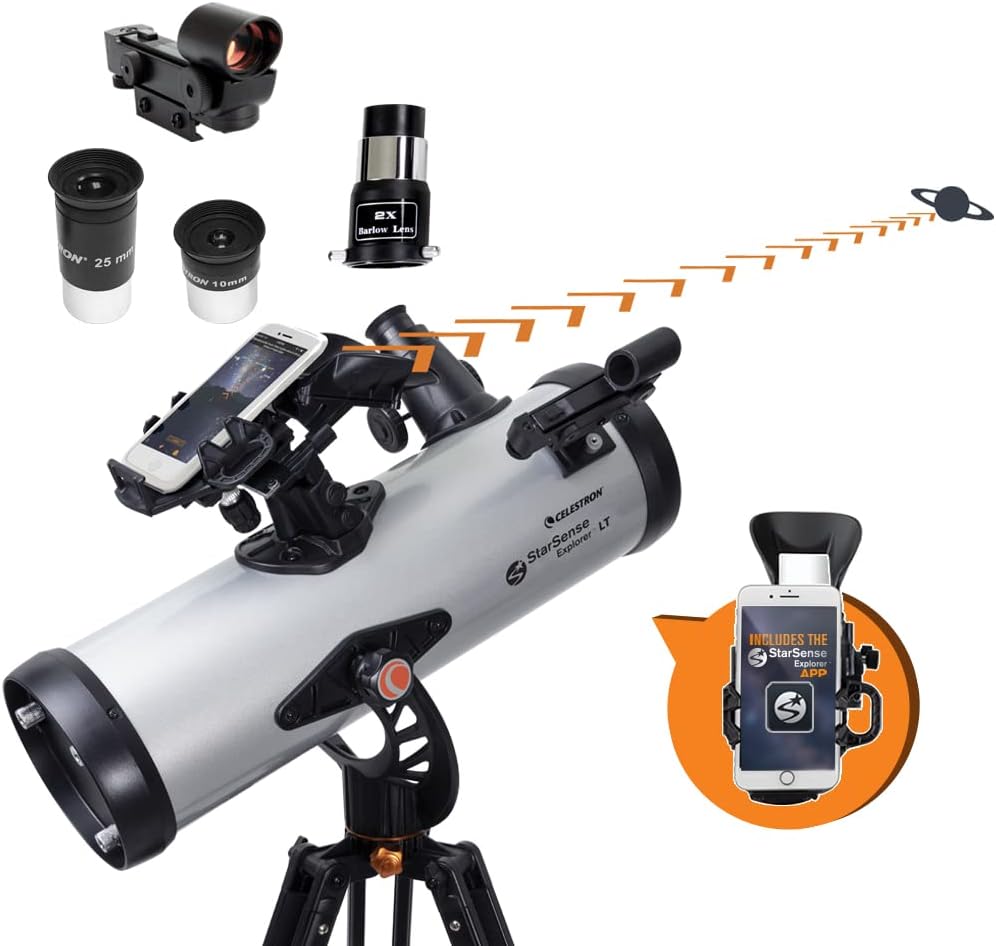
Both the Askar FRA500 and the William Optics GT81 IV were engineered for exactly this use case: small refractors with fast native focal ratios, integrated field flatteners, and image circles large enough to feed a four-thirds or APS-C cooled CMOS camera without vignetting. The question is not whether either will work — both will. The question is which set of trade-offs maps to your specific rooftop reality.
Head-to-head specification table
| Specification | Askar FRA500 | William Optics GT81 IV |
|---|---|---|
| Aperture | 90 mm | 81 mm |
| Native focal length | 500 mm | 478 mm |
| Native focal ratio | f/5.6 | f/5.9 |
| With reducer | 350 mm at f/3.9 (Askar 0.7x) | 382 mm at f/4.7 (Flat6AIII) |
| Optical design | 5-element Petzval (flattener built in) | Triplet APO + dedicated flat/reducer |
| Image circle | ~44 mm (full frame friendly) | ~44 mm with Flat6AIII |
| Weight (OTA bare) | ~3.7 kg / 8.2 lb | ~3.2 kg / 7.0 lb |
| Tube length collapsed | ~395 mm | ~360 mm |
| Focuser | 2.5" rack & pinion, dual speed | 2.5" rack & pinion, dual speed |
| Approx. 2026 street price | $1,699 USD | $1,498 USD |
Optical performance under narrowband filters
Narrowband filtering — 3 nm or 6 nm Ha, OIII, SII — is brutally honest about focuser tilt, mirror flop, and uncorrected field curvature. Stars that look acceptable under a UV/IR cut filter turn into bloated kidney beans the moment you stack a Halpha sub at gain 100.
The FRA500's Petzval design eliminates the spacing guesswork that haunts triplet-plus-flattener setups. The flattener element sits inside the tube, locked at the factory, so a city imager swapping between an ASI2600MM Pro and an ASI533MC simply changes the M54-to-T2 adapter stack and shoots. Corner stars on a full-frame sensor stay tight to about 90 percent of the image circle.
The GT81 IV is a true triplet apochromat with FPL-53 glass in the center element. Stars under narrowband come out punchier and slightly more contrasty on bright cores like the Lagoon or Orion, partly because the simpler air-spaced triplet has fewer surfaces to scatter photons. But you must run the Flat6AIII reducer/flattener and hit the 55 mm backfocus within 0.5 mm or the corners deform. On a rooftop where dew straps, OAGs, and tilt plates stack up fast, this is a real consideration.
Mount and payload reality for rooftops
A 7-pound OTA versus an 8-pound OTA does not sound dramatic until you add a 1.1 kg cooled camera, a 0.5 kg filter wheel, a guide scope, and the ASIAIR. The GT81 totals out around 6.5 kg ready-to-shoot. The FRA500 with the same accessory train pushes 7.2 kg. That extra kilogram is the difference between a ZWO AM3 strain-wave mount running comfortably and a Star Adventurer GTi maxed out.
For rooftop pier owners shooting on an AM5 or CEM40, this is a non-issue. For balcony tripod shooters who must break the rig down every clear night and carry it back inside, the GT81's lighter footprint and shorter collapsed length win the ergonomic battle every time.
Reducers, focal length, and target framing
Most of the iconic 2026 narrowband targets — Heart and Soul, North America with Pelican, Veil complex, Wizard Nebula — want focal lengths between 350 and 500 mm to fit on a four-thirds or APS-C sensor. Both scopes hit that band, but they do it differently.
The Askar 0.7x reducer drops the FRA500 to 350 mm at f/3.9. That is genuinely fast. On a Bortle 8 rooftop, 60-second Ha subs at f/3.9 deliver as much signal as 120-second subs at f/5.6, which means you finish a target in half the clear-sky window. The Williams Optics Flat6AIII reducer puts the GT81 at 382 mm at f/4.7 — still fast, but noticeably slower in actual integration.
If your only targets are widefield emission complexes, the FRA500 reducer combo is the better tool for the Askar FRA500 vs William Optics GT81 for condo rooftop narrowband use case. If you also want to dabble in smaller targets like the Crescent Nebula or M27, the GT81's slightly longer reduced focal length frames them more attractively.
If you reconsider and want aperture for planetary or globulars
Some rooftop imagers start with a small apo, then realize their sky is steadier than they expected and pivot toward planetary or lunar work. A Schmidt-Cassegrain becomes interesting at that point. The two picks below are not narrowband DSO scopes, but they are honest alternatives if you decide the FRA500/GT81 path is not for you after all.
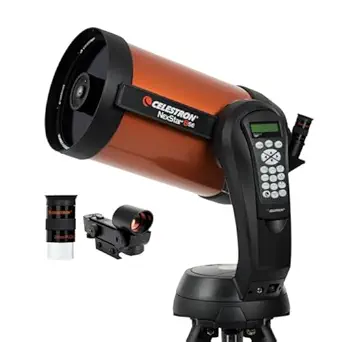
Celestron NexStar 8SE — for the imager who pivots to planetary
The 8SE delivers 203 mm of aperture and 2,032 mm of focal length on an integrated GoTo fork mount. It is not suitable for narrowband DSO imaging at native focal ratio, but for lunar mosaics, Jupiter belts, and Saturn ring detail off a rooftop pier, it is a remarkable value. View the Celestron NexStar 8SE on Amazon.
Celestron NexStar 6SE — for the lighter rooftop pier
If you decided against an apo refractor but the 8SE feels like too much weight on a tight balcony, the 6SE drops to 150 mm of aperture and roughly 9 kg total system weight. It handles planetary and small bright DSOs through Halpha and remains an honest grab-and-go SCT. View the Celestron NexStar 6SE on Amazon.
Build quality, focuser behavior, and dew
The FRA500's rack-and-pinion focuser holds a Moonlite-grade payload without slipping, but the dual-speed knob action can feel slightly notchy out of the box; a half-hour of break-in smooths it. The GT81 IV ships with a smoother focuser that feels more refined under the fingertips, but the new collapsing dew shield is plastic and rattles when the focuser is hammered by a cold guider correction.
Both scopes need a dew strap on Atlantic-coast or Pacific Northwest rooftops where humidity climbs above 80 percent after midnight. Neither has on-board dew heating. Plan on a Kendrick or Pegasus strap and a 12 V LiFePO4 power source.
Verdict for the rooftop narrowband imager
Pick the Askar FRA500 if you want one scope that does everything well, plan to run a full-frame mono camera, and care about signal-per-minute under heavy light pollution. The reducer combo at f/3.9 is genuinely class-leading. Pick the William Optics GT81 IV if every gram on your tripod matters, if you value the William Optics aftermarket and resale community, or if your sensor is APS-C or smaller and you want a slightly more refined hands-on experience. Both honestly resolve the Askar FRA500 vs William Optics GT81 for condo rooftop narrowband question in favor of whichever set of trade-offs aligns with your specific roof.
For deeper dives, see our companion guides on cooled CMOS cameras for Bortle 8 narrowband, ASIAIR Plus vs StellarMate X50 in 2026, and our condo balcony astrophotography pier builds roundup.
Frequently Asked Questions
Can the Askar FRA500 reach focus with the ZWO ASI2600MM Pro and EFW Mini stack?
Yes. The FRA500 has a 55 mm backfocus spec from the M54 thread shoulder. The ASI2600MM Pro is 17.5 mm, the EFW Mini is 20 mm, and a 16.5 mm extension plus an OAG brings the stack to exactly 55 mm with about 1 mm of shim adjustment available. No flexure plate is needed for sensors up to APS-C.
Does the William Optics GT81 IV need the Flat6AIII for narrowband, or is it optional?
The Flat6AIII is functionally required for any camera with a sensor larger than 1 inch. Without it, the GT81 produces visible field curvature in the outer 30 percent of the image circle, which narrowband filters amplify because of their longer typical exposures. Budget for the reducer/flattener as a mandatory accessory, not an upgrade.
How does light pollution affect the choice between the FRA500 and GT81 in 2026?
Under Bortle 7-9 skies, faster focal ratios collect signal proportionally faster relative to skyglow noise. The FRA500 at f/3.9 with its reducer reaches a workable SNR on Halpha targets in roughly 90 minutes of integration where the GT81 at f/4.7 needs about 130 minutes. Over a typical clear-night cadence in an urban condo setting, that gap compounds quickly.
What mount minimum should I buy for either scope with a cooled camera and OAG?
For the GT81 fully kitted, a Star Adventurer GTi works for unguided 60-second subs, but a ZWO AM3 or Sky-Watcher HEM27 is recommended for guided imaging beyond two minutes. For the FRA500 fully kitted, skip the GTi entirely and start at the AM3, HEM27, or CEM26 class. Both scopes are happiest on an AM5 if budget allows.
Is the FRA500 a true Petzval, and what does that mean for tilt sensitivity?
Yes, the FRA500 uses a five-element Petzval design with the field-flattening group integrated into the optical tube. Because the corrector spacing is factory locked, tilt sensitivity is dramatically lower than a triplet-plus-flattener like the GT81. You can usually get round corner stars with no tilt adjuster on sensors up to APS-C.
Can I use either scope for visual observing on transparent nights?
Both work visually with a 2-inch diagonal and quality eyepieces. The FRA500's larger 90 mm aperture gathers about 23 percent more light than the GT81's 81 mm, which matters on dim DSOs. Neither is ideal as a primary visual instrument because of the relatively short focal length, but both deliver pleasing wide-field views of the Pleiades, Andromeda, and the Veil complex with an OIII filter from a dark site.
Which scope holds resale value better in the 2026 used market?
William Optics has a longer-established aftermarket presence in North America and Europe, so the GT81 typically retains around 75-80 percent of MSRP on the used market after a year of use. The Askar FRA500 is newer to global distribution and currently retains about 65-70 percent. If you might sell within 18 months, the GT81 is the safer financial bet; if you plan to keep the scope long-term, the difference is irrelevant.
Key Takeaways
- Choosing the right Askar FRA500 vs William Optics GT81 for condo rooftop narrowband means matching capacity and output ports to your actual devices
- Always check actual watt-hours (Wh), not just watts — runtime depends on Wh, not peak output
- Also covers: FRA500 vs GT81 narrowband comparison
- Also covers: condo rooftop astrophotography refractor
- Also covers: HOA-friendly narrowband telescope
- Compare price-per-Wh across models to find the best value for your budget