The ZWO Seestar S50 for truck drivers is the most practical astrophotography rig on the market for over-the-road operators because it weighs just 5.5 pounds, fits inside a sleeper-cab cubby, runs off a single internal battery for 6+ hours, and tracks deep-sky targets automatically through a phone app while you sleep through your mandatory 10-hour reset. You set the tripod on the asphalt next to your truck, level it, tap a target in the SkyAtlas app, and walk away. By the time DOT clears you to roll again, you have stacked exposures of the Andromeda Galaxy, the Orion Nebula, or the Sun saved to the device's internal storage.
Why the Seestar S50 fits the trucker lifestyle better than any other telescope
Traditional astrophotography demands a mount, a tripod, a guidescope, a laptop, a camera, dew heaters, and a power tank. None of that fits in the side box of a Freightliner Cascadia, and none of it survives the vibration of 600 miles of interstate. The Seestar S50 collapses every one of those components into a single sealed unit roughly the size of a thermos. For drivers running a regional or OTR schedule, that consolidation is the entire pitch: the ZWO Seestar S50 for truck drivers eliminates the gear-hauling problem that has kept astrophotography out of the cab for decades.
The unit's 50mm triplet apochromatic objective, 250mm focal length, and onboard Sony IMX462 sensor handle nebulae, galaxies, and lunar work without any external optics. The internal alt-azimuth mount uses plate-solving to find targets in under a minute even from a Pilot Flying J parking lot where you cannot see Polaris through the canopy lights. You do not need to know the sky. You only need to know which exit you are at.
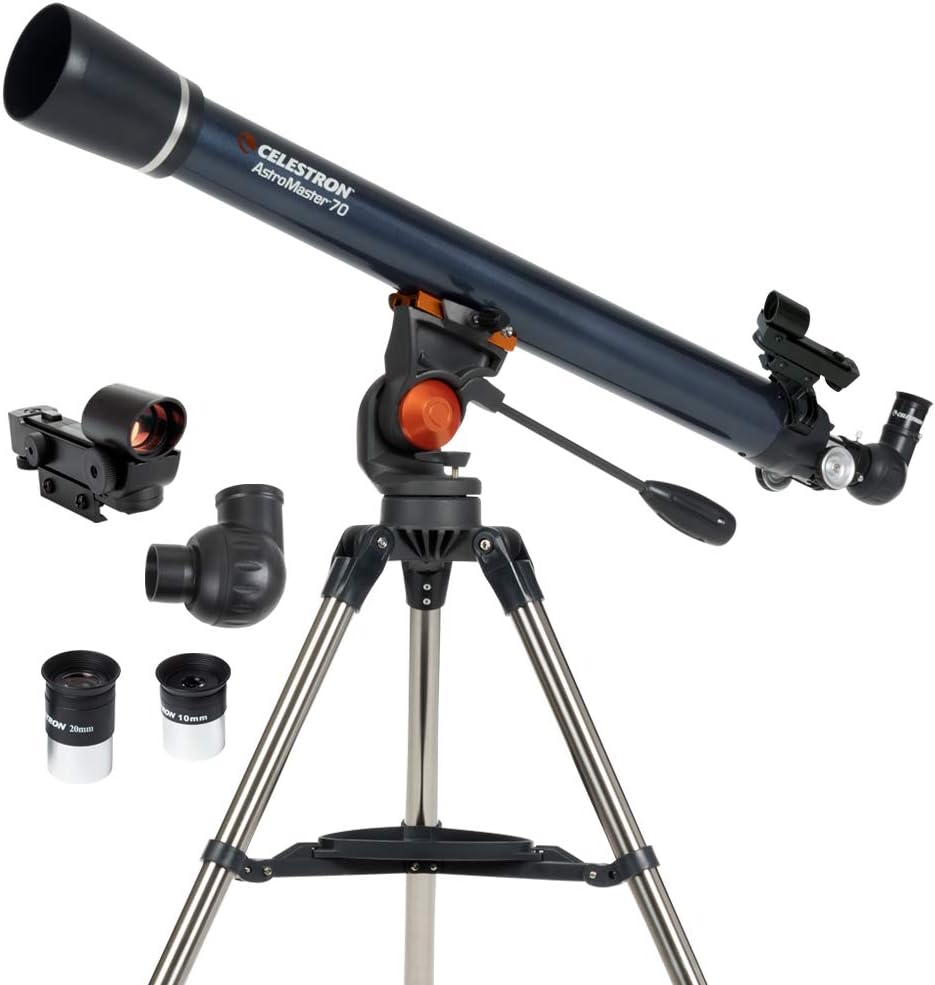
Setting up during a 30-minute break versus a full 10-hour reset
The Seestar S50 boots in roughly 90 seconds and reaches a usable focus in another 90. That makes it the rare telescope you can actually deploy during a paid 30-minute break and still capture a few stacked frames of the Moon or Jupiter. For a full 10-hour reset, the workflow is different: you pick a deep-sky target like M31, M42, or NGC 7000, queue an extended integration of 60-90 minutes, and let the scope work while you eat or sleep. The S50 will park itself when the battery drops below 15%.
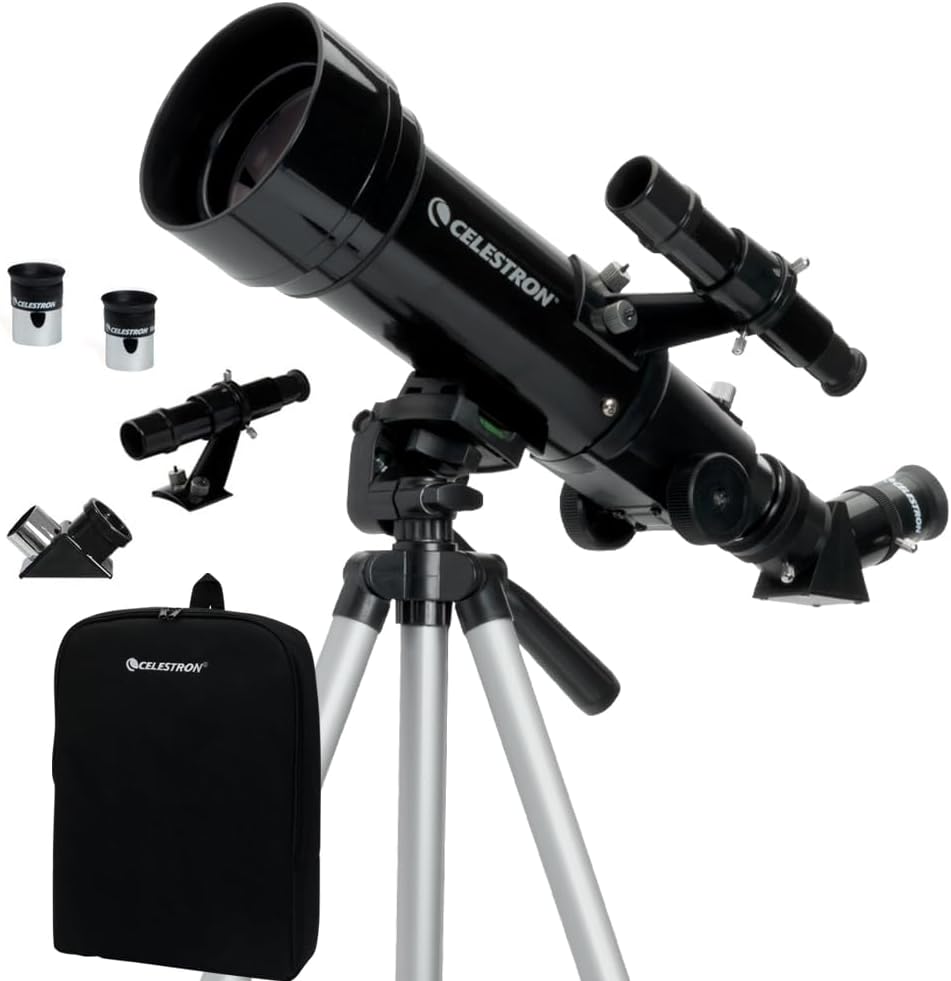
For drivers who want a deeper dive on portable rigs, our portable astrophotography setups guide compares the Seestar against the Vaonis Vespera and Dwarf II in tabletop scenarios that mirror a truck-stop deployment.
Power, storage, and connectivity from the cab
The S50's internal battery is rated for about 6 hours of imaging, which covers most of an overnight integration window. If you need more, the unit charges from any USB-C PD source - the same charger you already use for your phone or your ELD tablet works fine. Drivers running an APU or an inverter can leave it plugged in indefinitely. Images save to 64GB of internal storage and transfer to your phone over the device's built-in Wi-Fi hotspot, which means you do not need cell signal at the rest area. That matters because the darkest legal parking is rarely near a tower.
Where to park for the best skies on common freight lanes
Light pollution from a truck stop's overhead sodium lamps will wash out faint targets, but the Seestar's onboard dual-band filter cuts sodium and mercury emissions hard enough that emission nebulae like the Rosette and the North America Nebula still come through. The trick is to park on the far edge of the lot, point the scope away from the canopy, and use the app's light-pollution preset. For lanes through Wyoming, the Dakotas, west Texas, and eastern Oregon, you will routinely hit Bortle 3 or better at standard rest areas - skies most amateur astronomers drive hours to reach. See our light-pollution imaging tips for filter and stacking advice specific to parking-lot conditions.
Comparison: Seestar S50 versus the home-base alternatives
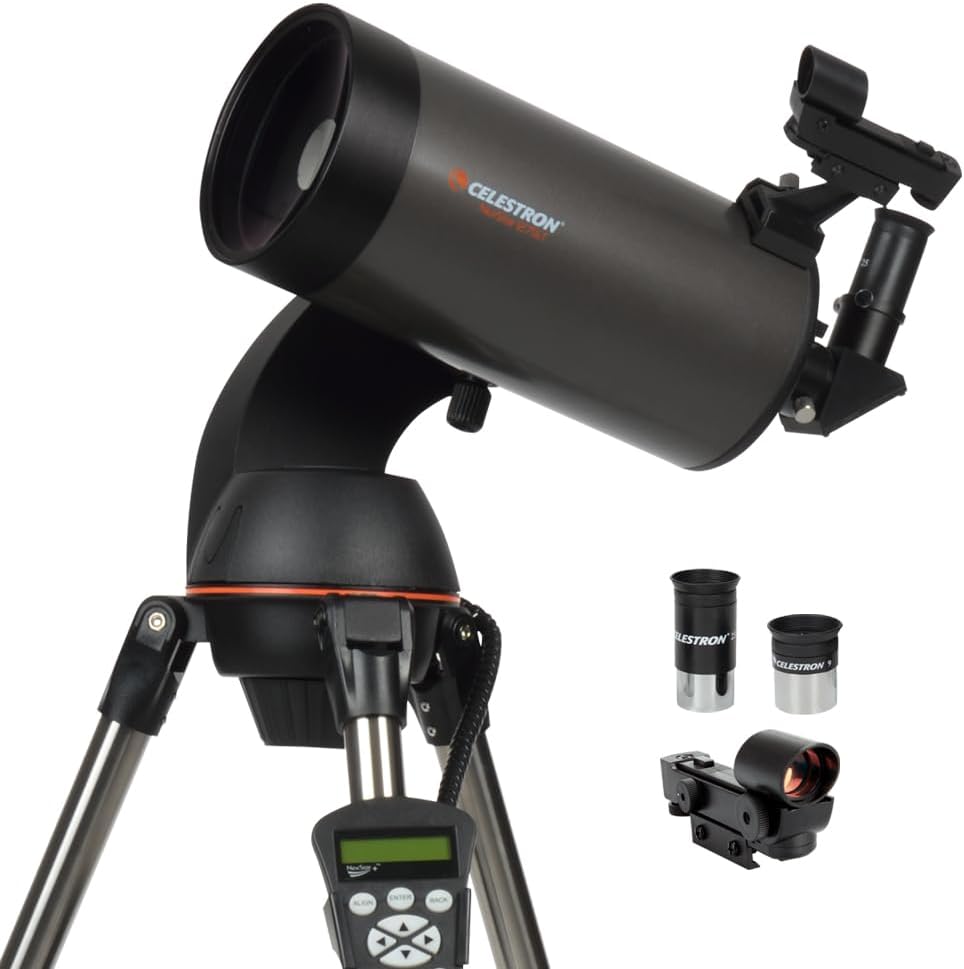
Many drivers want a smart scope for the road and a more capable instrument for the driveway at home. The table below compares the road-friendly Seestar S50 (sold separately at retailers) against two Celestron NexStar models that are popular as stationary home-base scopes for the same driver. The Celestrons are not road-portable in a sleeper cab - they are home-use complements.
| Spec | ZWO Seestar S50 (road) | Celestron NexStar 6SE (home) | Celestron NexStar 8SE (home) |
|---|---|---|---|
| Aperture | 50mm | 150mm | 203mm |
| Weight | 5.5 lb (all-in-one) | ~30 lb (with mount) | ~33 lb (with mount) |
| Setup time | ~3 minutes | 15-25 minutes | 15-25 minutes |
| Fits in sleeper | Yes | No | No |
| Astrophotography | Built-in | Requires add-ons | Requires add-ons |
| Best use | Rest-stop imaging | Backyard visual + lunar | Backyard deep-sky visual |
Recommended companion telescopes for home base
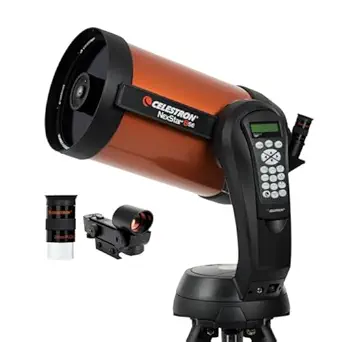
Celestron NexStar 6SE - best home complement for S50 owners
If you want a larger-aperture visual scope waiting in the garage for your home-time, the NexStar 6SE is the natural pairing. Its 6-inch Schmidt-Cassegrain gathers nine times the light of the Seestar's 50mm objective, so the targets you image on the road become targets you can actually look through an eyepiece at when you are home. SkyAlign makes the mount easy enough for a tired driver to deploy after a week out. View the Celestron NexStar 6SE on Amazon.
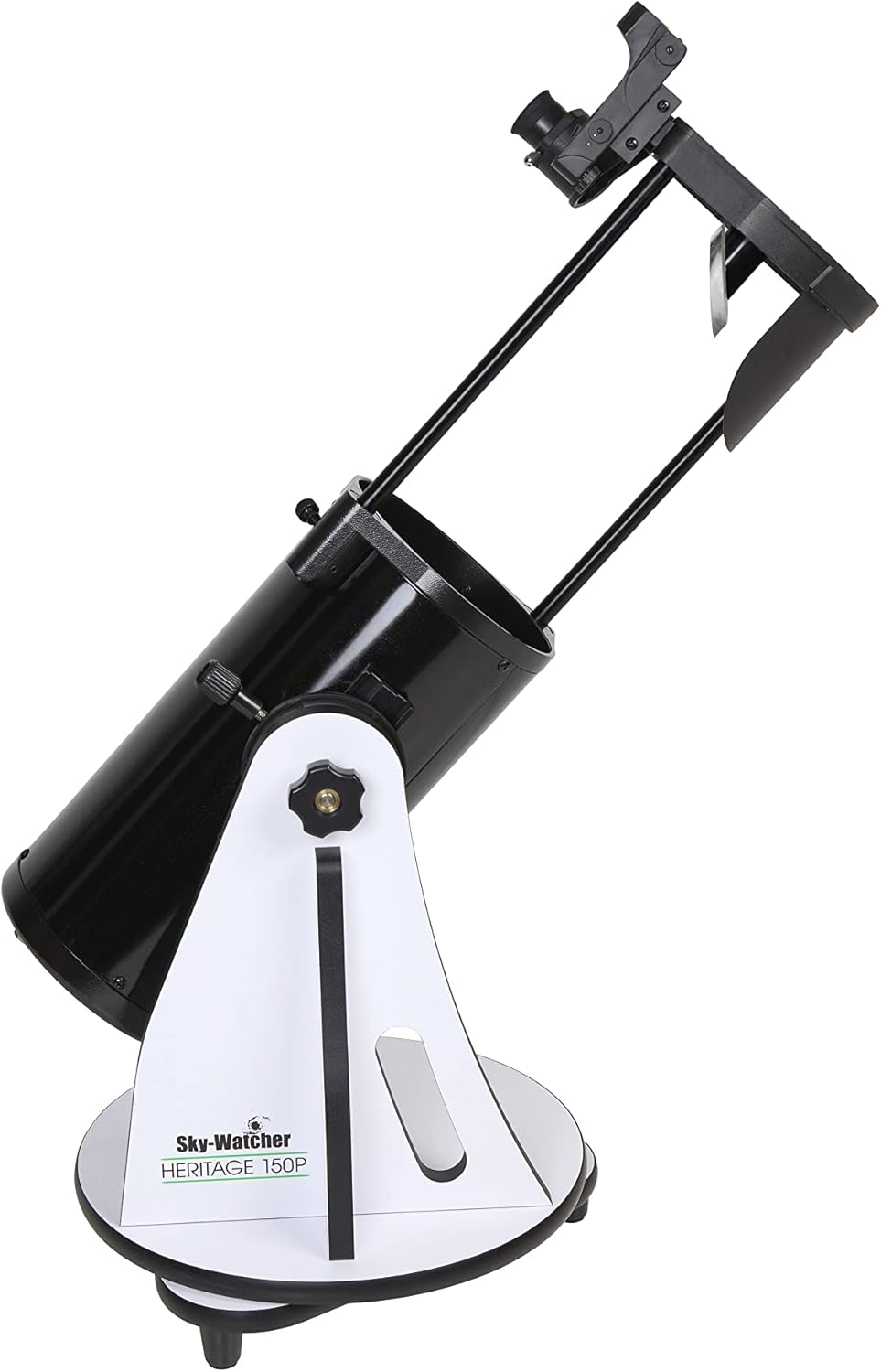
Celestron NexStar 8SE - bigger aperture for serious driveway nights
Drivers who already know they want long-term involvement in the hobby tend to skip the 6SE and go straight to the 8SE. The 8-inch aperture is the classic "do-it-all" SCT, capable of resolving Jupiter's belts, Saturn's Cassini division, and a healthy slice of the Messier catalog. It is heavier and pricier than the 6SE, but it is also a scope you will not outgrow. Pair it with the Seestar for road work and the 8SE becomes your weekend instrument. View the Celestron NexStar 8SE on Amazon.
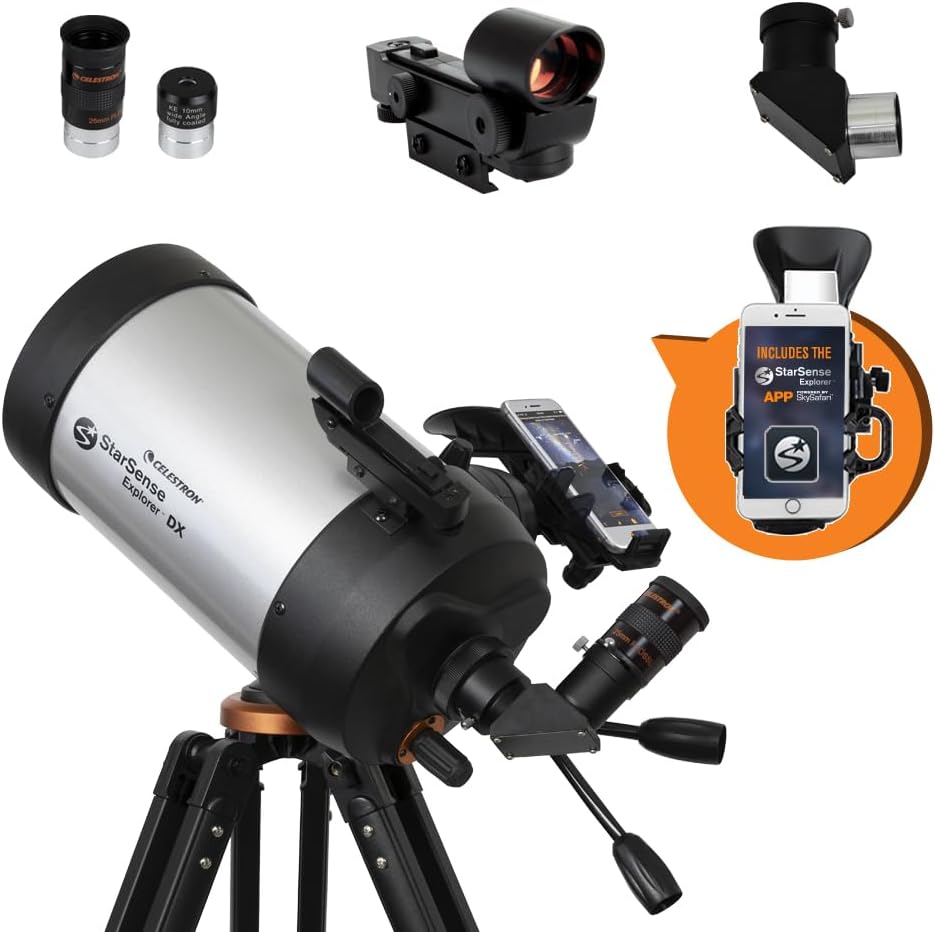
Celestron NexStar 8SE with NexYZ smartphone adapter kit
For drivers who want to share images from the home scope the same way they share Seestar shots from the road, the bundle that includes Celestron's NexYZ 3-axis smartphone adapter and an AC adapter is a smarter buy than the bare telescope. The smartphone bracket clamps to the eyepiece in seconds and lets you post lunar and planetary stills to the trucking forums you already read. View the NexStar 8SE + NexYZ kit on Amazon.
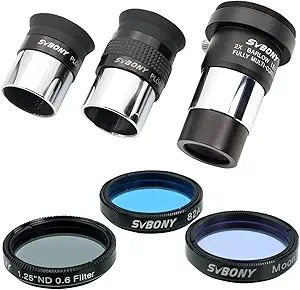
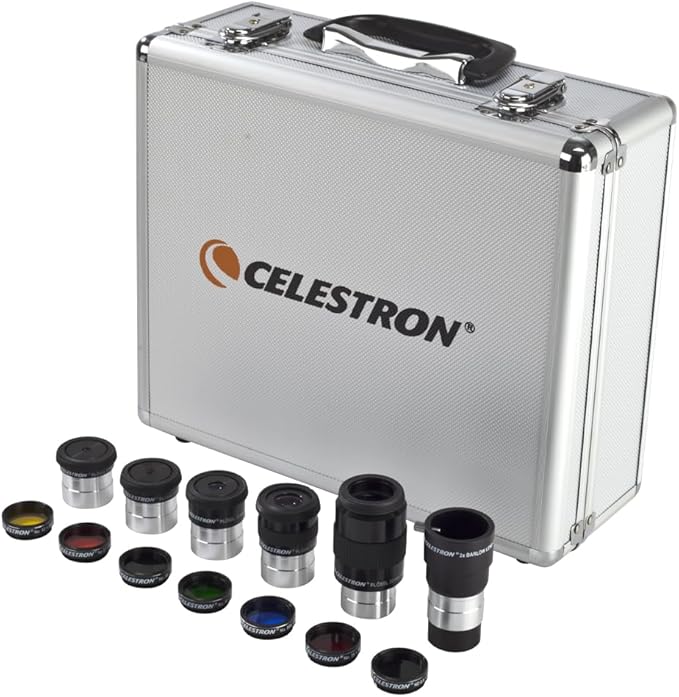
Celestron NexStar 8 SE with eyepiece and filter kit
The eyepiece-and-filter bundle is the most cost-effective way for a new owner to get the magnification range needed to actually use the 8SE on planets, double stars, and the Moon. Out of the box, the bare 8SE ships with a single 25mm eyepiece that limits you to about 80x. The kit adds the higher-power eyepieces and color filters that turn the scope into something Saturn looks like Saturn through. View the NexStar 8 SE eyepiece & filter kit on Amazon.
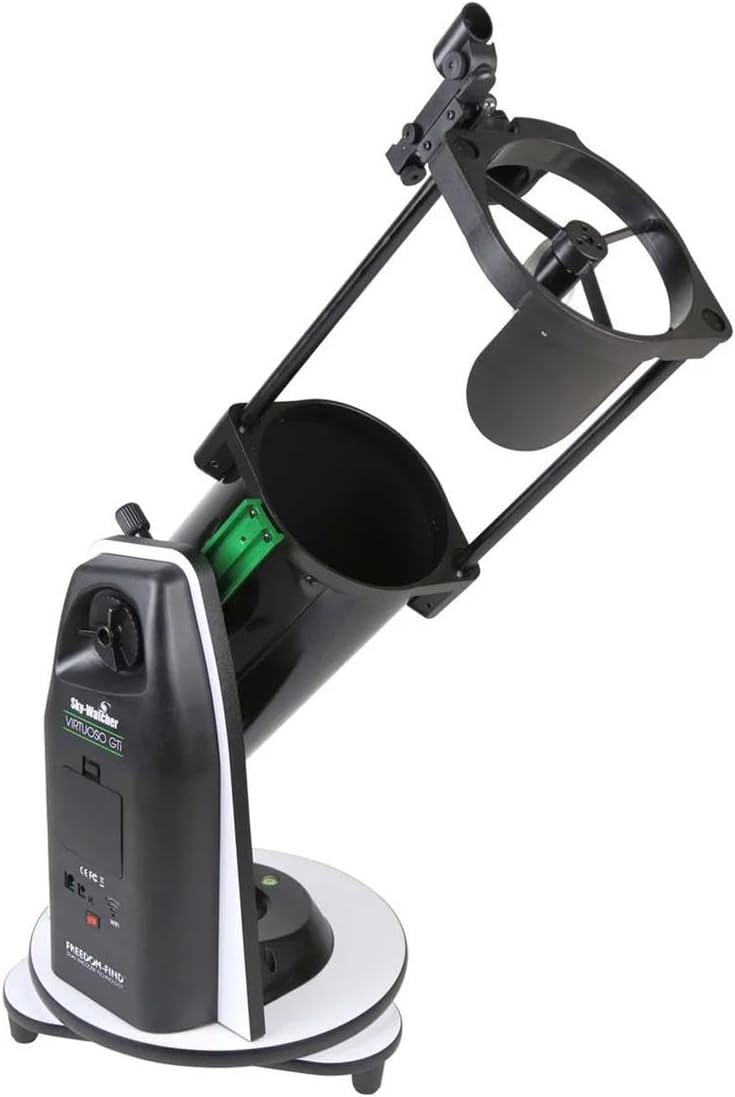
What the Seestar S50 cannot do
The S50 is not a planetary imager. Its 250mm focal length is far too short to resolve Jupiter's bands or Saturn's rings at any useful scale - those targets will look like small bright dots. It is also not a visual telescope - there is no eyepiece. Everything is mediated through the app. Drivers who want to actually see Saturn through glass at the end of a long week need one of the Celestron NexStar models above. The Seestar's job is photography of extended deep-sky targets in conditions where setting up a real rig is impossible.
The bottom line for OTR drivers in 2026
If you spend 250+ nights a year in a sleeper berth, the Seestar S50 is the only telescope that genuinely earns its space behind the passenger seat. It pays for itself in unique experiences during reset breaks that would otherwise be spent scrolling a phone. Combine it with a stationary 6SE or 8SE at home and you have the hobby covered in both halves of your life. For more on smart-scope picks across price tiers, see our best smart telescopes of 2026 roundup.
Frequently Asked Questions
Can a truck driver legally use the Seestar S50 in a rest area parking lot?
Yes. Federal rest areas and private truck stops do not prohibit small tripod-mounted devices outside your vehicle as long as you remain in your assigned parking space and do not obstruct lanes. Keep the tripod within the painted boundaries of your stall, point optics away from the fuel island, and you will not draw any complaint from management or DOT inspectors.
How long does the Seestar S50 battery last during overnight imaging?
The internal battery runs for about 6 hours of continuous imaging at moderate temperatures. In summer Texas heat the runtime drops slightly; in Minnesota winters it drops more substantially. Plug it into your truck's inverter or APU through the USB-C port to image straight through a 10-hour reset without battery anxiety.
Does the Seestar S50 work without cell signal at remote rest stops?
Yes. The device creates its own Wi-Fi hotspot that your phone connects to directly. No cell signal, no LTE, no internet is required for plate-solving, target selection, tracking, or saving images. You only need a connection when you want to share photos to social media after the session ends.
Will the Seestar S50 survive vibration from highway driving in a sleeper berth storage compartment?
The unit is sealed and rated for transport. Owners report no alignment or sensor issues after thousands of highway miles when the scope is stored in its included carrying case and wedged so it cannot slide. Avoid storing it loose where it can tumble against the wall during hard braking.
What is the best deep-sky target to image from a truck stop in summer 2026?
For July through September 2026, point the Seestar at the Lagoon Nebula (M8), the Trifid Nebula (M20), and the North America Nebula (NGC 7000). All three sit high in the southern sky from typical North American latitudes during the part of the night that lines up with most drivers' 10-hour reset windows. Each yields a satisfying image within a 30-60 minute integration.
Is the Seestar S50 worth it if I already own a Celestron NexStar at home?
Yes, because the two scopes solve different problems. The NexStar is a stationary visual instrument that requires garage space and a clear backyard. The Seestar is a portable imaging robot that fits in a side box. Owning both means you have astronomy access during home-time visual sessions and during OTR reset breaks - they do not overlap functionally.
How does the Seestar S50 compare to the Dwarf II and Vaonis Vespera for truck drivers?
The Seestar wins on optical quality and battery life for the price, the Dwarf II wins on raw portability and bird/wildlife dual-use, and the Vespera wins on image quality at roughly three times the cost. For a driver buying their first smart scope in 2026, the Seestar is the highest value of the three because its rugged form factor handles cab vibration better than the Dwarf and its price leaves room for the home telescope you will eventually want.
Key Takeaways
- Choosing the right ZWO Seestar S50 for truck drivers means matching capacity and output ports to your actual devices
- Always check actual watt-hours (Wh), not just watts — runtime depends on Wh, not peak output
- Also covers: smart telescope for long haul truckers
- Also covers: Seestar S50 sleeper cab astrophotography
- Also covers: truck stop stargazing telescope
- Compare price-per-Wh across models to find the best value for your budget