Specification and Compatibility Table
Built only from the published listing data. Where a listing does not state a number, this table says "Not stated" rather than guessing. Focal ratio is shown only where both aperture and focal length are published.
| Product | Type | Aperture | Focal Length | Focal Ratio | Mount | Price | Rating |
|---|---|---|---|---|---|---|---|
| HUGERSTAR 90mm Refractor | Refractor | 90mm | 800mm | ~f/8.9 | AZ mount, stainless tripod | $169.99 | Not stated |
| Celestron AstroMaster 130EQ | Newtonian reflector | 130mm | Not stated | Not stated | Equatorial (EQ) | $359.95 | 4.3 stars, 3416 ratings |
| Celestron AstroMaster 102AZ | Short-tube refractor | 102mm | Not stated | Not stated | Alt-azimuth (AZ) | $319.99 | 4.3 stars, 353 ratings |
| 130EQ Newtonian Reflector (with 1.5X Barlow) | Newtonian reflector | 130mm | Not stated | Not stated | Equatorial (EQ) | $215.99 | Not stated |
| Uonol 90mm Refractor (32X-240X) | Refractor | 90mm | 800mm | ~f/8.9 | AZ mount tripod | $139.99 | Not stated |
| NASA Lunar Telescope for Kids | Refractor (Lunar) | Not stated | Not stated | Not stated | Tabletop tripod | $44.99 | Not stated |
Last Updated: July 28, 2026
The products referenced on this page carry a combined 3,769+ verified Amazon customer ratings.
Finding the right how to compare telescope aperture focal length and mount typ comes down to matching the features to how you will actually use it.
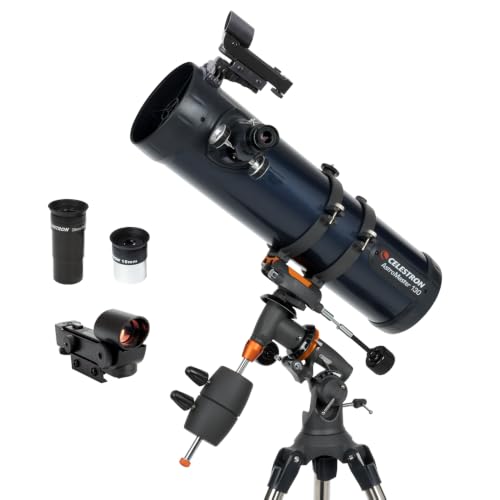
- POWERFUL TELESCOPE FOR ASTRONOMY BEGINNERS: The AstroMaster 130EQ delivers sharp optics, a stable equatorial mount, and smooth manual controls, making it the top choice for
- HIGH-QUALITY 130MM OPTICS: Enjoy views through the 130mm (5”) Newtonian reflector, which features high-quality aluminum and SiO₂ coatings and enough light-gathering ability to
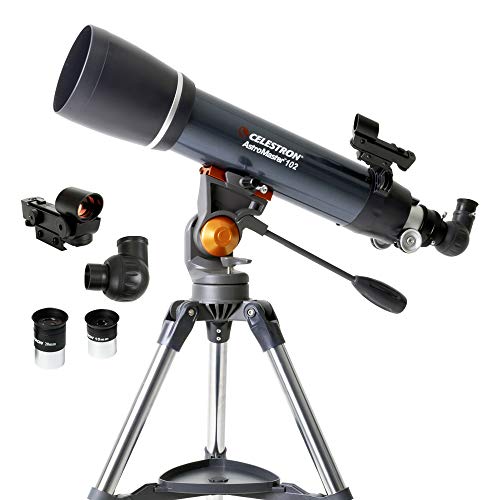
- POWERFUL TELESCOPE FOR BEGINNERS: The AstroMaster 102AZ is the perfect entry-level telescope for adults and kids eager to explore the night sky. You get bright, clear views and
- HIGH-QUALITY 102MM OPTICS: Enjoy crisp, detailed views through the fully coated 102mm (4") short-tube refractor, offering a wide field of view ideal for scanning star fields
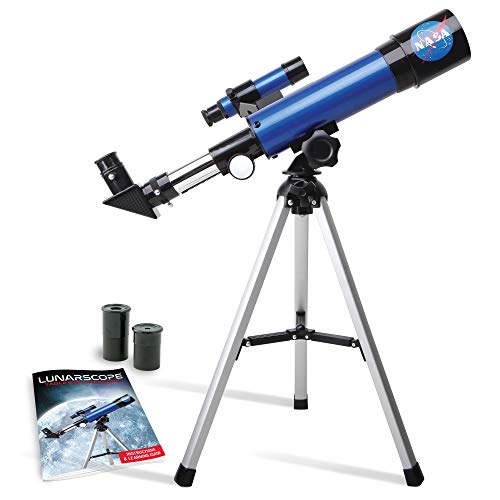
- INSPIRE CURIOSITY – The NASA Lunar Telescope allows your child to see the moon in incredible detail; the perfect gift for girls and boys interested in space, the moon, and
- HIGH-QUALITY OPTICAL GLASS AND FINDER SCOPE – This easy-to-use telescope comes with a finder scope, low power, and high-power eyepieces; when used correctly, this combination will
The Short Answer
Compare the three specs in order of impact: aperture first (it decides how much you can actually see), focal length second (it sets your magnification range and field of view), and the mount last but never least (it decides whether you can point steadily at what you want). Aperture is a hard physical limit you cannot upgrade later, focal length is a trade-off between reach and framing, and the mount type is the difference between a frustrating night and an easy one. Read all three together, because a big aperture on a shaky mount performs worse than a modest scope on a solid one.
Why These Three Specs Only Make Sense Together
Aperture is the ceiling on everything
Aperture is the diameter of the main lens or mirror, quoted in millimeters. It governs light-gathering and resolving power, which means it sets the faintest and finest detail the scope can ever show. A 90mm scope and a 130mm scope are in genuinely different classes for deep-sky targets, and no eyepiece swap closes that gap.
Treat aperture as a hard limit. You can change eyepieces, add a Barlow, or swap the mount, but you cannot add glass. This is why it belongs first in any comparison.
Focal length sets the view, not the power
Focal length is the distance light travels inside the optical tube before it forms an image, quoted in millimeters. Magnification is focal length divided by eyepiece focal length, so an 800mm tube with a 10mm eyepiece gives 80x. Longer focal length reaches higher magnification more easily but narrows the field of view; shorter focal length frames wide targets but tops out sooner.
The number that ties aperture and focal length together is the focal ratio (focal length divided by aperture, written like f/8.9). A 90mm f/8.9 scope is a longer, planetary-leaning instrument; a fast, short tube is friendlier to wide star fields. Compute this ratio for every scope you compare, because it tells you what the scope is built to do.
The mount decides whether any of it works in practice
Two mount families dominate beginner and intermediate scopes. An alt-azimuth (AZ) mount moves up-down and left-right, like a camera tripod head. It is intuitive, quick to set up, and forgiving. An equatorial (EQ) mount tilts to your latitude so one axis tracks the sky's rotation, which is a real advantage at high magnification, but it needs polar alignment and has a learning curve.
Match the mount to your patience and your targets. High-power planetary viewing rewards an EQ mount; casual Moon and terrestrial viewing is happier on an AZ.
Step-by-Step: Comparing Two Scopes on Paper
- Line up the apertures first. Convert everything to millimeters and rank them. Gotcha: marketing loves to lead with magnification ("240X", "90x"). Magnification is not a capability spec, so ignore it at this stage.
- Find the focal length for each. If it is printed (for example 800mm), note it. Gotcha: some listings only quote the model number or magnification and omit focal length entirely. If it is not stated, do not assume it, and treat that as a small red flag about listing quality.
- Calculate the focal ratio. Divide focal length by aperture. Gotcha: you can only do this when both numbers are published. A 90mm/800mm scope is f/8.9; if either number is missing, the ratio is unknowable from the listing alone.
- Identify the mount type and load rating. Read whether it is AZ, EQ, or a tabletop mount. Gotcha: "tripod included" says nothing about stability. A tall aluminum tripod under a long tube can wobble for seconds after every touch.
- Translate magnification claims into eyepiece math. Take the highest advertised power and check it against the aperture. Gotcha: usable magnification tops out around 2x the aperture in millimeters, so a 90mm scope realistically maxes near 180x regardless of a "240X" claim.
- Check what comes in the box. Note eyepieces, Barlow lens, finder, phone adapter, filters. Gotcha: a bundled 1.5x or 2x Barlow multiplies your effective magnification options, which changes how you read the raw focal length.
- Weigh portability against your actual site. A tabletop scope needs a table or ledge; a full tripod scope needs floor space and carrying. Gotcha: the scope you set up in two minutes gets used; the one that takes twenty stays in the closet.
What Goes Wrong When People Compare Specs
Chasing magnification numbers
Symptom: you buy the scope with the biggest "X" number and the image is dim, blurry, and hard to hold. Fix: re-rank by aperture and focal ratio. High magnification on a small aperture just enlarges a fuzzy image. Back off to a mid-power eyepiece and the view sharpens immediately.
Ignoring the mount until the first night
Symptom: every time you touch the focuser the target jumps out of view and shivers for several seconds. Fix: this is mount and tripod flex, not optics. Spread the tripod legs fully, keep them at minimum height, and let vibrations settle before observing. If it never settles, the mount is under-built for the tube.
Comparing an EQ and an AZ as if they were the same
Symptom: you pick an EQ scope for its aperture, then cannot find anything because the controls move diagonally. Fix: an untuned EQ mount feels backwards until it is polar-aligned. Learn the polar alignment routine, or choose an AZ scope if you want point-and-look simplicity.
Missing focal length on the listing
Symptom: you cannot calculate the focal ratio or predict magnification. Fix: do not fill the gap with a guess. Ask the seller or move to a listing that publishes both numbers, since the ratio is central to knowing what the scope is for.
Buying more scope than your site or patience allows
Symptom: a capable scope sits unused because setup is a chore. Fix: match tube length and mount complexity to how and where you observe. For balconies, apartments, or kids, a shorter tube or a tabletop mount removes the friction that kills the hobby.
Notice how the two 90mm refractors share the same 800mm focal length and therefore the same roughly f/8.9 character, while the 130mm reflectors gather noticeably more light but publish no focal length in these listings. That single missing number is why you should treat focal ratio as something to verify, not assume.
When the Fix Is a New One
Sometimes no amount of eyepiece swapping or tripod fiddling solves the problem, and the honest move is a different scope. Here are the signals, tied to what each option actually changes for aperture, focal length, and mount.
You have hit the aperture ceiling
If your current scope simply cannot show the faint detail you want, and you are already at a sensible magnification, you have run into the aperture wall. Stepping from 90mm to a 130mm reflector is a real jump in light-gathering, and the equatorial mount adds tracking for higher-power work. The Check Price on Amazon option here is the Celestron AstroMaster 130EQ Newtonian, which pairs 130mm of aperture with an EQ mount for readers ready to learn polar alignment.
You want simple pointing at a larger aperture
If the EQ learning curve is the thing standing between you and actually observing, the change you need is the mount, not the glass. A 102mm short-tube refractor on an alt-azimuth mount keeps setup intuitive while still stepping up aperture over an entry 90mm. See the Celestron AstroMaster 102AZ and Check Price on Amazon if point-and-look simplicity matters more than tracking.
The current scope is too much for the user or the space
If a full tripod scope is going unused because it is too heavy, too tall, or too fiddly for a child, the fix is a smaller, faster-to-deploy instrument. The NASA Lunar Telescope for Kids uses a tabletop tripod and is built around Moon viewing, which removes the setup friction entirely. Compare it and Check Price on Amazon when portability and ease outweigh raw reach.
FAQ
Is aperture or focal length more important?
Aperture, in almost every case. It sets the physical limit on brightness and detail, and you cannot upgrade it. Focal length shapes the view and magnification range within that limit, so decide aperture first, then use focal length to fine-tune the kind of viewing you want.
What does the focal ratio (like f/8.9) actually tell me?
It is focal length divided by aperture, and it describes the scope's personality. Higher ratios (longer, "slower" tubes) lean toward high-magnification planetary and lunar views with narrow fields; lower ratios ("faster" tubes) favor wide star fields at lower power.
AZ or EQ mount for a beginner?
An AZ mount is easier to start with because it moves in simple up-down, left-right directions and needs no alignment. An EQ mount tracks the sky's motion on one axis, which helps at high magnification, but it requires polar alignment and a bit of study before it feels natural.
Why is the advertised magnification so much higher than what works?
Advertised numbers like 240x are theoretical eyepiece math, not usable power. Practical maximum magnification is roughly twice the aperture in millimeters, so a 90mm scope realistically peaks near 180x before the image gets dim and mushy. Judge scopes by aperture, not by the biggest "X" on the box.
What should I check in owner reviews before buying?
Look specifically at comments about tripod stability, how long vibrations take to settle, and how easy the finder and focuser are to use. Go read the ratings and written reviews on the product page yourself, since real-world steadiness and assembly ease are exactly what specs cannot tell you.
Does a bundled Barlow lens change how I read focal length?
Yes. A 1.5x or 2x Barlow multiplies the effective focal length seen by the eyepiece, so a scope shipping with one gives you more high-power options than its raw focal length suggests. Factor any included Barlow into your magnification planning rather than treating the tube's focal length as the whole story.
For a neutral primer on how these optical terms are defined, the Wikipedia overview of optical telescopes is a stable reference for aperture, focal length, and focal ratio.
Key Takeaways
- Choosing the right how to compare telescope aperture focal length and mount typ means matching the key features to your specific needs and budget
- Read real customer reviews and check the return policy before you commit
- Also covers: telescope aperture vs focal length
- Also covers: AZ vs EQ mount
- Also covers: focal ratio explained
- Compare value across models — the priciest option is not always the best fit