When your Orion XT8 Dobsonian arrives, the primary and secondary mirrors have almost certainly drifted out of perfect alignment during shipping. Stars look like soft blobs or short-tailed comets instead of pinpoint dots. That's not a defect — it's the price of admission for a Newtonian reflector, and it's exactly why every XT8 owner needs a small collimation kit. This guide covers the orion xt8 collimation tools for beginners that actually matter in 2026, the order you should buy them in, and a step-by-step routine to bring your scope back to factory-sharp optics in under five minutes.
What collimation actually does on a Newtonian
Collimation is the process of aligning the secondary (diagonal) mirror under the focuser with the primary (large) mirror at the back of the tube so light from a star travels down the optical axis without being tilted off into the side of the eyepiece. On a Schmidt-Cassegrain like a Celestron NexStar, the optics are sealed inside a closed tube and the alignment usually holds for years. On an open-tube Newtonian like the XT8, every car ride, bump, and temperature swing shifts the mirrors by tiny amounts that add up.
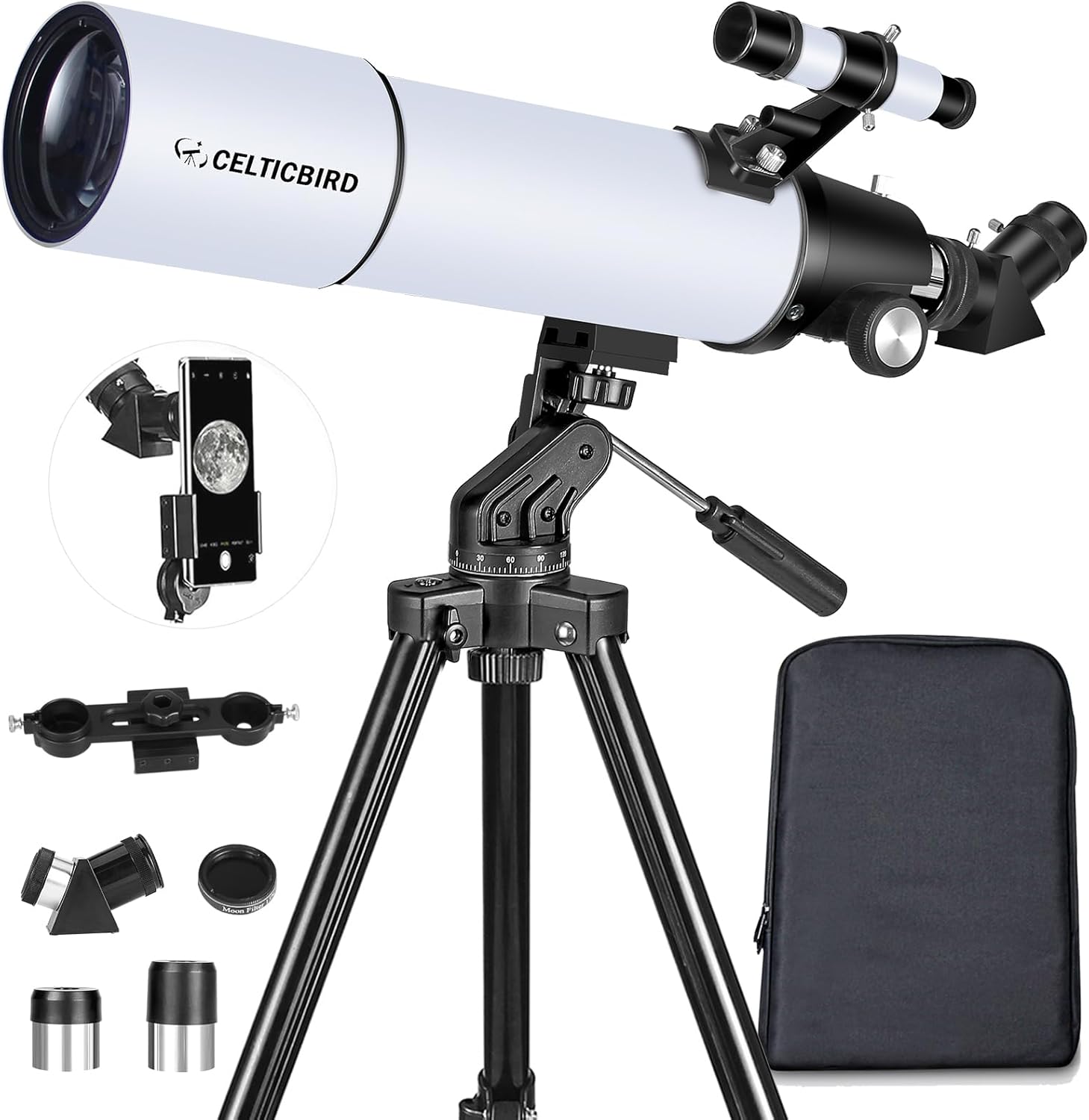
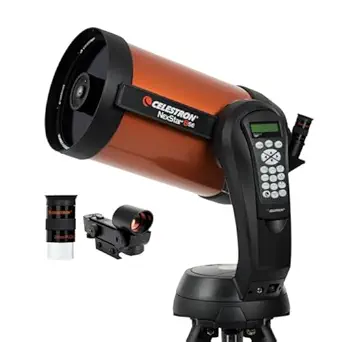
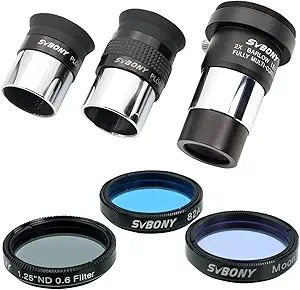
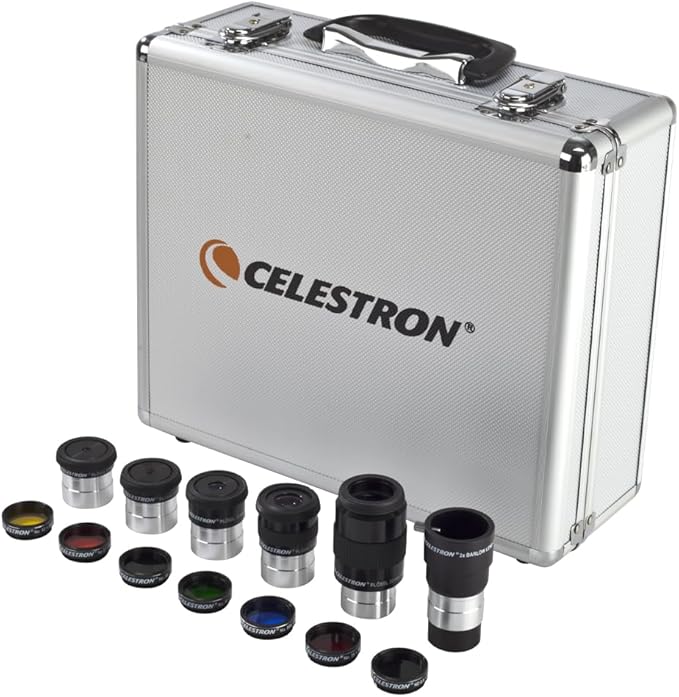
You'll know your XT8 needs collimation when bright stars at high magnification show flared diffraction spikes, when planets look mushy even on a calm night, or when defocused stars produce a donut with the center hole offset from the middle. None of those mean the scope is broken — they mean fifteen seconds of knob-turning is overdue.
The three tools every first-time XT8 owner should know
Aspiring astrophotographers and visual purists obsess over expensive autocollimators and Barlowed-laser kits, but the truth is that the only orion xt8 collimation tools for beginners worth buying up front are three simple items: a collimation cap, a Cheshire eyepiece, and a laser collimator. You don't need all three at once. You probably want to build the kit in stages.
The collimation cap — your free starting point
A collimation cap is essentially a 1.25-inch plastic plug with a tiny pinhole in the center, dropped into the focuser in place of an eyepiece. It forces your eye onto the exact optical axis so you can see whether the reflection of the primary mirror is centered under the secondary. Orion ships one with the XT8 in the accessory tray, which means your first night of collimation costs you exactly zero dollars.
The cap's weakness is that it shows you alignment but gives you no fine reference for tilt. It's good enough to get the scope close — close enough to find Jupiter and the Moon and be impressed — but not close enough for splitting double stars or chasing the bands on Saturn.
The Cheshire eyepiece — the precision baseline
A Cheshire eyepiece looks like a chunky metal tube with a crosshair at one end and a 45-degree polished face that catches ambient light and bounces it down onto the primary mirror's center spot. When you look through the Cheshire, you simultaneously see the crosshair, the reflected crosshair, the donut around the primary's center spot, and the bright illuminated ring. Aligning all four concentrically gives you a mechanically true collimation that does not depend on batteries or on the tool itself being aligned.
Cheshires are the gold standard for serious Newtonian owners because they reveal both secondary-mirror centering (a step the laser cannot truly verify) and primary-mirror tilt in one pass. The XT8 already has a center-marked primary from the factory, which means a Cheshire works perfectly out of the box. Expect to pay roughly $40-$60 for a quality unit from Agena Astro, Astromania, or Farpoint. Buying one is the single biggest jump in collimation quality you can make.
The laser collimator — speed and simplicity
A laser collimator drops into the focuser and shines a tightly-focused red dot down the optical axis. When the secondary is correctly tilted, the dot lands on the center spot of the primary. When the primary is correctly tilted, the dot bounces straight back into the small target ring on the laser's body. The whole alignment can be done by one person, in the dark, in under two minutes.
The catch — and it is a real catch — is that the laser itself has to be collimated. A miscollimated laser will confidently tell you the scope is perfect when it isn't. Decent units from Svbony, Apertura, or Orion run $35-$90 and most come with adjustment screws so you can verify and tweak the laser's own alignment using a V-block.
How to use them together in one quick routine
The right workflow for a first-time XT8 owner is not to pick one tool — it's to combine them. Use the Cheshire for the secondary mirror (centering and rotation, which a laser cannot verify well) and use the laser for the primary mirror tilt (which it verifies almost instantly). A typical session looks like this:
- Drop in the Cheshire. Adjust the three secondary mirror screws until the primary's reflection is round and centered under the secondary.
- Without moving the scope, swap to the laser. Confirm the red dot hits the center spot of the primary.
- Adjust the three primary mirror knobs at the back of the tube until the returned laser dot lands inside the target ring.
- Pull the laser. Drop the Cheshire back in for a final sanity check.
- If a star test that night shows clean, symmetric defocused donuts, you're done until the next trip in the car.
For more depth on technique, see our walkthrough on how to collimate a Newtonian telescope and our deep-dive on laser collimator vs. Cheshire eyepiece for first-time buyers deciding which tool to grab first.
The no-collimation alternative path
Some XT8 owners go through this learning curve, decide collimation is not for them, and pivot to a Schmidt-Cassegrain (SCT) design that holds alignment for years and tracks objects automatically. Before you give up entirely, remember that the orion xt8 collimation tools for beginners described above pay for themselves within a single sharp Saturn session — but if your head is heading toward a sealed-tube scope after a frustrating first night, the closest comparable Celestron SCTs are the NexStar 6SE and 8SE. Both use fully computerized GoTo mounts with sealed optics, no center-mark fuss, and no nightly knob-turning. Below is a side-by-side of the three NexStar configurations XT8 owners most often cross-shop.
| Model | Aperture | Optical Design | Mount | Best For |
|---|---|---|---|---|
| Celestron NexStar 8SE | 8 inches (203mm) | Schmidt-Cassegrain | Computerized GoTo (SkyAlign) | Same aperture as the XT8, sealed optics, GoTo tracking |
| Celestron NexStar 6SE | 6 inches (150mm) | Schmidt-Cassegrain | Computerized GoTo (SkyAlign) | Lighter, more portable, easier to set up solo |
| Celestron NexStar 8SE Filter Kit Bundle | 8 inches (203mm) | Schmidt-Cassegrain | Computerized GoTo (SkyAlign) | Same OTA plus a starter eyepiece + filter kit |
Celestron NexStar 8SE Computerized Telescope
The NexStar 8SE matches the XT8's 8-inch aperture so you don't lose any light-gathering power. The sealed Schmidt-Cassegrain tube holds collimation for years between adjustments, the SkyAlign computer can identify three bright objects to align itself, and the database holds 40,000+ targets. It's the most direct answer for an XT8 owner who wants to keep the aperture but skip the collimation routine entirely. View the Celestron NexStar 8SE on Amazon.
Celestron NexStar 6SE Computerized Telescope
If the XT8's 41-pound base and 20-pound tube convinced you that portability matters more than raw aperture, the NexStar 6SE drops to a 6-inch sealed optical tube on the same SkyAlign GoTo mount. It's the easiest grab-and-go scope in the NexStar lineup and still pulls in real detail on Jupiter's cloud bands, Saturn's rings, and the brightest Messier objects. View the Celestron NexStar 6SE on Amazon.
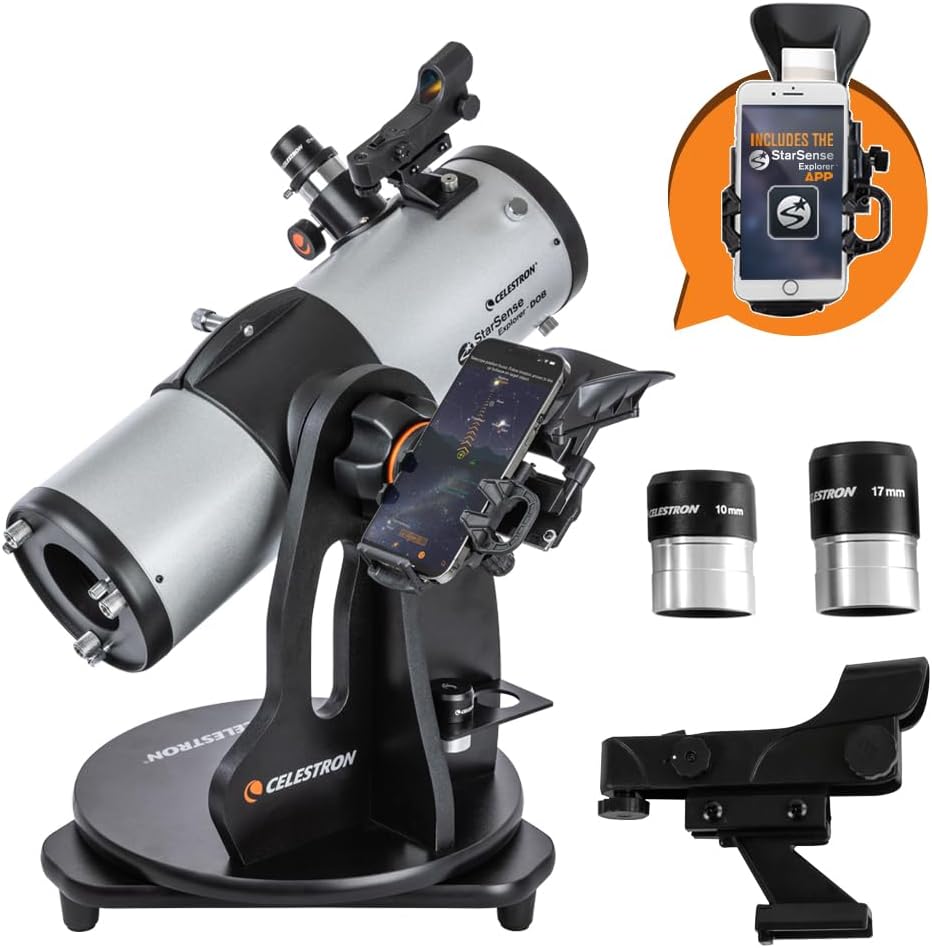
Celestron NexStar 8SE with Eyepiece & Filter Kit
If you already know you want the 8-inch SCT but you're sick of buying accessories piecemeal (a complaint XT8 owners know well), this bundle adds a multi-eyepiece kit and a color filter set to the standard NexStar 8SE. The filter kit is particularly useful for pulling detail out of Mars and Jupiter — the kind of detail collimation problems on a Newtonian were probably hiding from you in the first place. View the Celestron NexStar 8SE Filter Kit bundle on Amazon.
That said, most first-time XT8 owners do not actually sell the Dob. They buy a Cheshire, learn the routine, and discover collimation takes less time than aligning a NexStar's GoTo mount. The XT8 remains one of the best dollar-per-inch deep-sky scopes on the market in 2026, which is exactly why our best beginner Dobsonian telescopes for 2026 roundup keeps it at the top of the list.
Frequently Asked Questions
Do I really need to collimate my Orion XT8 every time I use it?
No. Check collimation at the start of each session by glancing through the Cheshire or shining the laser — if the center spot is still under the crosshair and the laser bounces back into the target ring, you're done in 15 seconds. Actual adjustment is only needed every few sessions or after the scope rides in a car.
Can I collimate my XT8 without buying any tools?
Sort of. The collimation cap that ships in the accessory tray gets you close enough for low-power views of the Moon and bright planets. A 35mm film canister with a pinhole works too. But once you want crisp views of Saturn's Cassini division or split double stars, a real Cheshire eyepiece becomes non-negotiable.
Is a laser collimator better than a Cheshire for beginners?
Lasers are faster, but they only verify primary mirror tilt — they cannot reliably tell you whether the secondary is rotated or centered correctly. A Cheshire is slower but checks everything. The best answer for an XT8 owner is to own both and use each tool for what it does best. If forced to pick only one, get the Cheshire first.
How much should I budget for orion xt8 collimation tools for beginners?
Plan on $80-$150 total: roughly $50 for a quality Cheshire eyepiece and $60-$90 for a verified laser collimator. The collimation cap is free in the box. Buying a $200 autocollimator is overkill until you're shooting astrophotography, which the XT8's Dobsonian mount isn't really suited for anyway.
Will collimation fix the comet-shaped stars I see at high power?
Usually, yes. Comet or pear-shaped stars at high magnification almost always mean the primary mirror is tilted, and the laser-then-knob routine fixes it in under a minute. If collimation is verified perfect and stars still flare, you may be dealing with tube currents (let the scope cool 30 minutes), atmospheric seeing, or a pinched mirror cell rather than alignment.
Do I need to mark the center of my XT8's primary mirror?
No. Orion ships the XT8 with a small adhesive ring already applied to the exact center of the primary mirror. Both Cheshire eyepieces and laser collimators use that ring as their alignment target. Do not remove it or try to clean it off. If it ever falls off, replacement center-spot stickers from Agena Astro cost a few dollars.
Are there any eyepieces I should pair with my collimation kit?
A well-collimated XT8 reveals just how mediocre the stock 25mm Plossl is. Once your scope is aligned, a wide-field 32mm Plossl for deep sky and a 6mm or 7mm planetary eyepiece for high-power Saturn and Jupiter are the natural next purchases — see our best eyepieces for the Orion XT8 guide for specific picks.
Key Takeaways
- Choosing the right orion xt8 collimation tools for beginners means matching capacity and output ports to your actual devices
- Always check actual watt-hours (Wh), not just watts — runtime depends on Wh, not peak output
- Also covers: xt8 laser collimator
- Also covers: cheshire collimator for orion xt8
- Also covers: how to collimate orion skyquest xt8
- Compare price-per-Wh across models to find the best value for your budget