The best celestron nexstar 8se power tank for remote sites in 2026 is a 12V LiFePO4 pack delivering at least 20Ah of usable capacity with a regulated 5.5x2.1mm center-positive output and a low-temperature cutoff above -10C. The NexStar 8SE draws roughly 0.75A while tracking and spikes to 2A during fast slews, so a 20Ah pack gives a comfortable 8 to 10 hours of GoTo observing with margin for a dew heater band and a red headlamp. For a true dark sky weekend, that means either Celestron's own PowerTank Lithium Pro or a 300Wh-class LiFePO4 power station such as the Jackery Explorer 300 Plus or the EcoFlow River 3 Plus, both of which deliver clean regulated 12V.
This guide walks through the actual power math, ranks the practical tank categories, covers cold-weather and polarity pitfalls, and points you to NexStar 8SE bundles that pair cleanly with a portable power station at a remote dark sky site.
How much power does a NexStar 8SE really draw?
Celestron's NexStar 8SE single-fork-arm mount runs on 12V DC with a center-positive 5.5x2.1mm barrel jack. Measured with an inline ammeter on a fully aligned mount, real-world draw breaks down like this:
- Sidereal tracking: 0.6 to 0.8A, or about 8 to 10 watts.
- GoTo slew at rate 9 and faster: 1.6 to 2.0A peak.
- SkyAlign initial alignment: averages 1.0A over 3 to 5 minutes of slewing.
- Hand controller backlight on full: adds ~0.1A continuous.
- 5 hours of tracking at 0.75A = 3.75Ah
- 20 minutes of cumulative slewing at 1.8A = 0.6Ah
- Dew heater band on the corrector plate (3W) for 5 hours = 1.25Ah
- Red headlamp and phone charging buffer = 1.0Ah
- Insulate the pack. A wool sock or padded camera pouch around the power tank traps enough self-heat from discharge to keep cells in their operating window through most temperate-zone nights.
- Pre-warm before the drive. A pack stored at room temperature loses cold capacity much slower than one that has been sitting at site temperature for hours.
- Prefer LiFePO4 for sub-zero work. LiFePO4 typically operates down to -20C discharge versus -10C for standard Li-ion, and the cycle-life advantage means the pack outlasts the telescope.
- Reversed polarity. A generic barrel cable from a power station may be center-negative. Always verify with a multimeter on a fresh cable before plugging into the mount.
- Overvoltage. Anything above 14V, including some automotive 12V outlets that actually run at 13.8 to 14.4V, risks the mount's voltage regulator. Use the regulated 12V port on your power station, never an unregulated alligator-clip lead to a car battery.
- Voltage sag during slews. A cheap, thin barrel cable adds enough resistance that the mount sees brownouts during fast slews. Use at least 16 AWG and keep the run under 6 feet.
The 8 internal AA batteries Celestron technically supports last roughly 30 to 45 minutes of mixed use before voltage sag triggers tracking errors and aborted slews. Anyone observing seriously, especially at a remote site without an AC outlet, needs an external 12V pack with stable voltage delivery under load. The mount is fussy about brownouts. Below ~11.0V the motors stutter, alignment is lost, and the SkyAlign procedure has to be restarted from scratch in the cold.
Capacity math for an all-night session
Plan an honest energy budget before you buy. A typical winter Bortle-2 session looks like this:
Total: ~6.6Ah at 12V, or roughly 80Wh. That is the floor. Now apply three derate factors most beginners ignore. First, lithium packs lose 10 to 30 percent of rated capacity below freezing. Second, the 12V output on most power stations is regulated near 13.6V, which inflates the watt-hour label but does not change the actual ampere-hours available to your mount. Third, you want at least 30 percent headroom for unexpected dew, a longer-than-planned session, or a chilly second night before you can recharge. Multiply your floor by two for a comfortable minimum. That puts the real target near 160Wh, or roughly a 14 to 15Ah LiFePO4 pack at 12V nominal. Bump it to 20Ah for two-night trips with a dew heater and a DSLR running on the same pack.
Power tank options compared
Five categories matter when picking a celestron nexstar 8se power tank for remote sites. Each has a sweet spot depending on weight, budget, and whether you are running cameras alongside the mount.
| Pack | Capacity | Chemistry | Weight | Best for |
|---|---|---|---|---|
| Celestron PowerTank Lithium Pro | ~158Wh | Li-ion | 3.7 lb | One-night trips, official Celestron cable |
| Celestron PowerTank 17Ah SLA | ~200Wh | Sealed lead-acid | 14 lb | Car-camp use, budget |
| Tracer or Talentcell 22Ah LiFePO4 | ~280Wh | LiFePO4 | 4-5 lb | Two-night trips, best dollar-per-Wh |
| Jackery Explorer 300 Plus | 288Wh | LiFePO4 | 8.3 lb | Mixed gear: scope + laptop + camera |
| EcoFlow River 3 Plus | 286Wh | LiFePO4 | 9.9 lb | Fast solar recharge, app monitoring |
Best official option: Celestron PowerTank Lithium Pro
If you want plug-and-play with no adapter fuss, the PowerTank Lithium Pro ships with the correct red-illuminated 12V barrel cable for the 8SE. No polarity guessing, no fried mainboards. Its 158Wh capacity comfortably covers a single full night including a dew heater band. The downside is dollar-per-watt-hour relative to generic LiFePO4 packs, and Li-ion chemistry handles cold less gracefully than LiFePO4.
Best value: Tracer or Talentcell 22Ah LiFePO4 pack
UK astronomy specialist Tracer and the near-identical Talentcell 12V 24Ah brick deliver the highest usable amp-hours per dollar with a chemistry that tolerates -20C far better than standard lithium-ion. You will need a 5.5x2.1mm center-positive cable, but those ship in the box. Two-night dark sky trips become trivial. The trade-off is no AC inverter and no USB-C PD for a laptop.
Best multi-device: Jackery Explorer 300 Plus or EcoFlow River 3 Plus
If you are imaging - meaning a DSLR, a guide camera, a dew controller, and possibly a mini PC - a 300Wh-class station with regulated 12V output, USB-C PD up to 100W, and an AC inverter is the cleanest single-pack solution. Both the Jackery 300 Plus and the EcoFlow River 3 Plus use LiFePO4 cells rated for 3000+ cycles and accept solar input, which matters for multi-night trips at sites with daytime sun.
Cold-weather power management
The fastest way to destroy a remote session is underestimating cold. At -10C, an unprotected Li-ion pack can deliver 30 percent less capacity and may shut down entirely under load. Three habits matter:
For desert sites with sub-freezing nights but warm days, a small 60 to 100W solar panel recharges your pack between dusk imaging sessions if you are staying multiple nights. Both Jackery and EcoFlow stations accept compatible panels directly with no extra controller.
Cabling, polarity, and what fries 8SE electronics
The NexStar 8SE input is center-positive 5.5x2.1mm at 12V DC nominal. Three things kill mainboards:
For dark sky sites where you may be tripping over cables in the red-only dark, coil and secure the lead with velcro and tape the barrel jack to the mount with gaffer tape so a stumble does not yank the plug. A reset mid-alignment costs ten minutes of cold fingers.
Recommended NexStar 8SE bundles for remote astronomy
If you are still choosing the telescope itself - or considering a bundle that already includes Celestron's official 18778 AC adapter to pair with an inverter-equipped power station - these are the configurations worth buying.
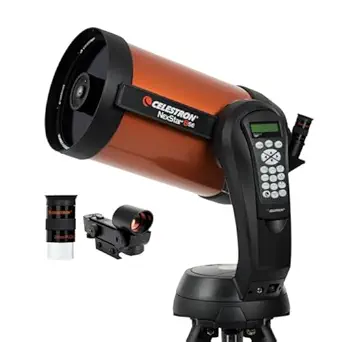
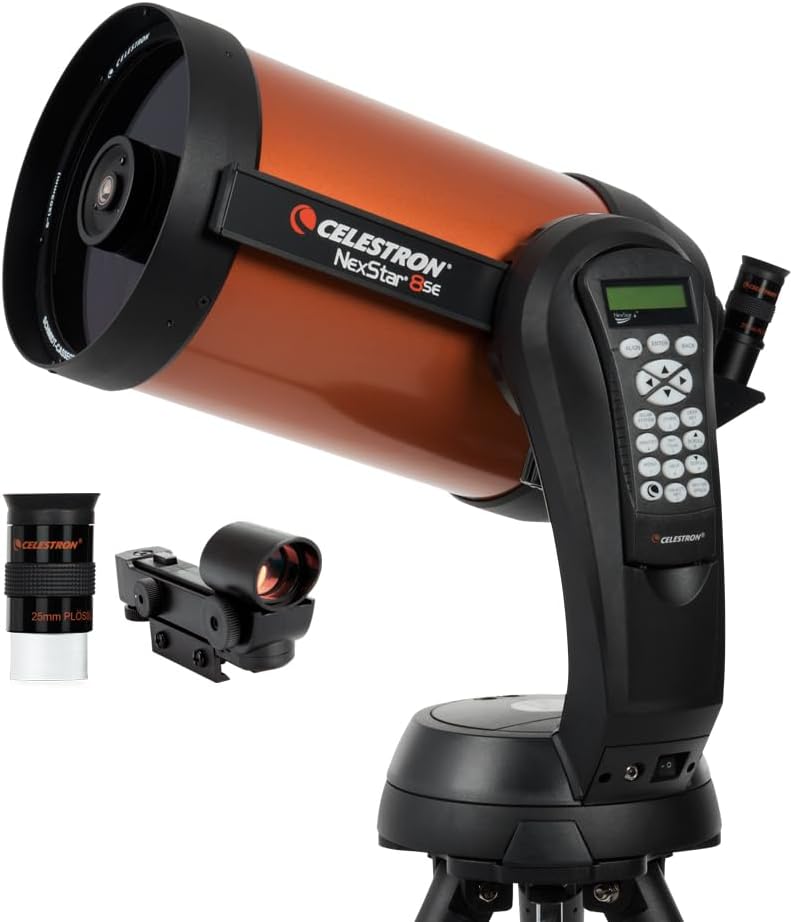
Best base setup: Celestron NexStar 8SE Computerized Telescope
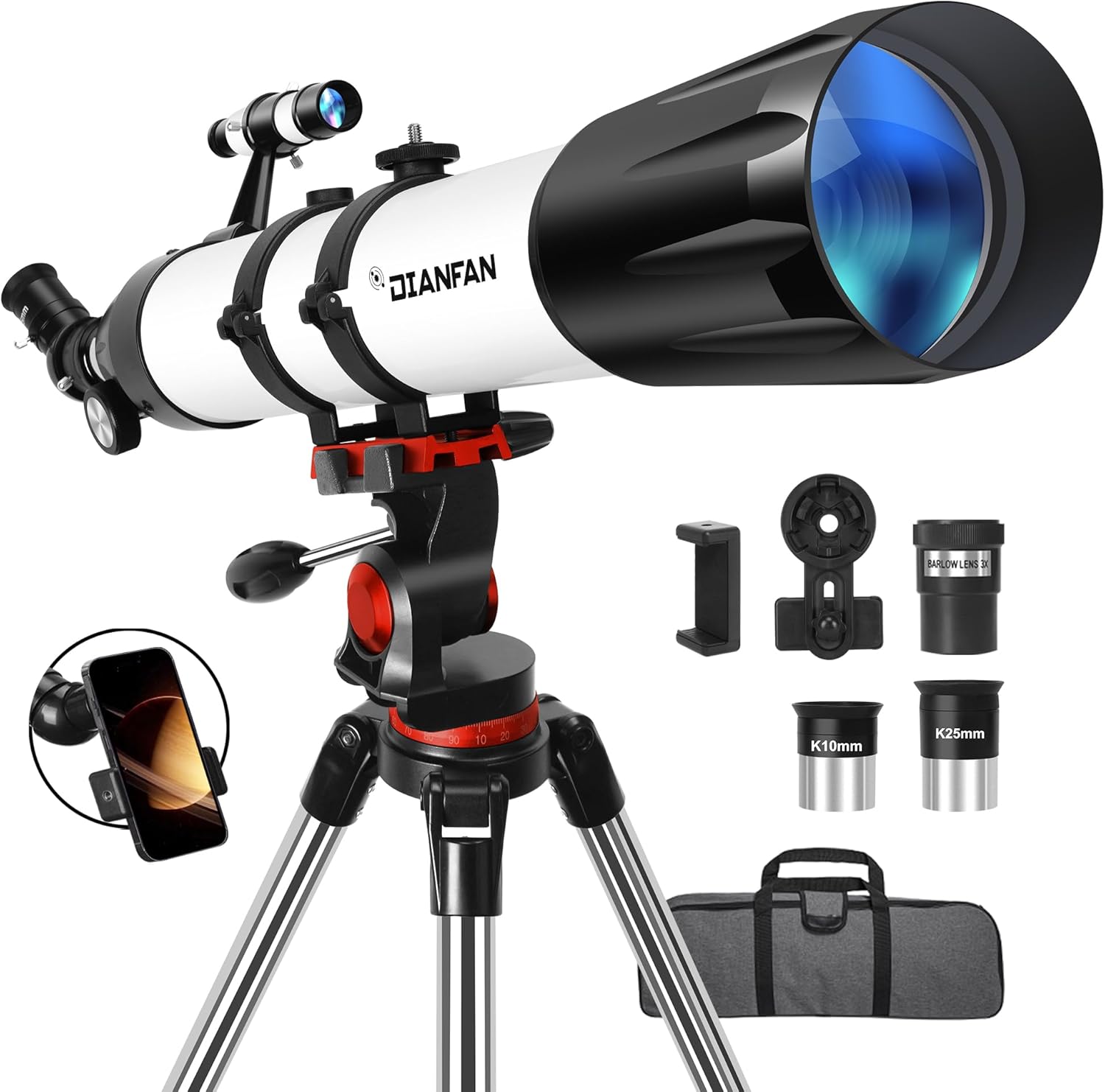
The classic single-fork 8SE remains the best all-around aperture-versus-portability balance for remote dark sky observing in 2026. The 8-inch Schmidt-Cassegrain delivers genuinely deep views of the Veil Nebula, M51 spiral structure, and Saturn's Cassini division at a tube weight near 24 pounds that still loads into the trunk of a sedan. Pair it with any of the LiFePO4 packs in the table above and you have a complete remote rig. View the Celestron NexStar 8SE on Amazon.
Best bundle for hybrid home and field use: NexStar 8SE with NexYZ DX and 18778 AC adapter
This kit pairs the 8SE with Celestron's official 18778 AC adapter, a regulated 12V/5A wall supply, plus the NexYZ DX smartphone adapter for lunar and planetary phone imaging. The AC adapter is what you plug into the AC outlet of a Jackery or EcoFlow station at remote sites. It guarantees clean regulated power with no polarity guessing and no third-party barrel cable. View the NexStar 8SE plus NexYZ DX and AC adapter bundle on Amazon.
Best eyepiece-included bundle: NexStar 8SE with 1.25-inch eyepiece and filter kit
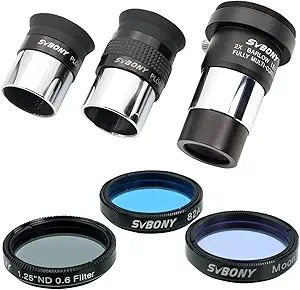
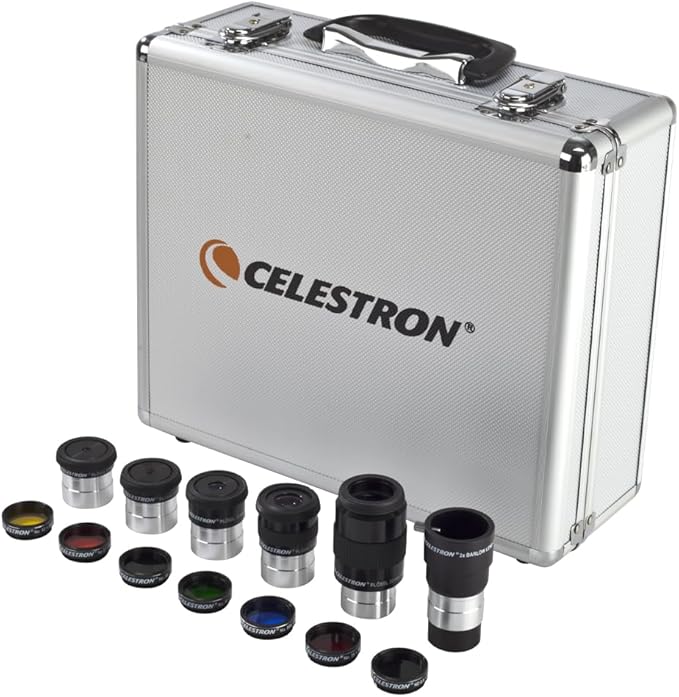
For first light at a dark sky site, you do not want to discover you are missing a low-power eyepiece for open clusters or a UHC filter for the Veil. This bundle ships the 8SE with a complete 1.25-inch eyepiece and filter kit, ready the moment the power tank is connected. View the NexStar 8SE with eyepiece and filter kit on Amazon.
Lighter alternative: Celestron NexStar 6SE
If your remote site requires a long hike-in, the 6SE draws noticeably less current, closer to 0.5A tracking and 1.3A peak slewing, and weighs about 8 pounds less assembled. A 100Wh power station covers an entire night with margin. View the Celestron NexStar 6SE on Amazon.
For more on choosing between Celestron's SE-series models, see our NexStar 8SE vs 6SE comparison, and for site selection, our guide to finding dark sky sites near you.
Frequently Asked Questions
How many hours will a 100Wh power bank run a NexStar 8SE?
Roughly 5 to 7 hours of mixed tracking and occasional slewing, assuming no dew heater. A 100Wh pack at 12V delivers about 7Ah usable after regulator losses. That is enough for a casual evening but tight for an all-night session, especially in cold conditions where lithium capacity drops 10 to 30 percent. For genuine all-night use at remote dark sky sites, target 200Wh minimum and budget for a dew strap.
Can I run a NexStar 8SE off a car battery at a remote site?
Yes, but only via a regulated outlet, never alligator clips on the battery terminals. A running car's electrical system sits at 13.8 to 14.4V, which exceeds the 8SE's safe input. Worse, idling at a remote site ruins astronomical darkness for everyone within half a mile thanks to headlights, dome lights, and exhaust shimmer. Use a dedicated LiFePO4 pack or 12V power station instead.
Does the Celestron PowerTank Lithium Pro work with the NexStar 8SE?
Yes. The PowerTank Lithium Pro is purpose-built for Celestron mounts and ships with the correct center-positive 5.5x2.1mm cable. It delivers 158Wh, enough for one full night including a dew heater band. The only caveat is its standard Li-ion chemistry, which is less cold-tolerant than a LiFePO4 alternative at sub-zero remote sites.
What is the safest 12V cable for connecting a power station to a NexStar 8SE?
A 16 AWG or thicker silicone-jacketed cable, under 6 feet long, with a 5.5x2.1mm center-positive barrel connector. Verify polarity with a multimeter on first use of any new cable. The factory Celestron cable supplied with the official PowerTank is the safest option. Avoid coiled cigarette-lighter cables thinner than 18 AWG, since voltage sag during slews triggers brownouts and aborted GoTos.
Do I need a dew heater when using a NexStar 8SE at a remote dark sky site?
Most nights in temperate climates, yes. The Schmidt-Cassegrain corrector plate fogs quickly once ambient temperature drops below the dew point, typically within 2 hours after sunset. A 3W heater strap on the corrector adds ~1.5Ah to your overnight power budget but prevents the session-ending fog. Factor it in when sizing a celestron nexstar 8se power tank for remote sites - it is the single most common overlooked load.
Will a Jackery Explorer 300 Plus run both an 8SE mount and a DSLR for astrophotography?
Easily. The 8SE draws ~10W average, a cooled astro camera might pull another 10 to 15W, and a USB-C mini PC adds 20W. That is ~45W combined, and the Jackery 300 Plus's 288Wh LiFePO4 capacity gives roughly 5 to 6 hours of imaging. For longer sessions, add a 60W or 100W solar panel for daytime recharge between nights.
Is the NexStar 8SE worth taking to a remote Bortle 1 or 2 site?
Absolutely. The 8-inch aperture really stretches its legs under truly dark skies. Galaxies show structure, planetary nebulae reveal central stars, and the Veil snaps into three-dimensional clarity with a UHC filter. The mount's GoTo database and SkyAlign make navigating unfamiliar sky efficient, leaving more time at the eyepiece. Just bring enough power. For travel-specific advice, see our portable telescope mounts guide.
Key Takeaways
- Choosing the right celestron nexstar 8se power tank for remote sites means matching capacity and output ports to your actual devices
- Always check actual watt-hours (Wh), not just watts — runtime depends on Wh, not peak output
- Also covers: nexstar 8se battery pack
- Also covers: portable power for nexstar 8se
- Also covers: celestron 8se field power supply
- Compare price-per-Wh across models to find the best value for your budget