Askar SQA55 off grid solar cabin imaging is entirely practical with a 200-400 Wh battery bank charged by 100-200 W of panels, because the 55 mm quintuplet astrograph draws only 10-25 W when paired with a cooled mono camera, ZWO ASIAIR, and AM3 strain-wave mount. This guide walks cabin owners through realistic power budgets, weatherproofing, dew control, and end-to-end remote acquisition workflows that survive cold nights at remote sites in 2026. Whether your cabin sits in the Sierra foothills, the Adirondacks, or the BC interior, the SQA55 has become the de facto travel astrograph for renewable-powered observatories.
Why the SQA55 Suits Solar-Only Cabin Setups
The Askar SQA55 is a 55 mm f/4.8 quintuplet flat-field astrograph with a built-in 0.8x corrector that delivers a 44 mm illuminated circle. Two characteristics make it almost purpose-built for off-grid cabins: it is light (under 2.4 kg with rings) and it pairs perfectly with low-current strain-wave mounts like the ZWO AM3 or iOptron HEM27. The whole imaging chain - mount, scope, camera, mini PC or ASIAIR - typically draws between 1.0 and 2.5 amps at 12 V. That is the same draw as a residential LED bulb. Compare that to a Schmidt-Cassegrain on an EQ6-R running 5-7 A peak, and the choice for solar-only sites becomes obvious.
When shopping for askar sqa55 off grid solar cabin imaging, it pays to compare specs, capacity, and real-world runtime before committing.
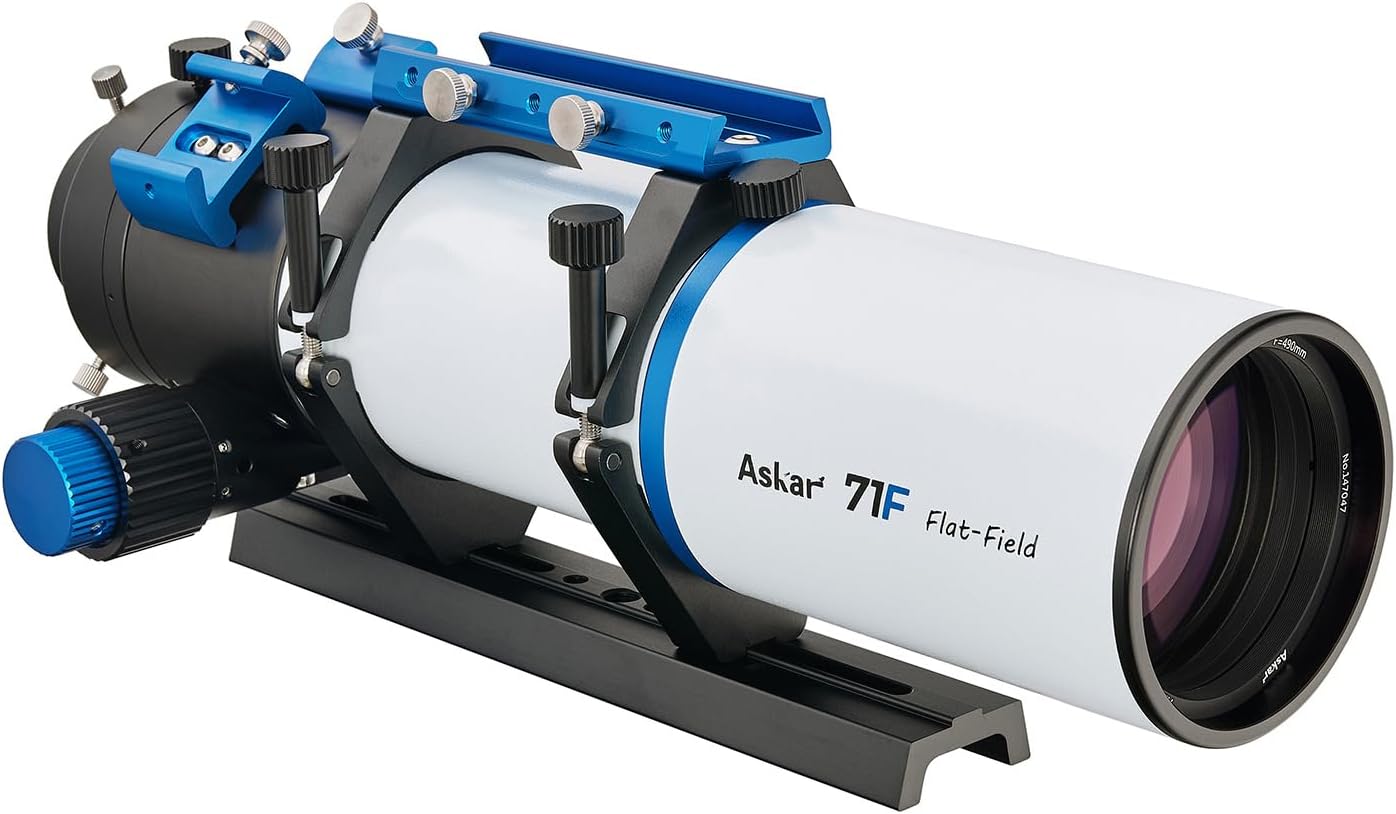
Wide-field astrographs also forgive seeing and tracking errors that would ruin sub-arcsecond imaging at f/10. A misaligned polar axis that destroys a 5-minute exposure on a long-focal-length SCT may still produce usable 60-second subs on the SQA55, which is critical when you cannot afford a re-shoot the next night because of cloud or panel snow.
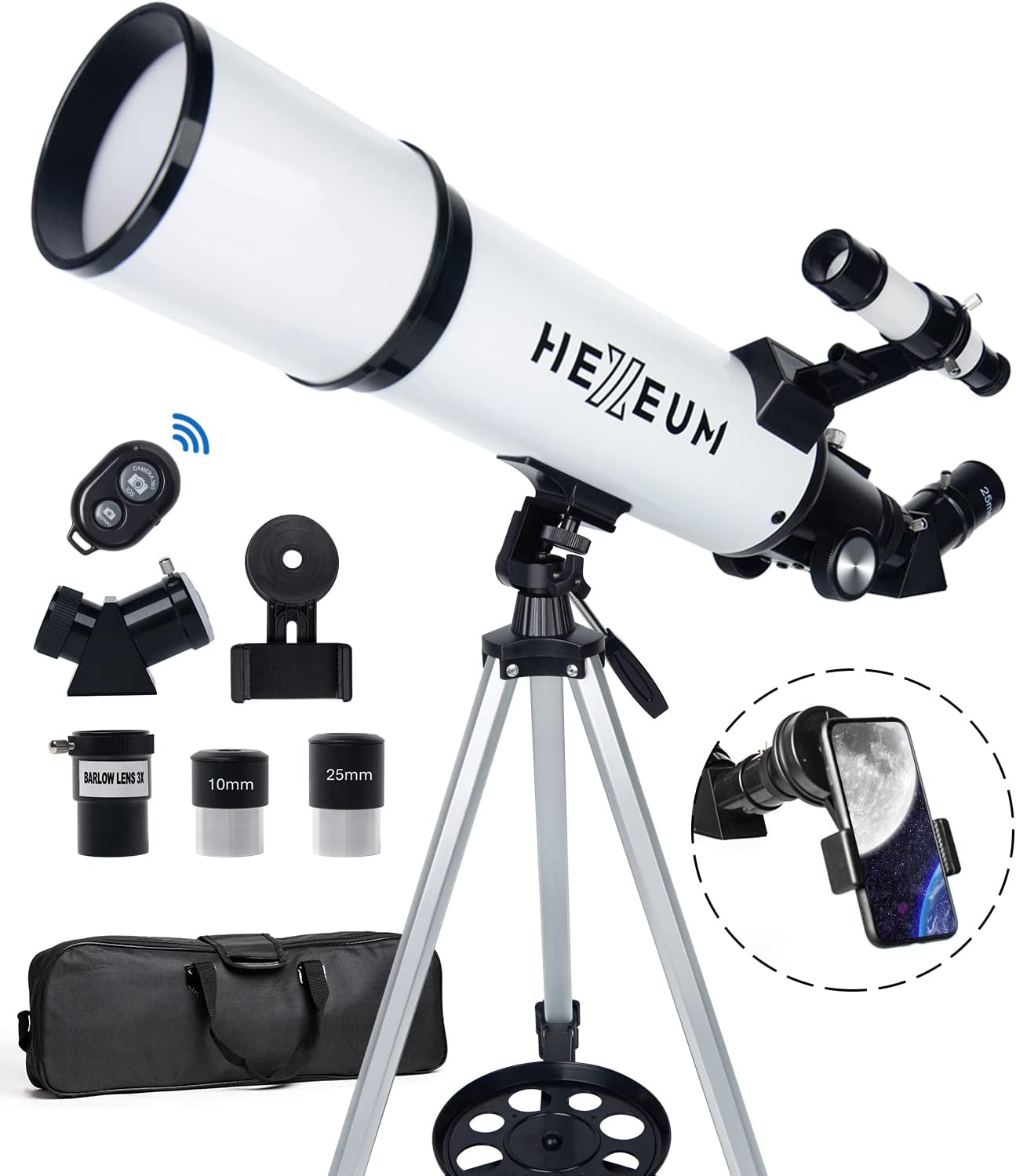
Power Budget for askar sqa55 off grid solar cabin imaging
Build your budget from real measured draws, not nameplate values. A complete SQA55 rig at 12 V on a clear -5 C night looks like this:
| Component | Idle (W) | Active (W) | Notes |
|---|---|---|---|
| AM3 strain-wave mount | 1.8 | 3.5 | Higher during slew |
| ZWO ASI2600MM Pro cooled | 3 | 14 | Cap TEC at 70% to limit draw |
| ZWO ASIAIR Plus | 4 | 6 | Includes Wi-Fi access point |
| Dew heater band (50 mm) | 0 | 5 | PWM cycles, avg under 50% |
| EAF focuser | 0.1 | 2 | Active only during focus runs |
| Total imaging session | ~9 W | ~28 W peak | Average ~18 W over 8 h |
An 8-hour session therefore consumes roughly 144 Wh, well within reach of a single 300 Wh LiFePO4 power station. If you also charge a laptop, run a heated jacket, or boil water on a 12 V kettle, you will want 500-1000 Wh of usable battery and 200 W of solar to recover the next day even with partial sun.
Sizing the Solar Array and Battery Bank
For year-round cabin imaging in the northern half of the lower 48, you want at least 4:1 oversizing on panels relative to peak load, because shoulder-season sun angles and intermittent cloud cut harvest by 50-70%. A 200 W rigid panel mounted at the latitude angle, paired with a 30 A MPPT charge controller and a 500-1000 Wh LiFePO4 battery, gives you two full imaging nights of margin even if the next day is overcast.
LiFePO4 chemistry is essential for cold cabins. Standard lithium-ion at -10 C loses 40% of its capacity and will refuse to charge, while LiFePO4 with built-in low-temp charging cutoff and self-warming circuits keeps you running into the teens Fahrenheit. Units like the Bluetti AC60, EcoFlow River 3 Plus, and Anker SOLIX C300 all expose 12 V cigarette and DC5521 outputs that drive the AM3 and ASIAIR directly.
For more detail on cold-night battery selection see our LiFePO4 power stations for astrophotography guide, and check our portable solar panel comparison for cabin-friendly rigid and folding options.
Companion Visual Telescopes for Cabin Nights
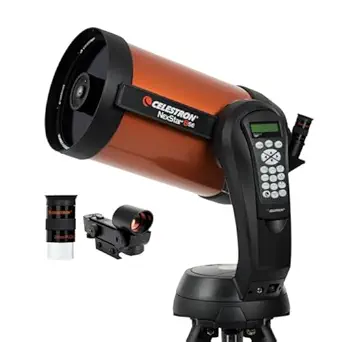
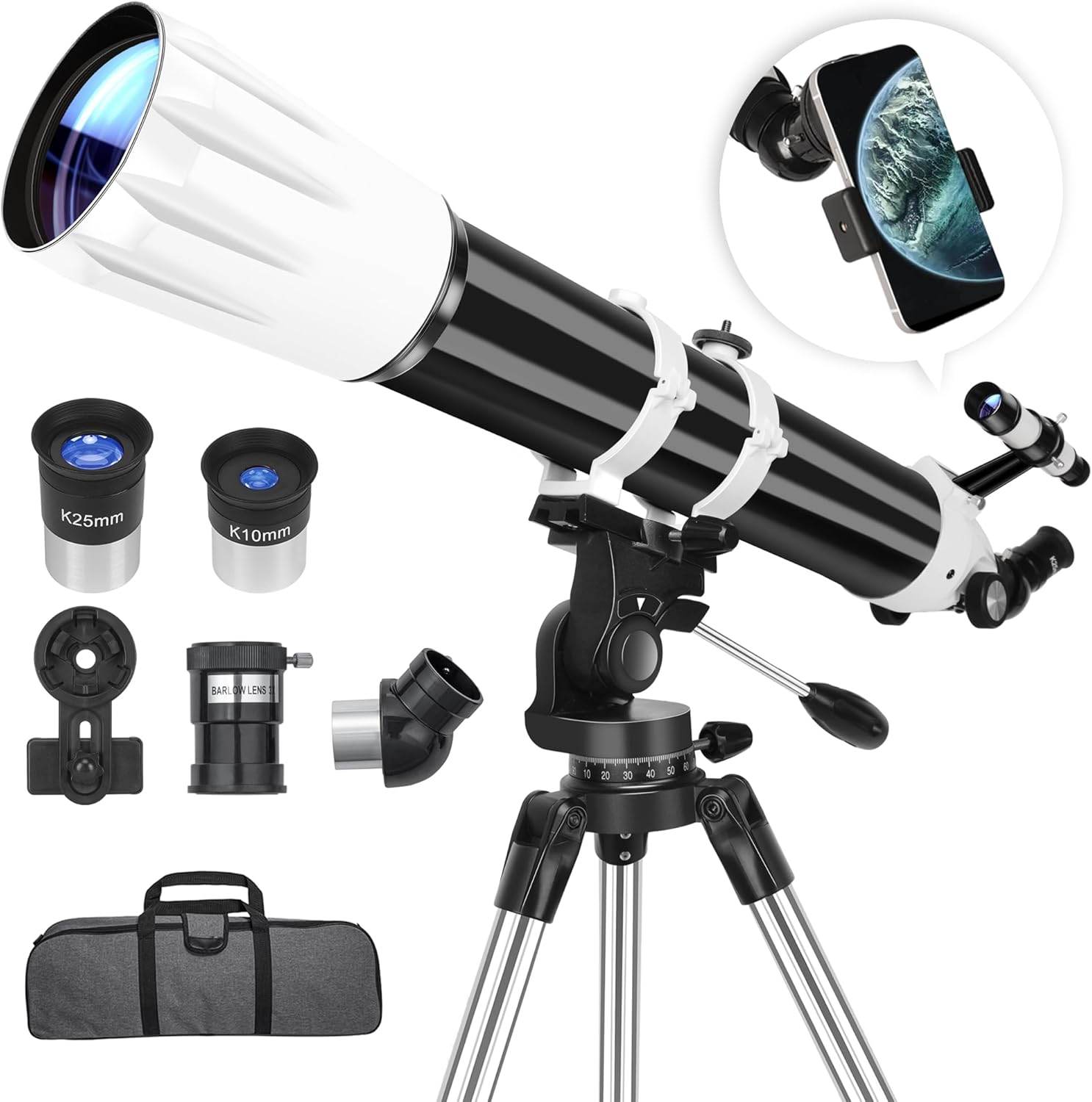
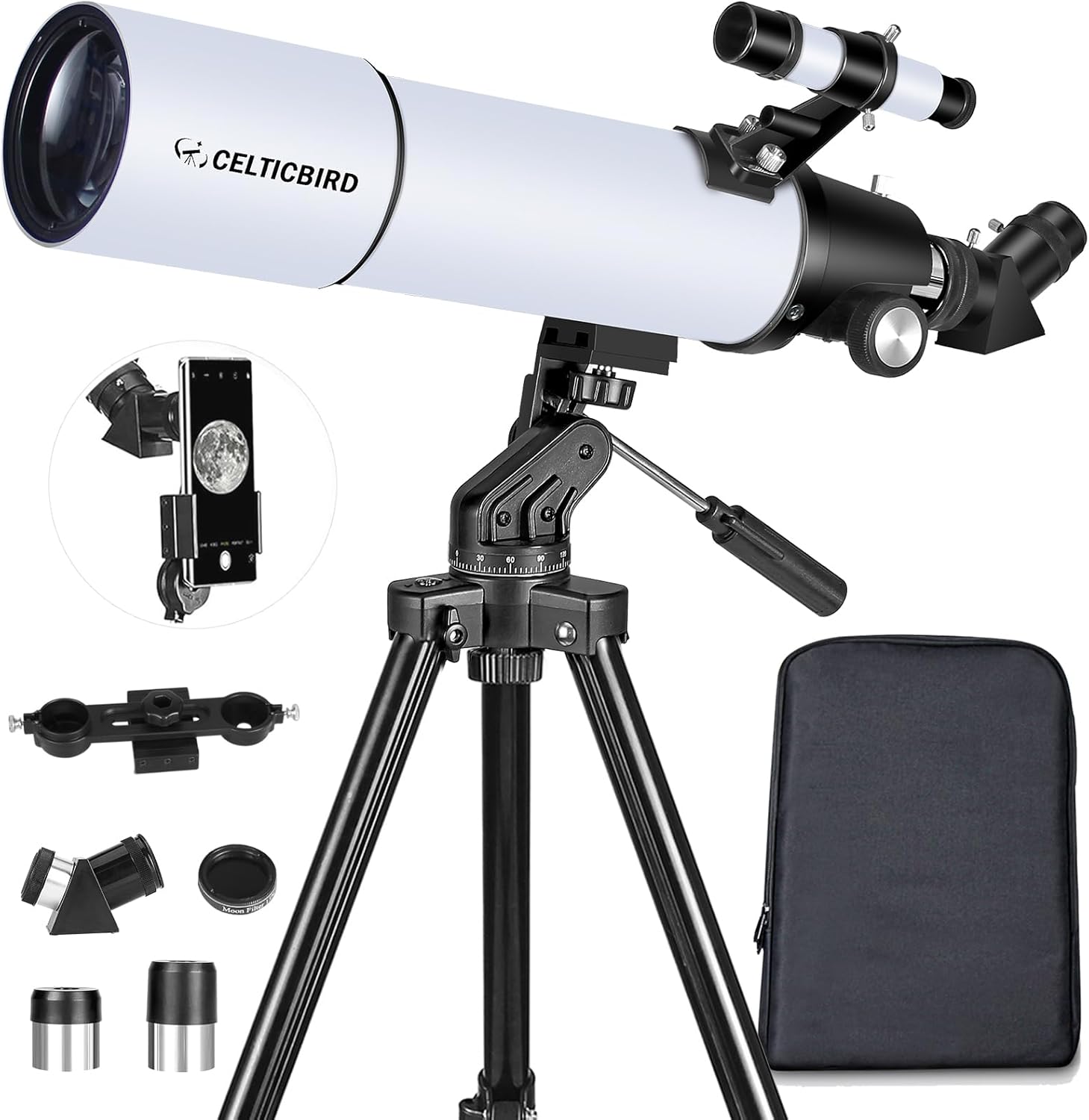
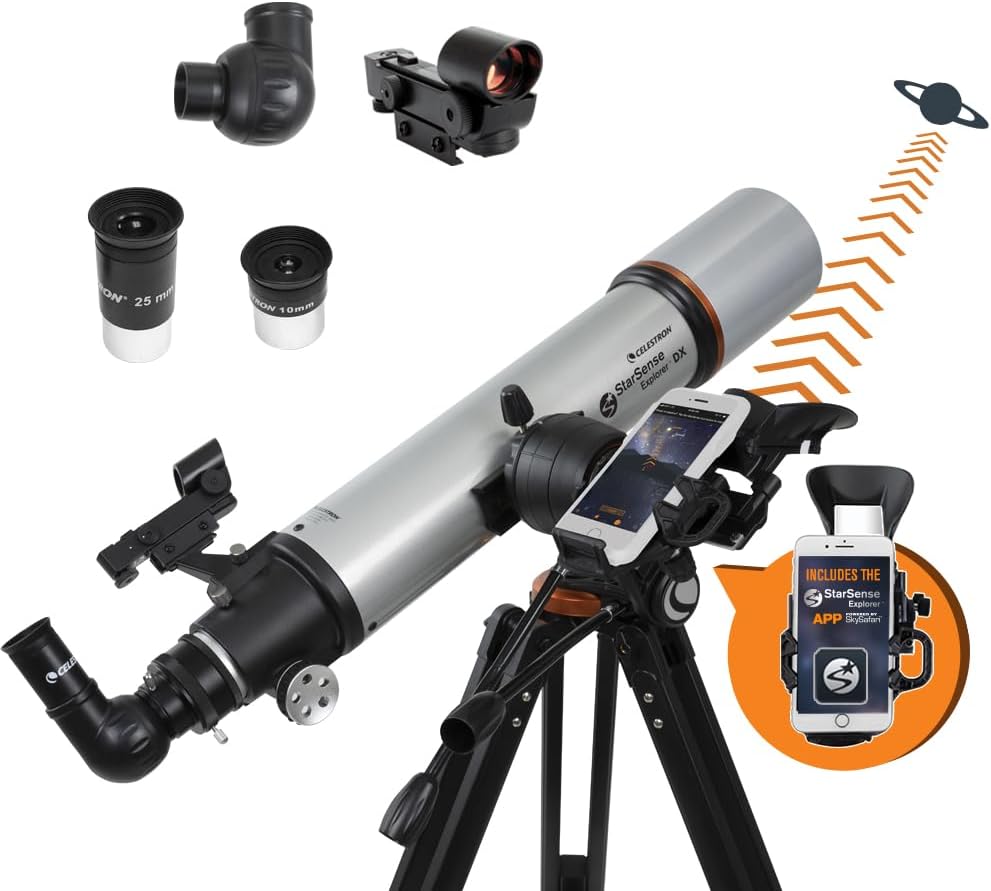
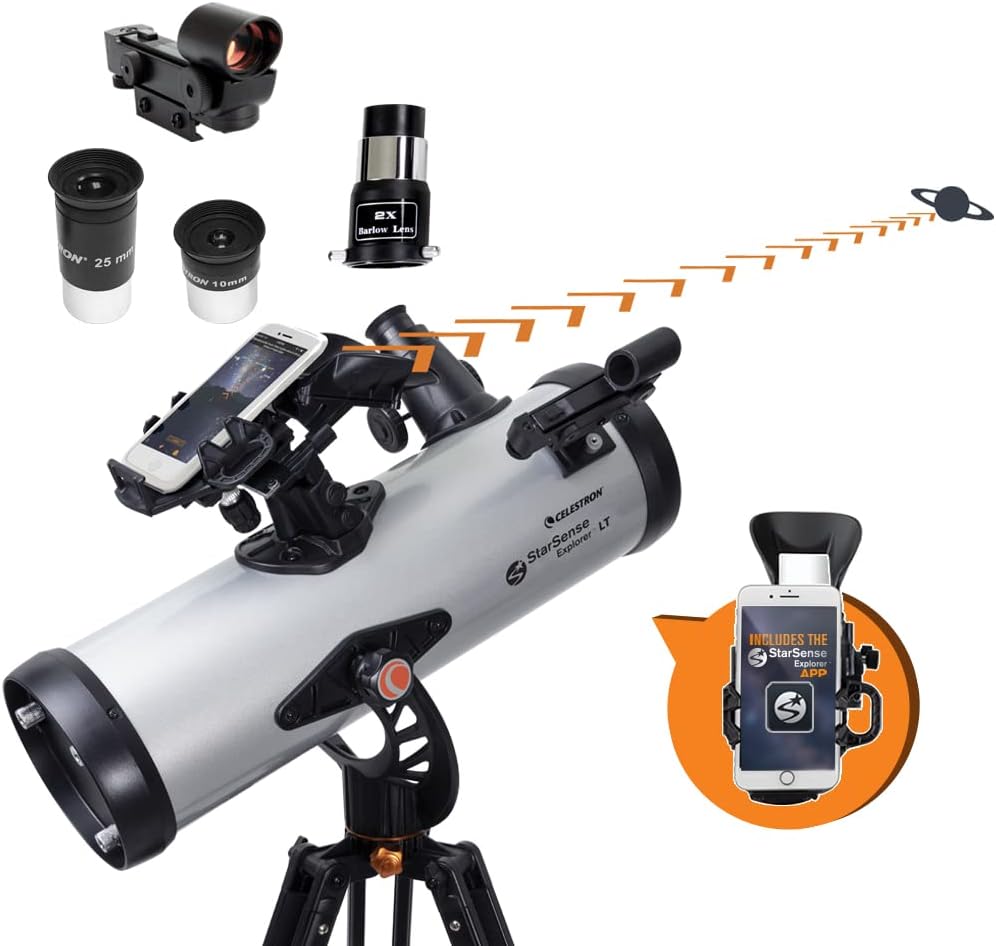
Most cabin imagers eventually want a second scope for quick visual observing while the SQA55 grinds away on a target. A Schmidt-Cassegrain on a battery-powered GoTo mount fills that role because its closed tube survives bug-laden summers and the GoTo lets guests tour the sky without learning to star-hop. Both Celestron NexStar models below run all night on the same 300-500 Wh power stations you already own for the imaging rig.
| Spec | NexStar 6SE | NexStar 8SE |
|---|---|---|
| Aperture | 150 mm | 203 mm |
| Focal length | 1500 mm f/10 | 2032 mm f/10 |
| OTA weight | ~9 kg | ~11 kg |
| Power draw on 12 V | ~12 W tracking | ~15 W tracking |
| Best cabin role | Lunar/planetary, casual guests | Galaxy hunting, planetary detail |
| Approx. 2026 price | $899 | $1499 |
Celestron NexStar 8SE - The Cabin Visual Workhorse
If you have the deck space and a 500 Wh battery to spare, the 8-inch SCT is the visual companion to beat. Its 2032 mm focal length splits double stars, resolves M13 into individual stars, and reveals Cassini's division on every clear night. The single-arm fork on the SkyAlign mount is a known compromise for long-exposure imaging, but for visual it is rock-solid and aligns in under five minutes. View the Celestron NexStar 8SE on Amazon.
Celestron NexStar 6SE - Lighter Footprint for Smaller Cabins
The 6SE is the right call when your panel budget tops out near 150 W or when the cabin is fly-in-only and every kilogram of checked baggage matters. You lose roughly one magnitude versus the 8SE on deep-sky targets, but you gain almost a full kilogram less to lug up the stairs and the smaller dew shield reaches operating equilibrium faster on cold nights. Check current pricing on the Celestron NexStar 6SE.
Celestron NexStar 8SE with NexYZ DX Adapter Bundle
For cabin owners who want to share the eyepiece view with kids or guests over the cabin Wi-Fi, the NexStar 8SE bundled with the NexYZ DX three-axis smartphone adapter and an AC adapter is worth the upcharge. The included AC adapter takes 110-240 V input, but the scope itself is happy on 12 V DC from your solar battery via a 5.5/2.1 mm barrel. See the NexStar 8SE with NexYZ DX adapter kit on Amazon.
Cold-Weather, Dew, and Wildlife Realities
Off-grid cabin imaging in 2026 brings problems urban imagers never face. Frost forms on the SQA55 dew shield within minutes once the air temperature drops below the dew point - a 50 mm PWM dew heater drawing under 5 W average prevents this without melting your power budget. Set the ASIAIR dew controller to 30-40% duty cycle and inspect the corrector at 2 a.m. on your first deployment to calibrate.
Animals are the next challenge. Black bears in the eastern US and porcupines everywhere have a documented taste for rubber feet on tripods. Lift the rig off the deck on a permanent concrete pier if you can, or at minimum cover the legs in stainless mesh. A motion-triggered floodlight on a separate 12 V circuit deters most curious wildlife without ruining dark adaptation - mount it pointing down at the pier, not outward.
Wind matters more than you expect at exposed cabin sites. The SQA55 is short and stiff but the AM3 strain-wave mount is sensitive to gusts above 25 km/h. A simple plywood wind break to the prevailing wind direction recovers an extra 1-2 nights per month of usable imaging time.
Remote Acquisition Workflow
The most underrated benefit of the SQA55 on a strain-wave mount is true unattended operation. With ASIAIR's plan mode, you can plate-solve, focus, dither, and meridian-flip without coming back outside. Set up sequences on the ASIAIR app inside the cabin, then walk away. The mount slews to your target after astronomical twilight, runs autofocus when temperature drifts more than 2 C, and parks safely before dawn.
For redundancy, consider a Raspberry Pi 4 running Ekos/INDI as a backup. The Pi pulls about 4 W and gives you a second control path if ASIAIR firmware updates break overnight - a not-uncommon problem reported in 2025-2026. Connect both via a 12 V powered USB hub and switch between them in software without re-cabling.
Internet connectivity for true remote operation usually means Starlink Mini at cabins. Mini Starlink runs about 25 W average and 50 W peak, which is more than your entire imaging rig. If you keep Starlink off and only enable it for morning data sync, you save 200+ Wh per night.
Frequently Asked Questions
Can a 100W solar panel really power an Askar SQA55 imaging rig all night?
Yes, in summer at latitudes below 45 N. A 100 W panel harvests roughly 400-500 Wh on a clear summer day, and your average imaging draw is under 150 Wh per 8-hour session. The catch is winter and shoulder seasons. Above 45 N in December, expect 150-200 Wh harvest from a fixed 100 W panel. Pair with 500 Wh of battery and you will still get two clear nights out of three before needing a sunny recharge day.
What is the best mount for SQA55 cabin imaging on solar power?
The ZWO AM3 strain-wave is the consensus 2026 pick. It carries the SQA55 with a 30% payload margin, runs without counterweights (saving weight on hike-in deployments), and draws 1.5-3 W typical. The iOptron HEM27 is the next-best alternative if you want belt-drive over strain-wave for slightly better periodic error. Avoid traditional GEM mounts like the EQ6-R for solar-only sites - their 5-7 A peak draw doubles your battery requirements.
How cold can the SQA55 operate before lubrication issues start?
The SQA55 itself has no temperature-critical moving parts. The focuser is rack-and-pinion with synthetic grease rated to -30 C. The bottleneck is your mount: AM3 strain-wave gearing slows below -15 C and will produce sluggish slews. Battery chemistry is the harder limit - even LiFePO4 with self-warming pulls 30-40 Wh just to keep itself at charging temperature in -20 C conditions, which can eat half your usable capacity overnight.
Do I need a permanent pier or can I use a tripod at my cabin?
Tripods work but cost you setup time and polar alignment repeatability. A 4-foot concrete pier with a 12-inch sonotube footer below frost line is a weekend project for under $200 and pays back the first time you skip a 30-minute polar alignment. For renters or seasonal cabin guests, a marked tripod foot pattern on the deck combined with ASIAIR all-sky polar alignment gets you on-target in under ten minutes.
How does the SQA55 compare to the Redcat 71 for cabin use?
The Redcat 71 is the SQA55's closest competitor. Both are quintuplet flat-field designs with similar weight, focal length near 350 mm, and comparable image quality. The SQA55 has a slightly larger illuminated circle (44 mm vs 42 mm) and a marginally lighter tube. The Redcat 71 has a more refined focuser and slightly cleaner stars in the extreme corners. For solar-only cabin use either works - pick whichever is in stock. See our full SQA55 vs Redcat 71 comparison for sample frames.
Will lithium batteries survive being left at the cabin through winter?
Yes, with caveats. Store LiFePO4 at 50-60% state of charge in a temperature-stable location (under the cabin, not in the rafters). Avoid full discharge before storage. Most modern units like the Bluetti AC60 and EcoFlow River 3 Plus have low-temp lockouts that prevent charging damage below 0 C, but they self-discharge in the cold. Plan on a full charging session before your first spring imaging trip.
What target list works best for short cabin imaging weekends?
For a typical 2-3 night cabin trip with the SQA55, prioritize wide-field targets you can finish: NGC 7000 (North America Nebula), IC 1396 (Elephant's Trunk), the Pleiades, Andromeda M31, the Heart and Soul Nebulae, or the California Nebula. These all fit the SQA55's 44 mm illuminated circle and can produce a finished image with 4-6 hours of total integration spread across one or two nights.
Key Takeaways
- Choosing the right askar sqa55 off grid solar cabin imaging means matching capacity and output ports to your actual devices
- Always check actual watt-hours (Wh), not just watts — runtime depends on Wh, not peak output
- Also covers: sqa55 low power astrophotography rig
- Also covers: off grid telescope solar battery
- Also covers: askar sqa55 cabin astronomy
- Compare price-per-Wh across models to find the best value for your budget