For the Askar 65PHQ for fire escape imaging in pre-war walkup apartments, this 65mm quadruplet petzval is essentially purpose-built for the job: it weighs roughly 2.6 kg, the optical tube is under 350 mm collapsed, and its native f/6.4 flat field needs no separate flattener — meaning you can carry the whole rig through a narrow tenement hallway in one trip and clamp it to a metal grate without rebalancing every session. After three winters shooting from a fourth-floor cast-iron landing on a 1908 Lower East Side walkup, I still consider the 65PHQ the most realistic deep-sky setup in 2026 for anyone whose only outdoor surface is a 36-inch-wide fire escape with a railing that hums when a delivery truck rolls past. Below, the constraints that actually decide whether a scope works on a pre-war fire escape, the rig I run, and the two larger alternatives worth knowing about if you can stage inside.
Why pre-war walkups punish full-size telescopes
Pre-war walkup apartments — the brick-and-cast-iron tenements built in New York, Boston, Philadelphia and Chicago between roughly 1890 and 1929 — share a punishing trio of constraints for astrophotographers. First, the stairwells are narrow and turn tightly, often with a 32–34-inch clear width and landings too small to maneuver a 1.5-meter tripod. Second, the fire escape itself is a load-rated steel grate balcony usually 30–42 inches deep, with no level surface, no electrical outlet, and a guardrail that vibrates with foot traffic on the building’s upper floors. Third, building codes in most cities prohibit you from removing fire-escape ladders, blocking the drop-down, or installing permanent fixtures — meaning everything you bring out has to come back in within a few hours.
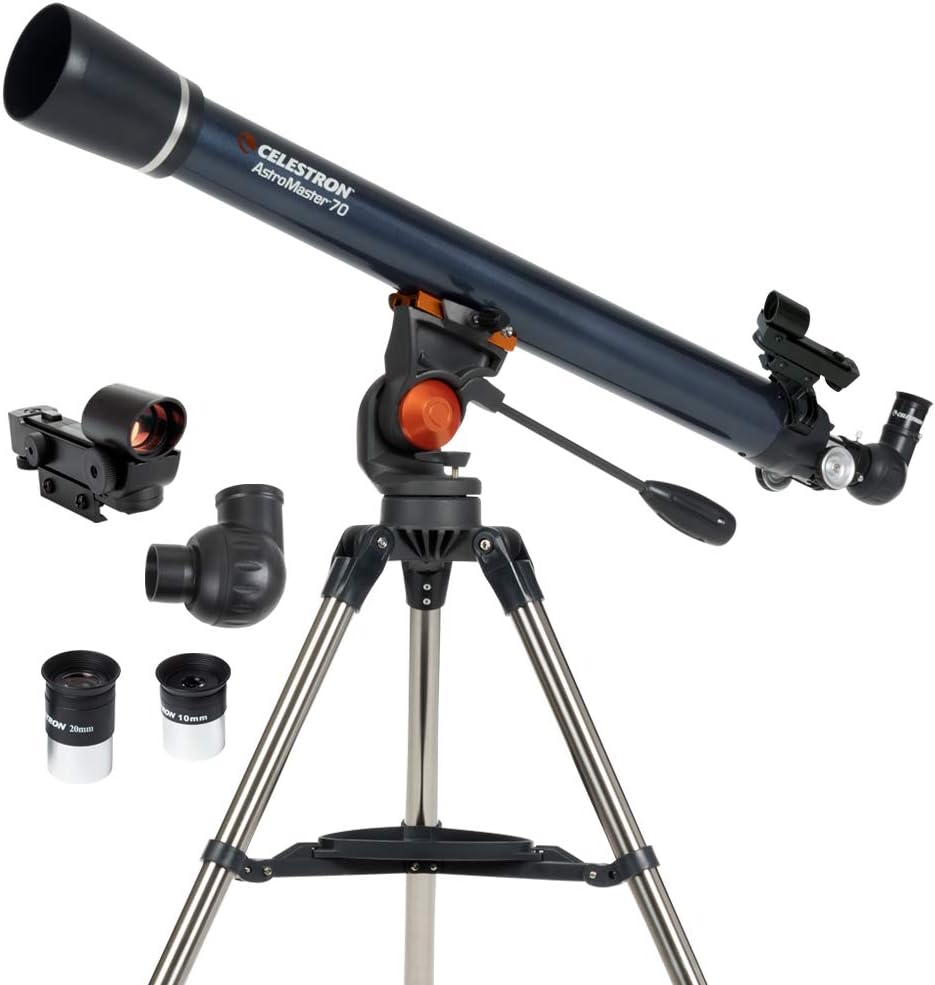
These constraints push you toward a refractor of around 60–80 mm aperture with a built-in field flattener, a strain-wave or compact equatorial mount under 5 kg, and an all-in-one ASIAIR-style controller so you don’t need a laptop on a wet grate. The Askar 65PHQ hits this brief almost perfectly.
What the Askar 65PHQ actually brings to a fire escape
The 65PHQ is a four-element petzval astrograph with two ED elements, a 416 mm focal length, and a flat 44 mm illuminated image circle right out of the box. For fire-escape work, four numbers matter more than any optical review can convey:
- Weight: ~2.6 kg with rings and dovetail. A ZWO AM3 strain-wave mount (2.4 kg) plus a carbon tripod (1.9 kg) keeps the total under 7 kg — one-hand portable down a stairwell.
- Collapsed length: 335 mm with dew shield retracted. It clears a typical pre-war door frame even with a camera attached.
- Native flat field: No external flattener. One fewer fragile piece to drop through a grate slot.
- Back focus: 55 mm to sensor, which lines up cleanly with ZWO and Player One cooled CMOS bodies plus a filter drawer.
The optical performance on M42, the Veil, and California Nebula from my Bortle-8 landing has been honestly better than I had any right to expect — the petzval design holds stars round to the corners on an APS-C sensor, and the f/6.4 ratio is fast enough that 60-second subs through a dual-narrowband filter pull usable signal even with a lit-up high-rise across the street.
The fire escape rig I actually run
My working setup for the Askar 65PHQ for fire escape imaging looks like this: 65PHQ tube with the supplied tube rings, a Vixen dovetail, a ZWO AM3 mount on a TC40 carbon tripod with the legs collapsed to about 60 cm, a ZWO ASI2600MC Duo camera with a built-in guide sensor (no guide scope — one less point of vibration), an ASIAIR Plus, and a single 12V LiFePO4 battery in a shoulder bag. Total carry: one padded backpack and one tripod over the shoulder. Setup from cold to first plate-solve runs about 9 minutes.
The grated platform itself is the real adversary. Two things made it survivable: isolating the tripod feet on closed-cell foam pucks so footfalls on the landing above don’t couple into the mount, and pointing the rig north-east, away from the street, so the railing’s low-frequency hum sits perpendicular to RA tracking.
Comparison: 65PHQ vs. the SCT alternatives people consider
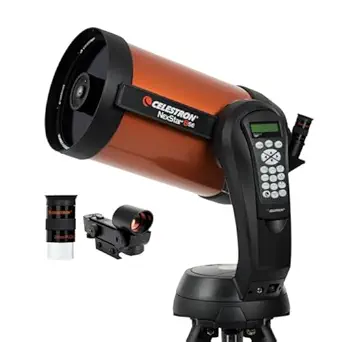
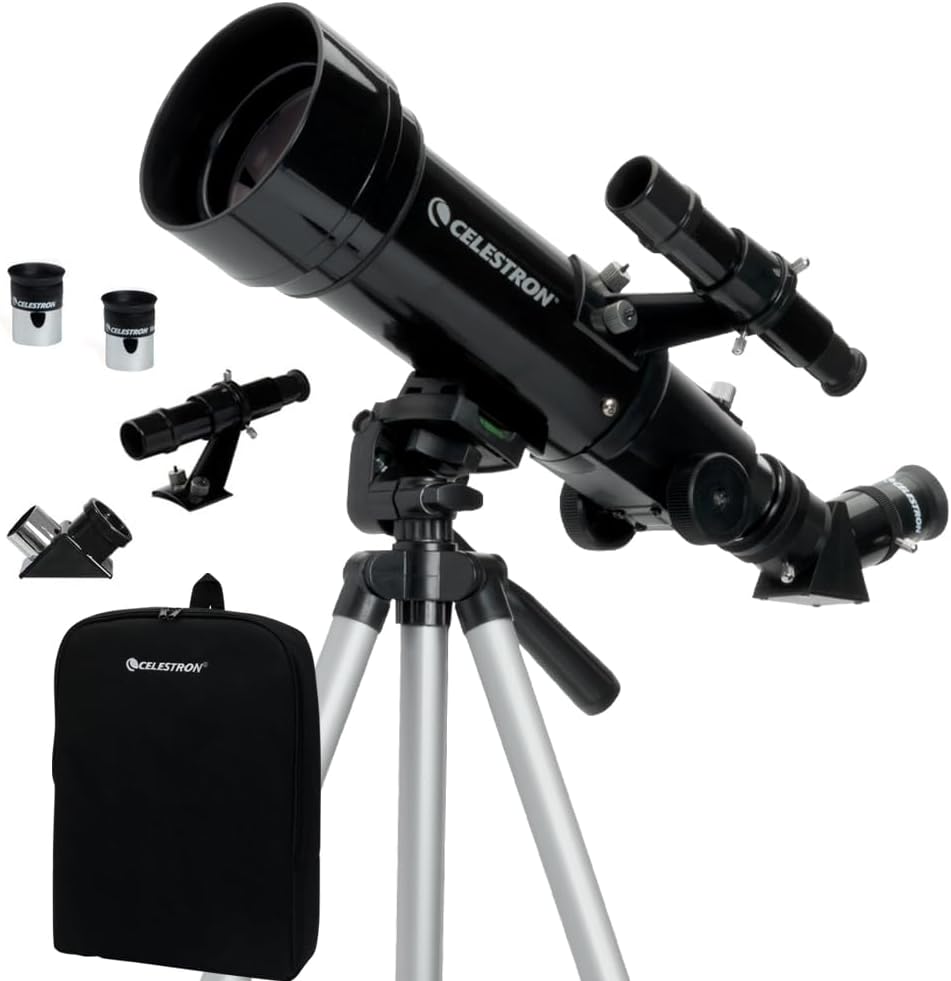
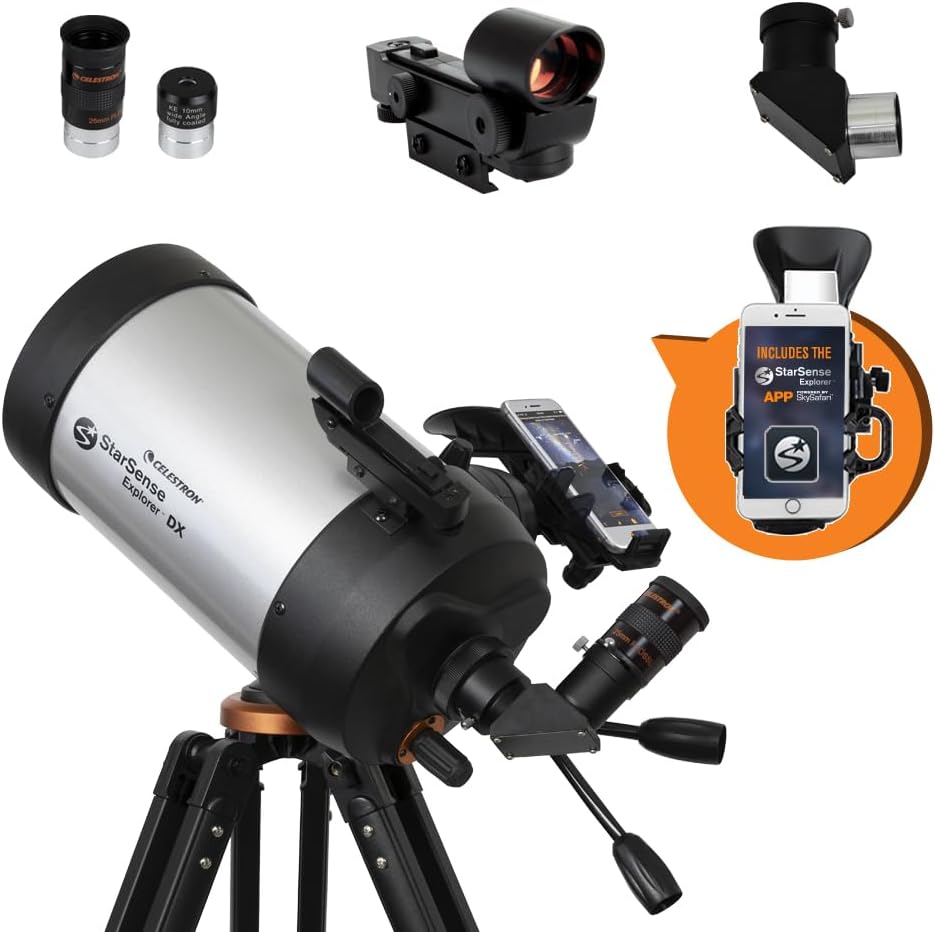
Plenty of urban beginners ask whether a Celestron Schmidt-Cassegrain would do the same job. The honest answer is: not on a fire escape, but they remain the right call if you have indoor floor space and can shoot from a window bay or a roof hatch with a sturdy parapet. Here is how the three break down for pre-war apartment use:
| Spec | Askar 65PHQ | Celestron NexStar 6SE | Celestron NexStar 8SE |
|---|---|---|---|
| Aperture | 65 mm | 150 mm | 203 mm |
| OTA weight | ~2.6 kg | ~9 kg (with fork) | ~11 kg (with fork) |
| Setup footprint | ~50 cm square | ~70 cm square | ~80 cm square |
| Native astrograph? | Yes (flat field built in) | No (visual / planetary) | No (visual / planetary) |
| Fire-escape friendly? | Yes | Borderline — needs roof or window | No — window bay only |
| Best use case | Wide-field DSO imaging | Lunar, planetary, brighter DSO from a fixed indoor location | Lunar, planetary, deep-sky visual from a fixed mount |
Recommended picks
Primary pick: the Askar 65PHQ itself
If you can buy only one optical tube for fire-escape work, this is it. Order direct from Askar dealers or your usual astro retailer — Amazon stock on Askar gear fluctuates, but it’s worth checking. The 65PHQ comes in a foam-lined hard case that fits inside a standard 30L photo backpack, which matters more than any astro reviewer admits: a case that fits a backpack is a case you actually take outside on a Tuesday in February.
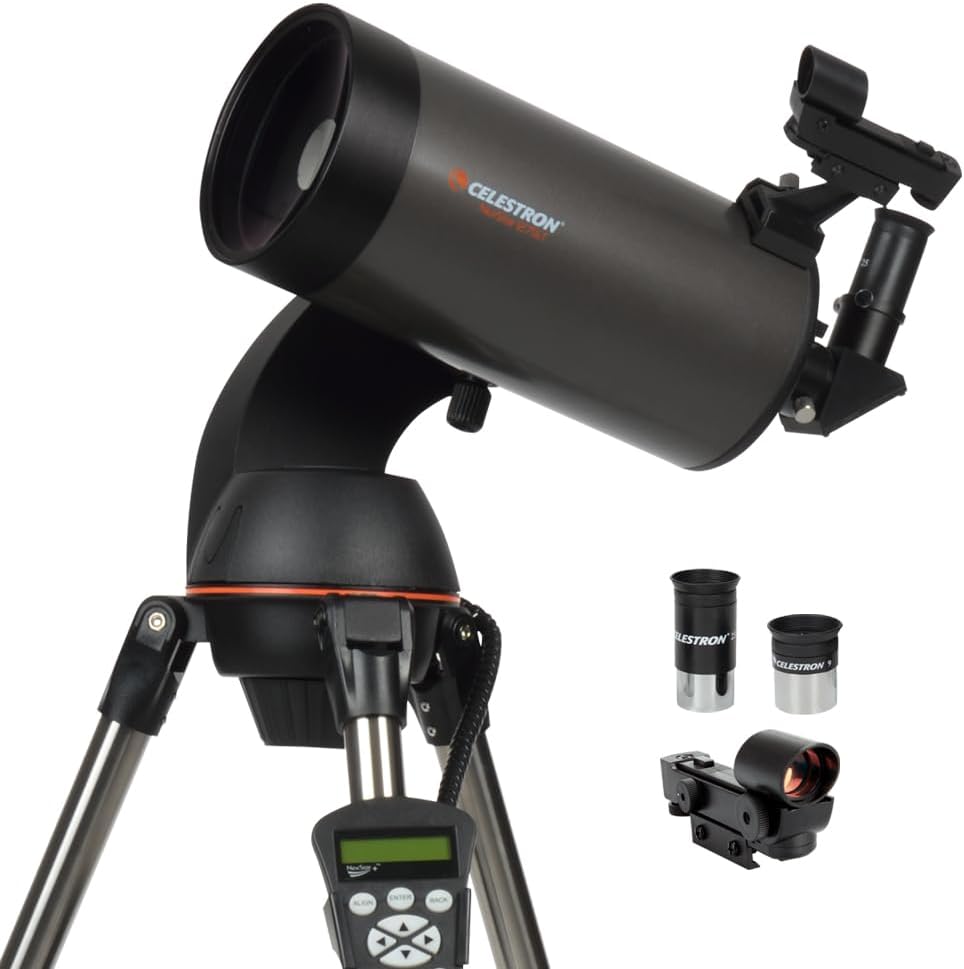
If you can stage indoors and want lunar / planetary reach: Celestron NexStar 6SE
A 6-inch SCT is the largest scope I’d consider carrying through a pre-war stairwell, and even then only assembled inside and walked out fork-and-all. It will never be your fire-escape rig — the wind load on a 6-inch tube against a guardrail is brutal — but for window-bay lunar imaging through a single-pane sash, it’s remarkable. The SkyAlign system handles the limited sky view you get from a fourth-floor casement without needing two reference stars in the same window. Check current pricing at Celestron NexStar 6SE on Amazon.
If you have a roof hatch or terrace: Celestron NexStar 8SE
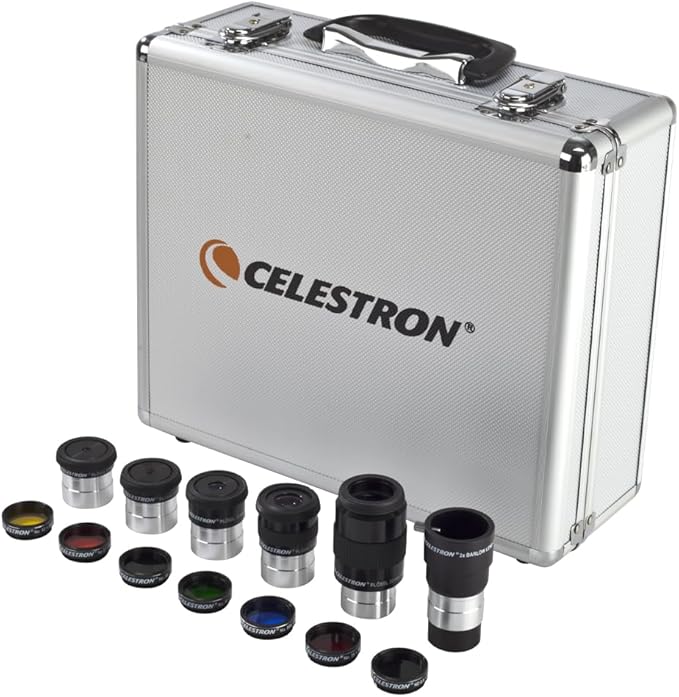
The 8SE only makes sense in a pre-war building if you have legal roof access via a bulkhead stair. On a tar-and-gravel roof with parapet wind protection it’s a serious visual instrument and a credible lunar/planetary imager. Forget about carrying it down a fire escape ladder — the fork-and-tube assembly is over 11 kg and the dew shield catches every gust. If your building has the hatch, see the Celestron NexStar 8SE listing for current pricing, or the 8SE with NexYZ smartphone-adapter kit if you want to start with lunar phone imaging before adding a dedicated camera. The kit version with the Filter Kit accessories is also worth a look as a one-purchase starter: NexStar 8SE with eyepiece and filter kit.
Setup tactics specific to pre-war fire escapes
A few things took me longer to learn than they should have:
- Carry order matters. Bring the mount and tripod out first, then the OTA, then the camera and battery. If a neighbor cracks a window above you and a flowerpot or cigarette comes down, the OTA is the irreplaceable part — keep it in the apartment until the mount is up.
- Level the tripod against the railing, not the floor. Fire-escape grates slope outward by 1–3 degrees for drainage. Use the rail as your true horizontal reference and the bubble level on the AM3 head to confirm.
- Polar alignment with a partial sky. You usually can’t see Polaris from a south-facing fire escape. The ASIAIR’s plate-solve polar alignment handles this beautifully — aim anywhere with sky, do two solves at different RA positions, and you’re within a few arcminutes.
- Manage the dew shield. A retracted dew shield reduces the tube’s wind cross-section by about 30%. Only extend it when actually dewing up, which on a Manhattan winter night is usually after 2 a.m.
- Respect the neighbors’ sight lines. A glowing red ASIAIR screen in a fire-escape window at 1 a.m. has gotten the cops called on more than one urban imager I know. Cover it with a piece of red gel and dim to minimum.
For more on filter choice in heavily light-polluted urban skies, see our companion piece on dual-narrowband filters for Bortle-8 imaging.
Frequently Asked Questions
Is the Askar 65PHQ too small for serious deep-sky astrophotography from a city fire escape?
No — in a Bortle-8 urban sky, sub-meter aperture is rarely your limiting factor; sky brightness and stable seeing are. The 65PHQ’s 416 mm focal length frames most popular targets (Veil, North America, Heart-and-Soul, Andromeda) on an APS-C sensor without mosaicking, and at f/6.4 it collects light fast enough that 60-second narrowband subs are productive. The 65PHQ also lets you build long total integration times across many short nights, which matters more than aperture for SNR on emission nebulae.
Can I use the Askar 65PHQ on a manual alt-az tripod for fire-escape visual use?
You can, but you’ll be disappointed. The 65PHQ is optimized as an astrograph; visually it’s a respectable wide-field refractor but doesn’t outperform much cheaper 80 mm doublets at the eyepiece. If your fire escape is mostly for visual, look at a shorter 60–72 mm doublet on an AZ-GTi mount instead, and save the 65PHQ for nights you’re imaging.
What mount works best with the Askar 65PHQ on a narrow fire-escape grate?
A strain-wave mount — ZWO AM3, ZWO AM5N, or iOptron HEM27 — is the right answer in 2026. They eliminate the counterweight shaft (huge on a 36-inch grate), accept a 65PHQ payload without complaint, and reach polar alignment via plate-solving with no view of Polaris required. The AM3 paired with a TC40 carbon tripod is the lightest credible combination.
Will the fire-escape vibrations ruin long exposures with the 65PHQ?
Surprisingly, no — provided you isolate the tripod feet. The dominant vibration on a steel fire escape is in the 5–15 Hz range from foot traffic on landings above. Closed-cell foam pucks under the tripod feet damp this enough that 60- to 120-second subs at 416 mm focal length come out round. The 65PHQ’s low mass actually helps here, because the entire system’s moment of inertia is small and recovers from disturbance quickly.
How does the Askar 65PHQ compare to the Askar 71F or William Optics RedCat 71 for apartment astrophotography?
The 71F is a doublet with a separate flattener — lighter than the 65PHQ but you have to manage flattener spacing yourself, and chromatic correction on bright stars is a step behind. The RedCat 71 is optically superb but heavier and more expensive. The 65PHQ sits in the sweet spot: built-in flat field, true APO color correction, and the lightest weight of any APS-C-flat petzval in its price class. For fire-escape use specifically, the weight advantage is decisive. See our broader comparison of 2026 petzval astrographs for the full breakdown.
Do I need permission from my building or landlord to image from the fire escape?
You don’t need permission to occupy the fire escape briefly — building codes in most cities explicitly preserve tenant access — but you cannot store equipment there, block the ladder drop, or obstruct egress for other tenants. In practice that means everything goes back inside before you sleep, and you should be ready to clear the platform within a minute if anyone above you needs the route in an emergency. Some pre-war co-ops have additional house rules; check your lease.
Is the Askar 65PHQ for fire escape imaging worth it if I might move to a house with a yard in a year or two?
Yes — the 65PHQ is one of the few small-aperture astrographs that scales gracefully. In a dark-sky backyard, paired with a cooled mono CMOS and an L-eNhance or LRGB filter wheel, it produces images competitive with much larger scopes for wide-field targets. You won’t outgrow it; you’ll add to it. The 65PHQ remains a permanent part of most serious imagers’ kits even after they buy a larger Newtonian or RC, because no big scope packs into a backpack.
Key Takeaways
- Choosing the right Askar 65PHQ for fire escape imaging means matching capacity and output ports to your actual devices
- Always check actual watt-hours (Wh), not just watts — runtime depends on Wh, not peak output
- Also covers: Askar 65PHQ walkup apartment astrophotography
- Also covers: fire escape telescope setup NYC
- Also covers: Askar 65PHQ tight space imaging
- Compare price-per-Wh across models to find the best value for your budget